A breakdown of the Sony WH-1000XM5: 30mm carbon fiber drivers, the 8-microphone Auto NC Optimizer, LDAC support, and the non-folding headband that divides buyers.
Flagship noise-cancelling headphones carry a heavy burden. They have to mute a jet engine, survive a transatlantic flight on one charge, and still sound good enough that you catch the reverb tail on a snare. This Sony WH-1000XM5 review walks through what Sony's published specifications actually promise — and who those promises fit.
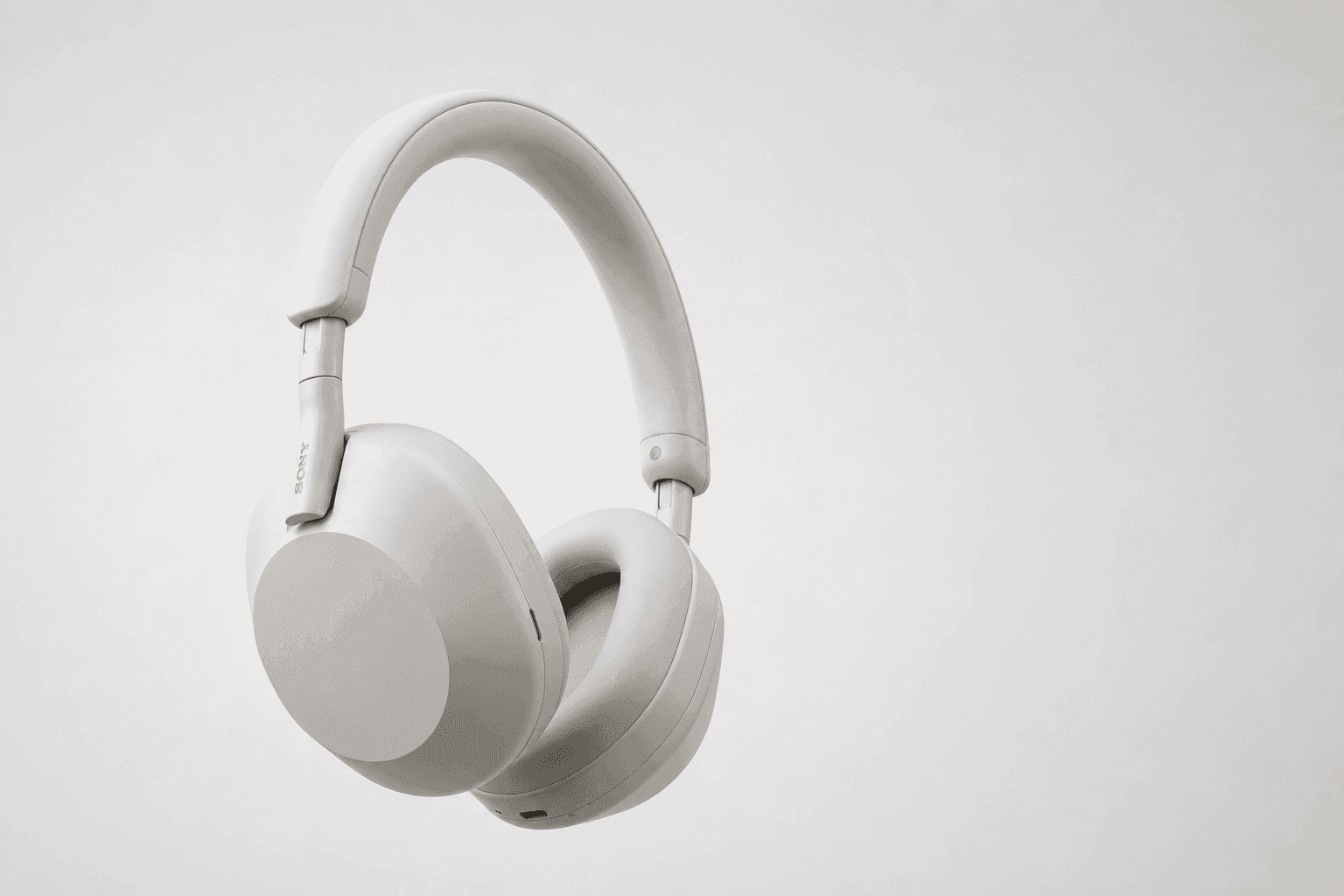
Sony rebuilt the frame for this generation rather than nudging it. Gone are the folding arms of the XM4, replaced by a continuous stepless slider and synthetic leather earcups. That single decision changes how the headphones pack, how they look, and how the clamping pressure lands on your head.
Inside, the change is just as blunt: Sony dropped the long-running 40mm driver for a custom 30mm carbon fiber composite dome, aiming at high-frequency clarity and a stiffer diaphragm. Pair that with LDAC support, the Integrated Processor V1, and the HD Noise Canceling Processor QN1, and you have the technical case Sony makes against the Bose QuietComfort Ultra, Sennheiser Momentum 4 Wireless, and Apple AirPods Max. Frequent flyers, open-office survivors, and commuters are the target buyer here.
Some links in this article are affiliate links, which helps support GadgetPickr at no extra cost to you.
The Quick Take
Sony's fifth-generation flagship stays one of the most practical picks in the high-end ANC category. An eight-microphone array driven by the V1 processor handles isolation, while bespoke 30mm drivers handle the music. Neither half feels like an afterthought.
Verdict
Everything in this Sony WH-1000XM5 review points the same direction: buy it if you are a traveller, commuter, or open-office worker who wants adaptive noise cancellation and deep app control in one lightweight package — the eight-microphone Auto NC Optimizer stack is the single strongest reason, because it retunes itself to each environment instead of applying one fixed profile. Skip it if you pack light, and skip it for one reason above all others: the redesigned headband does not fold, so the case eats carry-on space its predecessor did not.
The rest of the picture supports that call. A 250-gram frame with soft-fit leather reduces earcup pressure over long listening sessions. Bluetooth 5.2 with LDAC gives the 30mm carbon fiber drivers more data to work with than any previous generation received, and 30 hours with ANC engaged is competitive rather than category-leading. Absent manual ANC intensity controls, you are trusting Sony's automation — most people will be happy to.
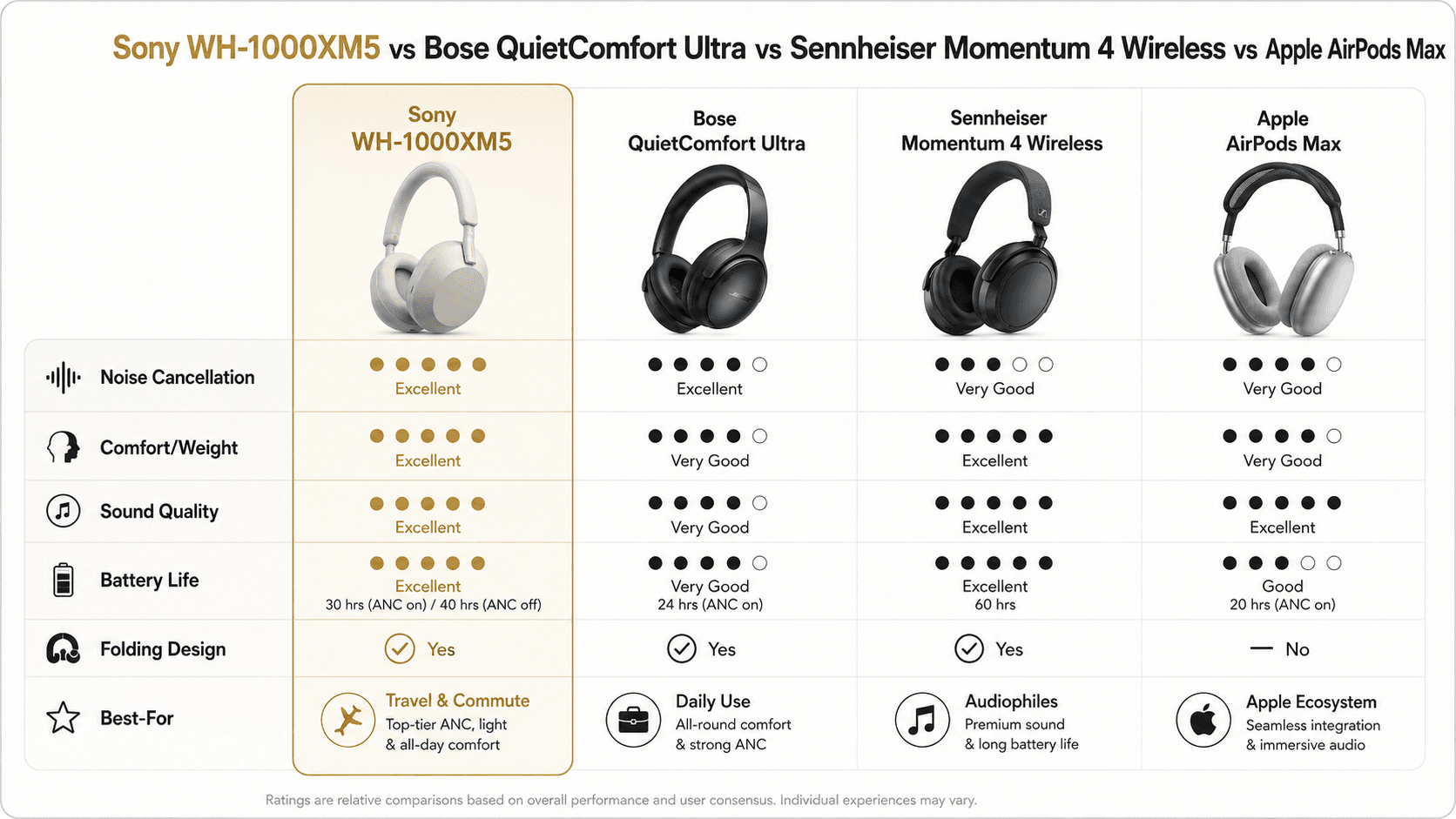
Set against the Bose QuietComfort Ultra, Sennheiser Momentum 4 Wireless, and Apple AirPods Max, none of which wins on every axis, this is the most balanced of the four. Capable, sensibly engineered, and easy to recommend to anyone whose priority is quiet.
Sony WH-1000XM5
Premium active noise canceling, wireless travel headphones, daily commuting, office productivity, high-fidelity Bluetooth audio
Positioned in the upper reaches of the mainstream ANC tier — below the AirPods Max, above most mid-range cans.
Sony WH-1000XM5 Review: Design and Hardware Overview
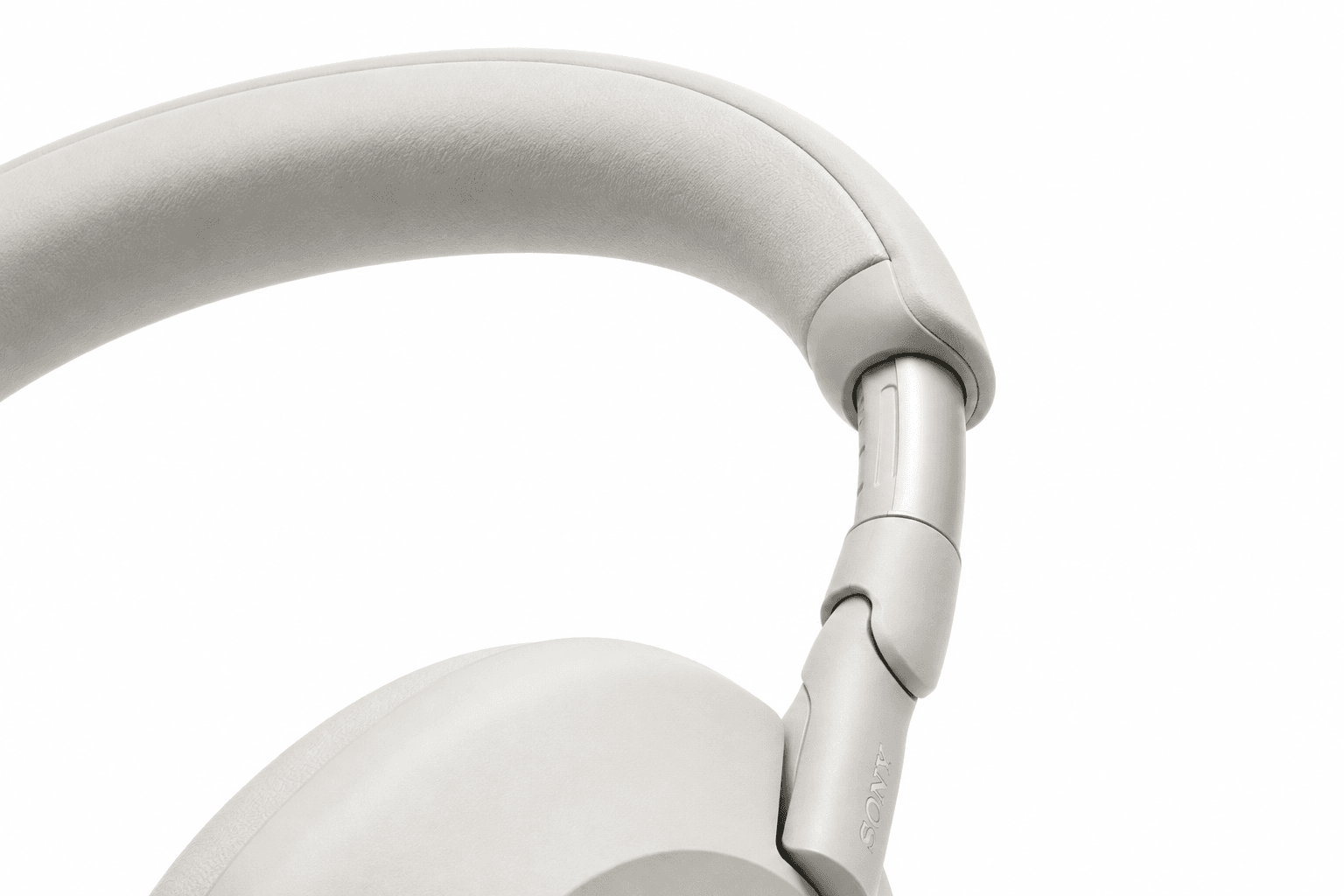
A structural shift defines this body. The folding arm mechanism is gone, and in its place sits a silent stepless slider with single-hinge earcups. Soft-fit synthetic leather wraps the pads and the headband, spreading clamping force instead of concentrating it on two points.
Weighing approximately 250 grams, the lighter frame balances durability and comfort, though the non-folding design requires a larger flat protective case when traveling. That is the trade you accept for the cleaner silhouette.
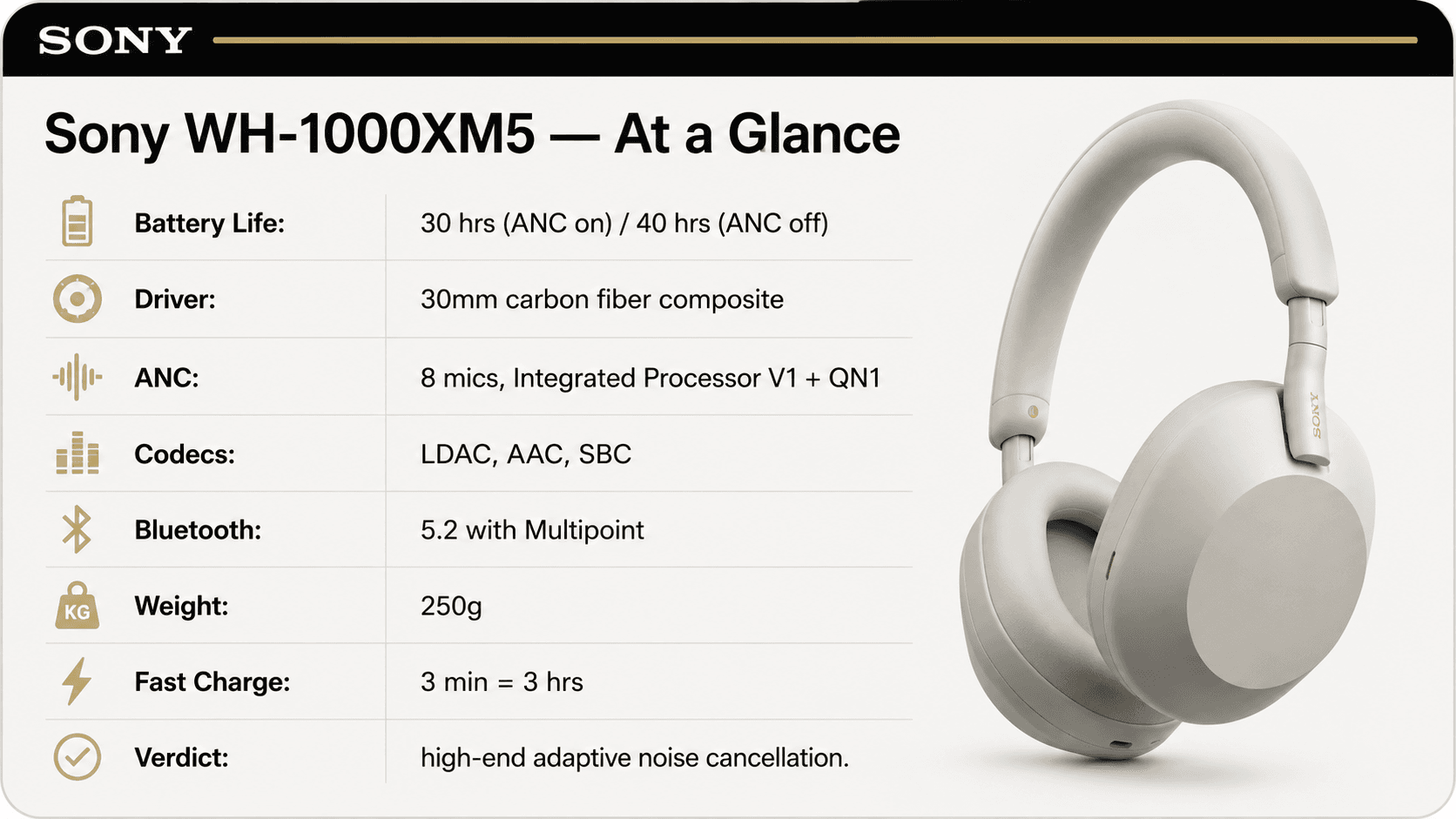
Acoustically, moving from a 30mm driver to a custom 30mm dome with a carbon fiber composite edge is a deliberate engineering choice, not a cost cut. Stiffer and lighter means less flex, which on paper means cleaner treble and tighter transients. Wireless audio transmission uses Bluetooth 5.2 alongside Sony's proprietary LDAC codec, which streams high-resolution audio up to 990 kbps at 24-bit/96kHz when connected to compatible source devices. SBC and AAC remain on the menu, as does Multipoint pairing to two devices at once.
Two chips carry the noise-cancelling load: the Integrated Processor V1 and the HD Noise Canceling Processor QN1. They read eight microphones — four per earcup — and the Auto NC Optimizer retunes cancellation against atmospheric pressure and how the cups actually sit on your head. No manual calibration step. Beamforming mics with AI-driven suppression handle the other direction, pulling your voice out of the traffic behind you.
Battery is the specification most buyers check first: up to 30 hours of playback with ANC running, or up to 40 hours with ANC toggled off. USB Power Delivery quick charging via the USB-C port provides three hours of playback from a three-minute charge when using a compatible USB Power Delivery AC adaptor.
Key Specs and Compatibility
Here is the hardware sheet in one place, pulled from Sony's published figures. Skim it before you read the trade-offs section — most of the arguments below trace straight back to two rows: driver size and battery life.
Both Android and iOS get the Sony Headphones Connect app for EQ and mode control, supporting Google Fast Pair, Swift Pair, and USB-C power delivery.
What Stands Out
Start with the cancellation stack, because that is where the money went. The V1 processor and QN1 HD chip split the work across eight microphones, and the Auto NC Optimizer keeps adjusting rather than locking to one profile. Cabin drone at altitude and a coffee grinder two metres away are different problems, and Sony's approach treats them that way.
Driver size going down while ambition goes up is the counterintuitive part. Less cone area normally means less air moved, but the carbon fiber composite dome is far more rigid than a conventional 40mm diaphragm, which keeps distortion in check when a dense orchestral passage or a layered electronic mix hits. Bass stays in its lane instead of smearing into vocals. LDAC then feeds it up to three times the data of a standard Bluetooth profile, assuming your phone plays along.
Design is where opinions split. Sony swapped the folding hinge for a one-piece headband on a stepless slider, which kills the click-and-squeak that plagues multi-hinge travel headphones. It also looks cleaner than almost anything in the category. Soft-fit leather on the crown spreads pressure across the temples rather than pinching.
Smart features round it out. Multipoint over Bluetooth 5.2 lets a laptop and a phone stay connected at once, with call audio taking priority automatically. Speak-to-Chat drops the volume and opens ambient pass-through the moment you start talking — useful when a flight attendant asks a question. Beamforming mics with AI-based reduction handle the call itself, isolating voice from wind and street noise.
Strengths
For productivity, travel, and long listening days, this is a versatile piece of kit. A 250-gram frame with soft-fit synthetic leather is built to avoid hot spots, which matters if you are wearing headphones from a 9am standup through to a evening flight. Low-frequency rumble — train carriages, aircraft cabins, HVAC hum — is exactly the frequency band an eight-mic feedforward-plus-feedback array targets best.
Endurance lines up with real routines. Thirty hours with ANC engaged covers a long-haul flight with room to spare, or roughly a working week of commutes. The three-minute quick charge is the specification that saves you at the gate.
Juggling devices is handled too. Bluetooth 5.2 multipoint hands audio over when a call lands on your phone while a video plays on your desktop. Sony maps volume, track skipping, and mode switching to taps and swipes on the right earcup, and a palm placed flat over that cup triggers Quick Attention — outside audio, instantly, without pulling the headphones off.
Weaknesses
Now the trade-offs, and the first one is physical. Because the chassis no longer folds, the earcups only swivel flat, so the case is a wide slab rather than a compact clamshell. In a packed carry-on, that difference is real.
Automation cuts both ways. Manual override toggles for cancellation intensity are absent, so the Auto NC Optimizer occasionally reacts to environmental shifts you did not care about, producing small changes in the background floor. If you want ANC pinned at maximum and left there, a fixed-level implementation will annoy you less.
On the audio side, LDAC is an Android privilege — iPhone owners are capped at AAC, and the codec row in the spec table is doing less work for them. Anyone coming from the sub-bass-heavy tuning of older XM models may also find the 30mm driver's low end leaner by default, which the companion app's EQ can fix in about thirty seconds.
Best Alternatives
Three rivals matter here, each winning on a different axis.
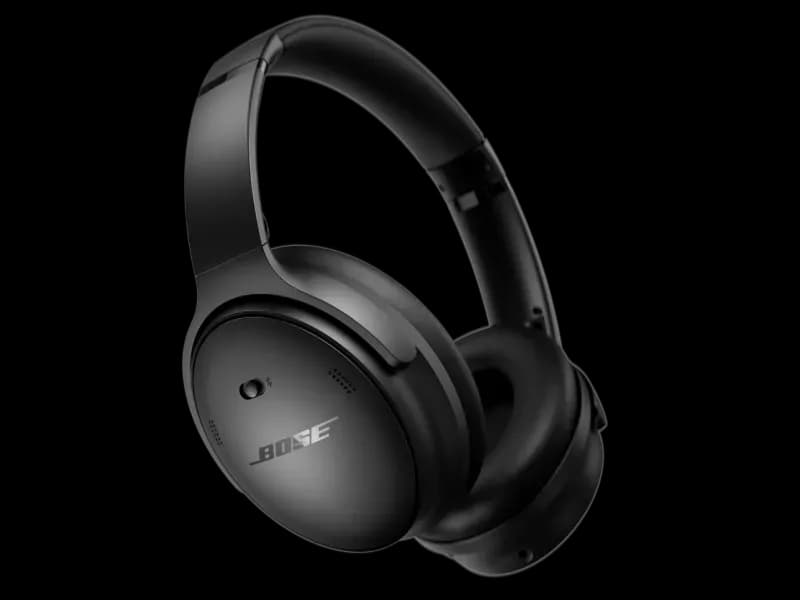
Bose QuietComfort Ultra remains the reference for raw low-frequency cancellation on long flights, and it still folds — so you trade Sony's LDAC support and deeper EQ customisation for a smaller case and slightly stronger isolation.
Sennheiser Momentum 4 Wireless is the pick for listeners who want soundstage and runtime over absolute isolation: Sennheiser equips its flagship with larger 42mm drivers and delivers up to 60 hours of battery life on a single charge—double the 30-hour runtime of the WH-1000XM5, at the cost of ANC that trails Sony's Auto NC Optimizer in shifting environments like train platforms.
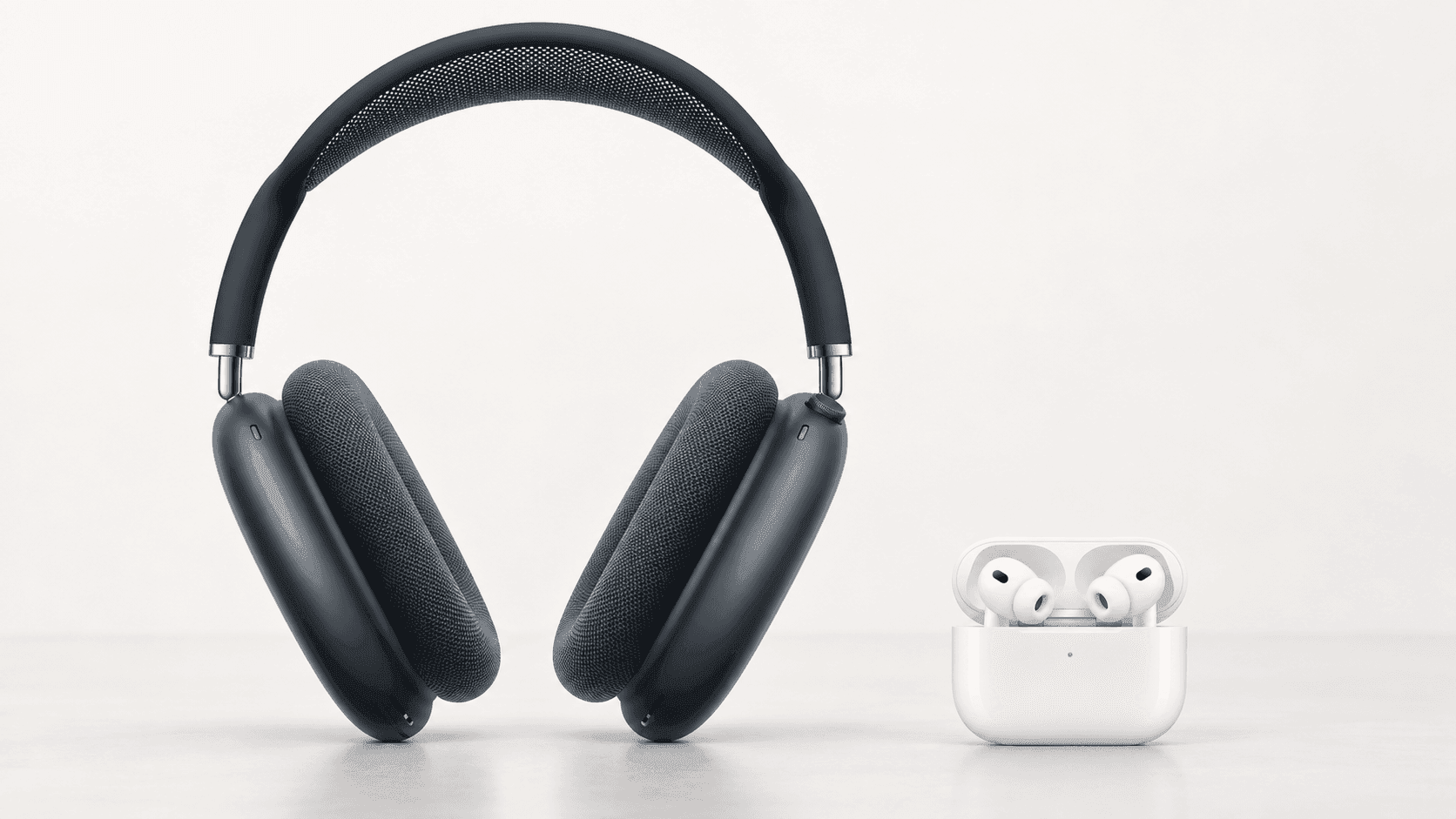
Apple AirPods Max make sense if you live inside iOS, where spatial audio and automatic device switching just work — but they come at a significantly higher cost, weigh noticeably more, and rely on a USB-C connection system rather than standard USB-C charging. Pick Bose for packability, Sennheiser for battery, Apple for ecosystem, Sony for balance.
Who Should Buy It
Frequent flyers, daily commuters, and hybrid workers are the clearest fit. If your day involves an open-plan office at one end and a train at the other, the eight-microphone array running on the Integrated Processor V1 is aimed squarely at the chatter and engine noise that make both places tiring.
Android owners with high-resolution libraries get a second reason: LDAC carries meaningfully more data than SBC or AAC. Anyone who takes calls in noisy places gets a third, thanks to the beamforming array and AI-based reduction on the outbound side. Add Speak-to-Chat, app-level EQ, and 30-hour battery life, and you have one of the better-rounded packages at this level.
Commission may be earned from this link, at no extra cost to you.
Who Should Skip It
Not everyone should be buying these. Minimalist packers are the obvious exclusion — the non-folding headband demands a bigger case than the WH-1000XM4 did, so if bag space is your top constraint, the older folding design or the QuietComfort Ultra will serve you better.
Athletes should look elsewhere as well. The over-ear design lacks a formal IP moisture resistance rating, which rules it out for sweaty training sessions and wet commutes. Budget buyers who only need light isolation are paying for the V1 processor and LDAC without using either. And if you want to charge less than once a fortnight, the Momentum 4's runtime is simply in a different class.
Sources & References
Specifications and claims in this analysis were cross-referenced against the sources below.
Yes, if adaptive noise cancellation and app control top your list. The eight-mic Auto NC Optimizer and 30-hour battery still hold up against current flagships. Buyers who need maximum runtime or a folding design have better options.