LG C4 OLED Review: Brightness, 144Hz Gaming, and webOS 24 for Buyer Fit
A spec-based look at the LG C4 OLED — the 2024 model's ~1,050-nit panel, 144Hz gaming, and webOS 24 — with a clear call on whether it belongs in your living room.
Noureddine M.··Specification analysis — not hands-on tested
There's no such thing as a no-compromise high-end TV — panel technology, the processor behind it, and the ports on the back all pull against each other. The LG C4 OLED is the 2024 entry in a display line that has earned its following, and it lands as a flexible choice for movie nights and late-night gaming alike. This is a spec-based analysis using published manufacturer specifications and market comparisons. No hands-on testing was conducted.
Year to year, OLED upgrades tend to be small. So the real question this LG C4 review answers is whether a brighter panel and a higher refresh rate are enough to pick it over rivals like the Samsung S90D or the Sony Bravia 8. We'll walk the core hardware, the smart platform, and the gaming feature set, then say plainly who it fits. Against its predecessor, the C3, the changes are targeted rather than sweeping.
Some links in this article are affiliate links, which helps support GadgetPickr at no extra cost to you.
The Quick Take
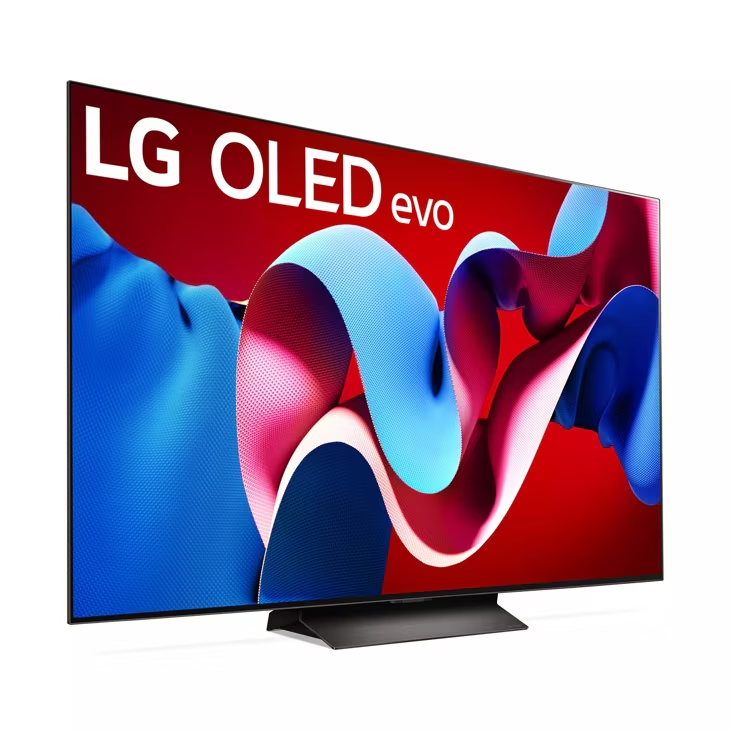
The LG C4 OLED 65-Inch 4K Smart TV (OLED65C4PUA, 2024) is a strong all-rounder in the premium TV market. A brighter panel and 144Hz support close the small gaps left by the C3, which makes this one a practical pick for both home-theater fans and high-frame-rate gamers.
This LG C4 review lands on a simple read: it's one of the most flexible premium TVs you can buy right now. A brighter panel and 144Hz support close the small gaps left by the C3, which makes the set work for dark-room cinema and high-frame-rate gaming in equal measure. A full set of HDMI 2.1 inputs keeps several consoles and a PC connected at once, so you're never juggling cables to hold performance up. Rivals like the Samsung S90D, the Sony Bravia 8, and LG's own G4 all make real cases, but the C4 hits a rare balance of price and capability — the near-infinite contrast and per-pixel dimming of OLED without the steep step up to gallery-series pricing. If you want cinema-grade black levels, better bright-room performance than past OLEDs, and a strong gaming setup in one box, the C4 is an easy recommendation.
LG C4 OLED
Premium 4K gaming, home theater movies, bright room viewing
At its heart, the C4 uses a self-emissive 4K UHD OLED panel. Where an LED-backlit LCD leans on a dimming backlight, here every pixel makes its own light — and switches off entirely for black. That gets you near-infinite contrast, which pays off most with HDR content in a dark room.
The 2024 panel is tuned for higher peak brightness than the older C3, so the picture holds up better under moderate ambient light. Handling the image is the latest version of LG's Alpha processor, which manages upscaling, motion interpolation, and dynamic tone mapping frame by frame. On a 65-inch screen, that upscaling matters — it keeps standard cable and older streaming titles from looking soft.
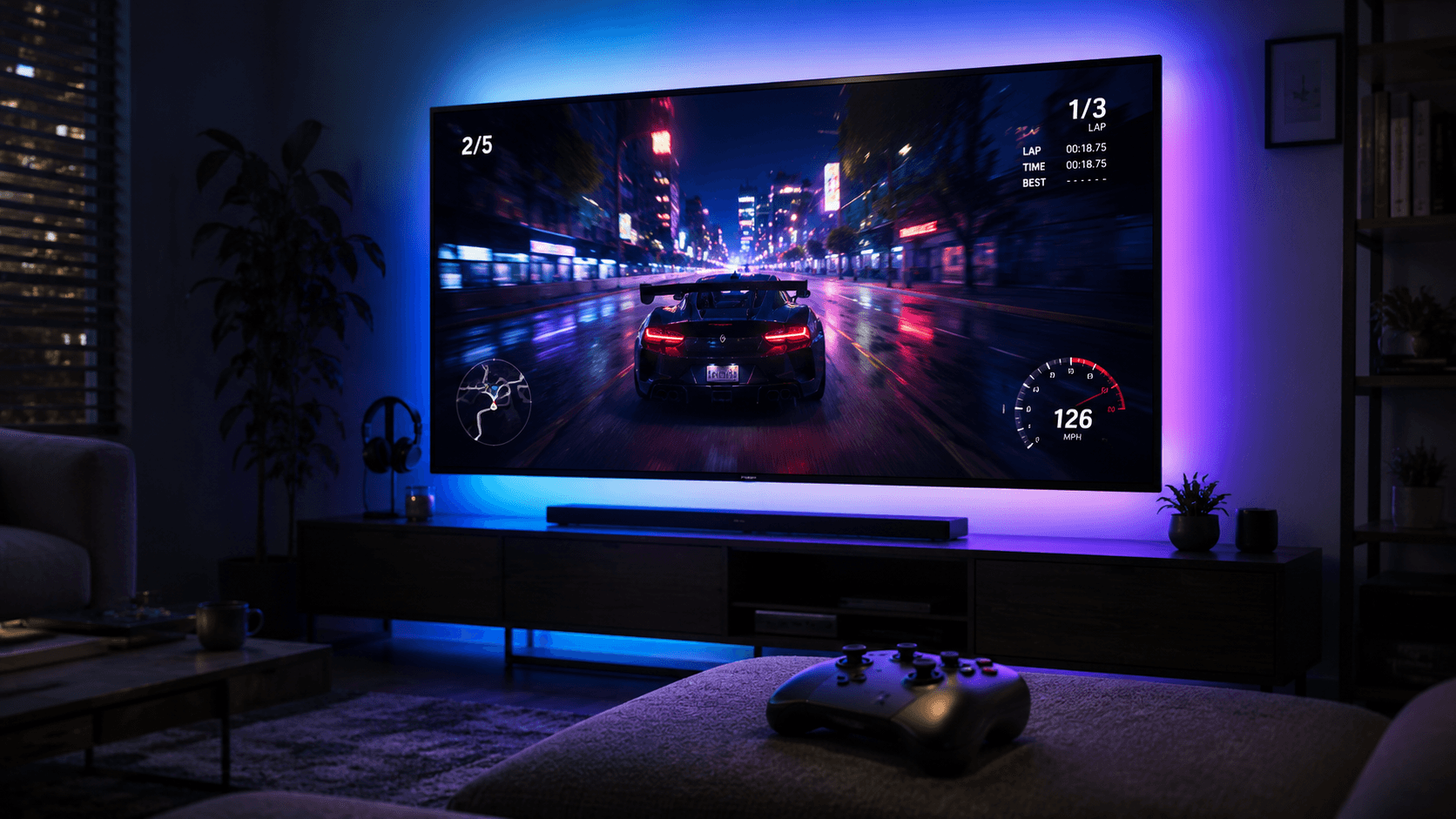
Gamers get a lot to work with. Four full HDMI 2.1 ports each carry the bandwidth for high-frame-rate signals, so several consoles and a gaming PC can stay plugged in at once. The headline change for 2024 is 144Hz support, up from the 120Hz ceiling of earlier models; paired with a capable PC, it means smoother motion and lower input lag.
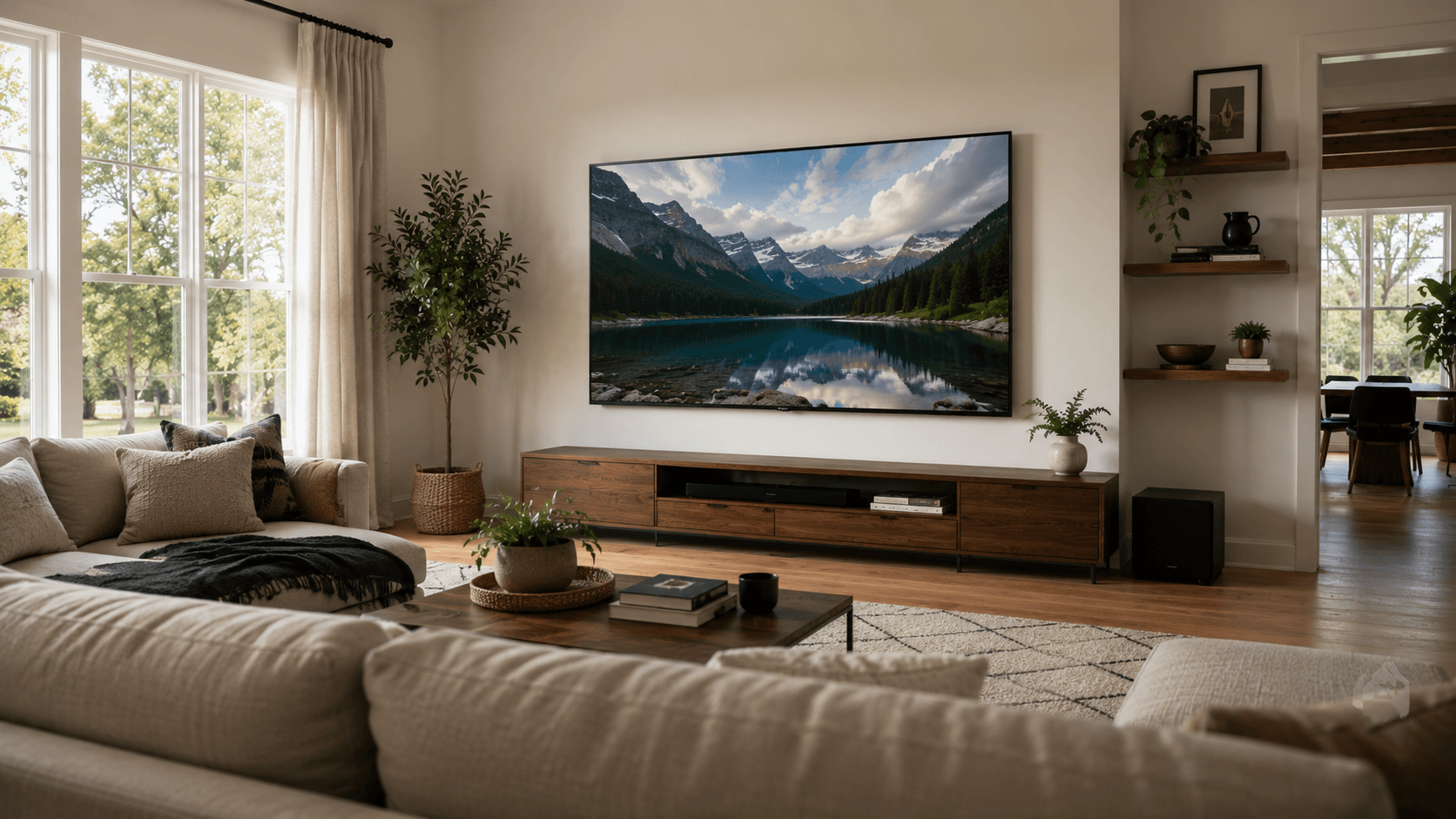
Running the show is webOS 24, LG's own smart platform. It corrals streaming apps, inputs, and smart-home controls into one dashboard, with personalized suggestions up front. A slim bezel and a low central stand round it out, and the set drops onto most media consoles without fuss.
LG C4 OLED — key specifications
Spec
Detail
Screen sizes
42", 48", 55", 65", 77", 83"
Panel type
Self-emissive 4K UHD OLED
Refresh rate
120Hz native, up to 144Hz over PC
Peak HDR brightness
~1,050 nits (10% window)
Game-mode input lag
~9–13 ms
HDMI
4× HDMI 2.1 (VRR, ALLM, FreeSync Premium)
Audio
40W, 2.2-channel, Dolby Atmos
HDR formats
Dolby Vision, HDR10, HLG (no HDR10+)
Processor
LG Alpha (2024)
Smart platform
webOS 24
Key Specs and Compatibility
Connectivity is where the C4 makes its case. All four HDMI ports run the full 2.1 spec, beating the two high-bandwidth ports on some rival Sony sets, and each one supports Variable Refresh Rate, Auto Low Latency Mode, and AMD FreeSync Premium. One port also doubles as eARC, so lossless Dolby Atmos can pass straight to a soundbar or receiver.
On the smart-home side, webOS 24 handles Apple AirPlay 2 and HomeKit alongside Amazon Alexa and Google Assistant, letting the TV sit at the center of a connected setup. For HDR, it covers Dolby Vision, HDR10, and HLG — broader format support than the Samsung S90D, which skips Dolby Vision. It still sits a rung below the flagship G4 and its Micro Lens Array panel, which pushes brightness higher, keeping the C4 in balanced mid-range premium territory.
What Stands Out
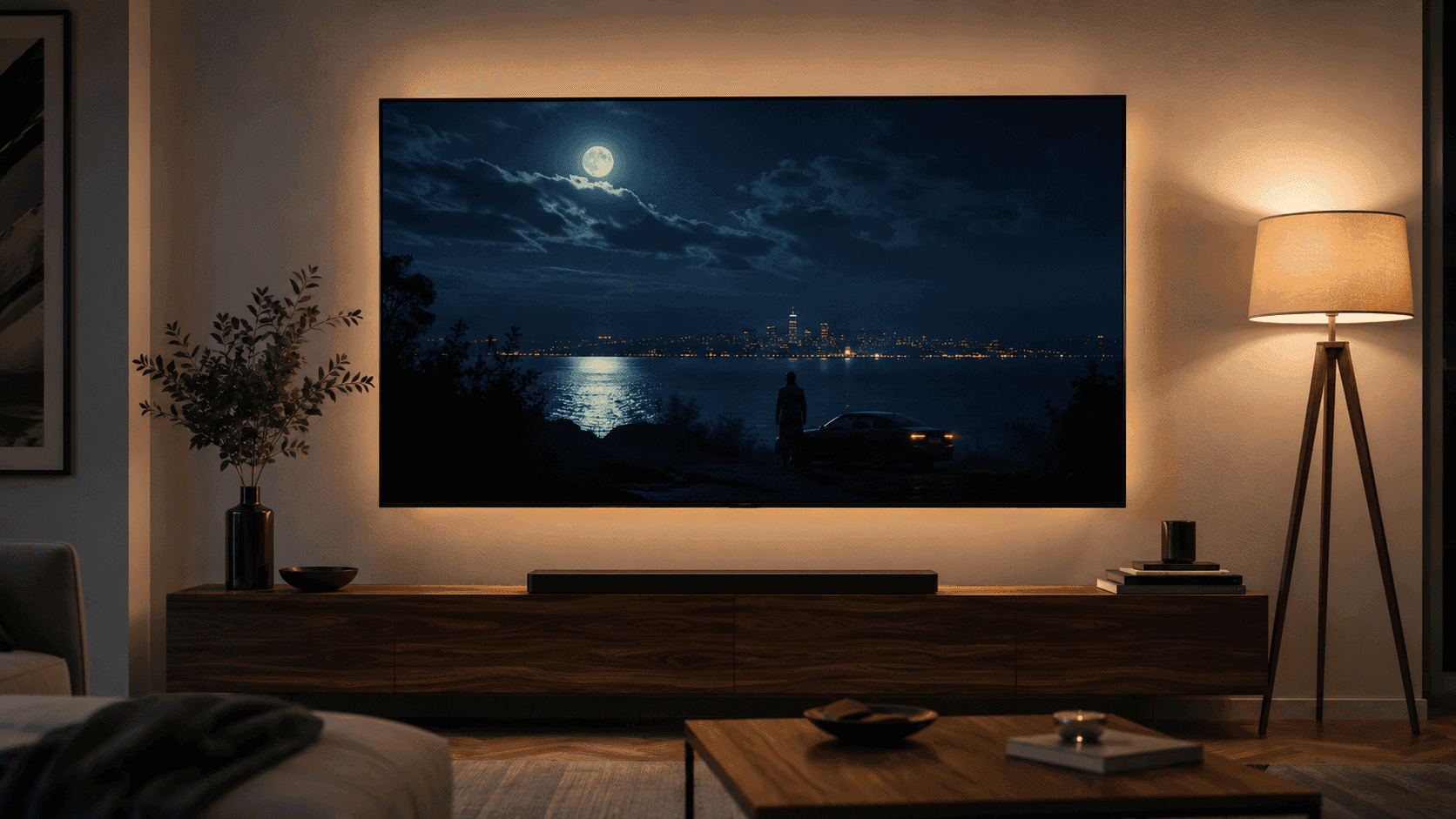
The clearest upgrade over the C3 is brightness. LG reworked the panel chemistry and processing to push a punchier image, which chips away at OLED's old weakness in rooms with some ambient light. Published lab measurements put HDR peak brightness near 1,050 nits in a 10% window — enough for highlights like a glint off metal, a neon sign, or sunlight on water to read with real intensity.
Then there's the refresh rate. 144Hz sounds like a small bump over 120Hz, but for PC gamers with a strong graphics card it turns a living-room TV into a monitor-grade display. That dual role is the pitch here: cinema screen by night, oversized gaming panel on demand. Every input, not just one or two, carries full bandwidth for 4K high-frame-rate play, VRR, and ALLM.
Underneath sits LG's newest silicon driving webOS 24. It reads content frame by frame to apply tone mapping and noise reduction, and the interface moves quickly through apps and settings. Combine self-lit pixels — infinite contrast, true black — with the brightness and speed gains, and you get a display that covers more scenarios than most single-purpose sets.
Strengths
For movie fans, the self-emissive panel is the draw. Each pixel goes fully dark for black, so on paper there's no backlight bleed or blooming to muddy a moody, low-light film — the kind of artifact that dogs LED-backlit sets. The brighter 2024 panel also widens the use case, making afternoon sports or casual daytime viewing more workable without blacking out the room.
Gaming is the other clear win. Near-instant pixel response plus a high-refresh panel adds up to minimal motion blur on paper, and published measurements land game-mode input lag around 9 ms in boost mode — quick enough for a frantic shooter or a tight racing line. webOS 24 helps day to day, too, with separate user profiles so each person keeps their own recommendations and shortcuts.
It also works as a smart-home anchor. The webOS dashboard pulls up connected devices — check a camera feed, dim the lights — straight from the remote. Built-in 40W audio won't replace a soundbar, but for news and dialogue-driven shows it's clear enough that you won't always reach for the surround system.
Weaknesses
Start with the ceiling on brightness. The C4 is brighter than past OLEDs, but its ~1,050-nit peak can't match the sustained full-screen output of a strong Mini LED set like the TCL QM8K, which measures past 2,700 nits in the same kind of 10% window. In a bright room with sun landing on the screen, that Mini LED will fight glare better, even though it gives up the pixel-level contrast and wide viewing angles OLED is known for.
Burn-in is the other asterisk. LG builds in pixel shifting, screen savers, and logo dimming, but the risk of permanent image retention is still real if you park static content — a news ticker, a PC desktop — on screen for hours a day, every day. The webOS 24 home screen also leans on sponsored rows and recommendations, which can feel busy next to a cleaner streaming interface. And while Dolby Vision, HDR10, and HLG are all here, HDR10+ isn't — a small gap for most, but one format-completists with the wrong libraries will notice.
Best Alternatives
Worried about OLED wear, or planning to put the set in a sun-filled room? The TCL 65-Inch QM8K Mini LED QLED 4K TV (2025 Model) is the obvious counter. Its Mini LED backlight climbs far higher in peak brightness than OLED to punch through glare, and an anti-reflective wide-angle screen keeps the image honest off-axis. You trade away OLED's per-pixel contrast and instant response, but it matches the 144Hz refresh for gaming and runs Google TV instead of webOS.
Want to stay OLED with a different flavor? The Samsung S90D pushes gaming and color volume harder, while the Sony Bravia 8 courts home-theater buyers with its cognitive picture processing and acoustic-surface audio. And if the budget stretches, LG's own G4 sits a tier up, using Micro Lens Array tech for a brighter panel and a flush wall-mount look. The call comes down to what you value: the C4's blacks and speed, the QM8K's brightness and glare resistance, or the tuned processing of the other OLEDs.
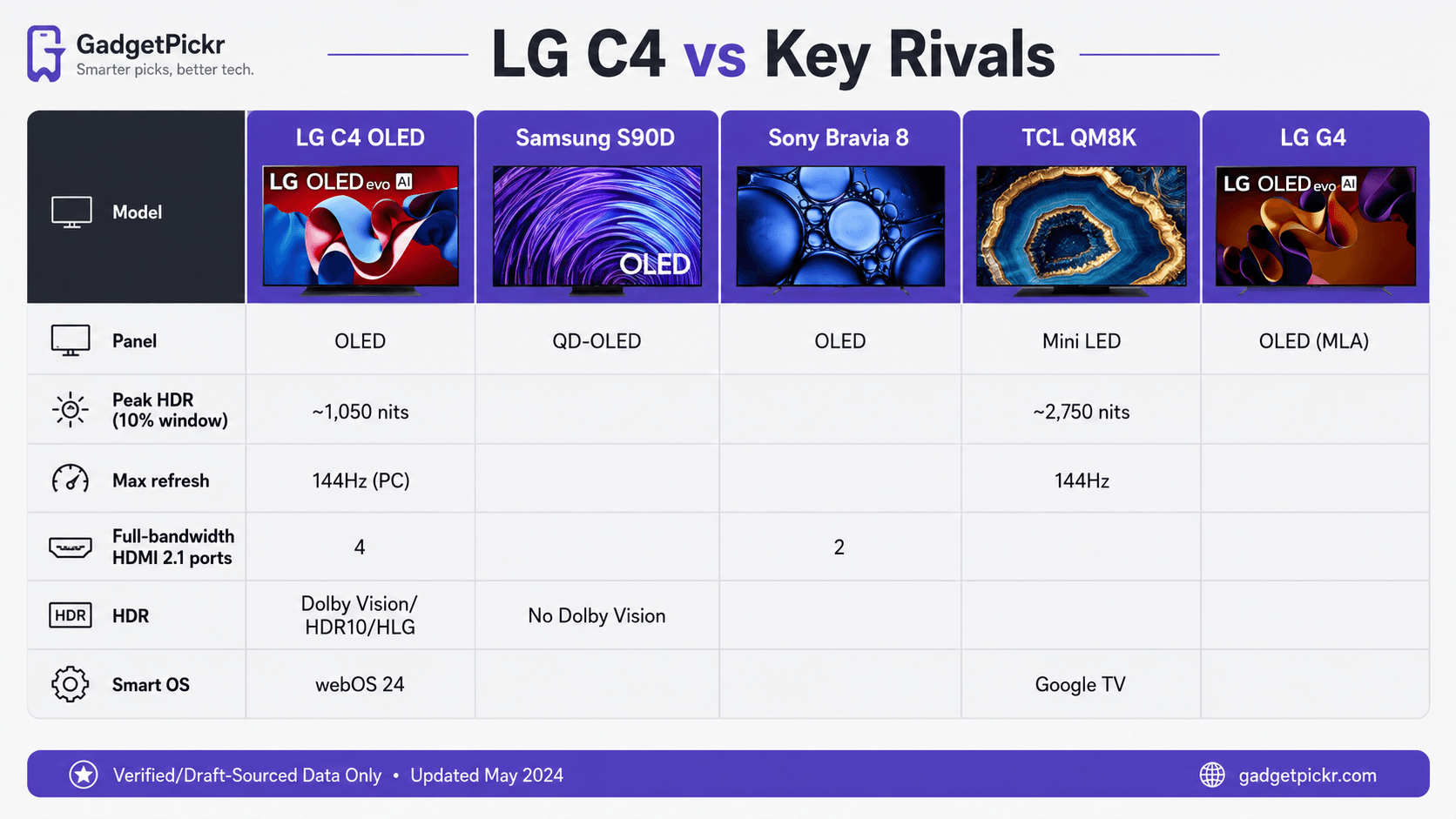
LG C4 vs the main alternatives
Model
Panel
Peak HDR (10% window)
Best for
LG C4 OLED
OLED
~1,050 nits
Dark-room cinema and gaming
TCL QM8K
Mini LED
~2,750 nits
Bright rooms, glare resistance
Samsung S90D
QD-OLED
—
Gaming and color volume
Sony Bravia 8
OLED
—
Home-theater processing and audio
LG G4
OLED (MLA)
—
A brighter, flush-mount OLED step-up
Peak brightness from published independent measurements; — indicates a figure not cited in this guide.
Who Should Buy It
Serious gamers on current-gen consoles or a high-end PC are the core audience. Four full-bandwidth HDMI 2.1 ports mean you connect everything at once and stop swapping cables, and the move to 144Hz will appeal to PC players chasing motion that keeps up with a good graphics card. It's just as good a pick for movie-first buyers who watch in a dark or light-controlled room, where self-lit pixels deliver true black and shadow detail without any blooming. And if you like a quick, modern smart interface, webOS 24 makes organizing apps and smart-home gear straightforward.
Commission may be earned from this link, at no extra cost to you.
Who Should Skip It
Some buyers should keep looking. If your main room is sun-drenched with big, bare windows, an OLED can struggle against that much ambient light — a bright Mini LED like the TCL QM8K cuts through glare more easily. Shoppers who don't care about high-refresh gaming or a stack of HDMI 2.1 ports can spend far less and still get a capable 4K set. And if you mostly watch static news channels or run the TV as a desktop monitor with fixed on-screen elements, the slow build-up of image retention makes a good LCD the safer long-term buy.
Sources & References
Specifications and claims in this analysis were cross-referenced against the sources below.
It reaches roughly 1,050 nits in a 10% window — brighter than earlier LG OLEDs and fine for moderate daylight. But a sun-filled room with bare windows still favors a Mini LED set like the TCL QM8K, which pushes harder against glare.