Canon EOS R50 Review: Is the 18-45mm Kit Worth Buying?
A practical first camera for family photos and tripod-based video, with subject detection and a flip-out screen. The 18-45mm lens limits zoom, low-light shooting, and walking vlogs.
Your first interchangeable-lens camera should give you room to grow without being a pain to carry around. This Canon EOS R50 review finds it a sensible place to start for family photos, travel, and video shot from a tripod. Its subject-detection autofocus and flip-around touchscreen are the best reasons to buy it. The small 18-45mm kit lens is what holds it back.
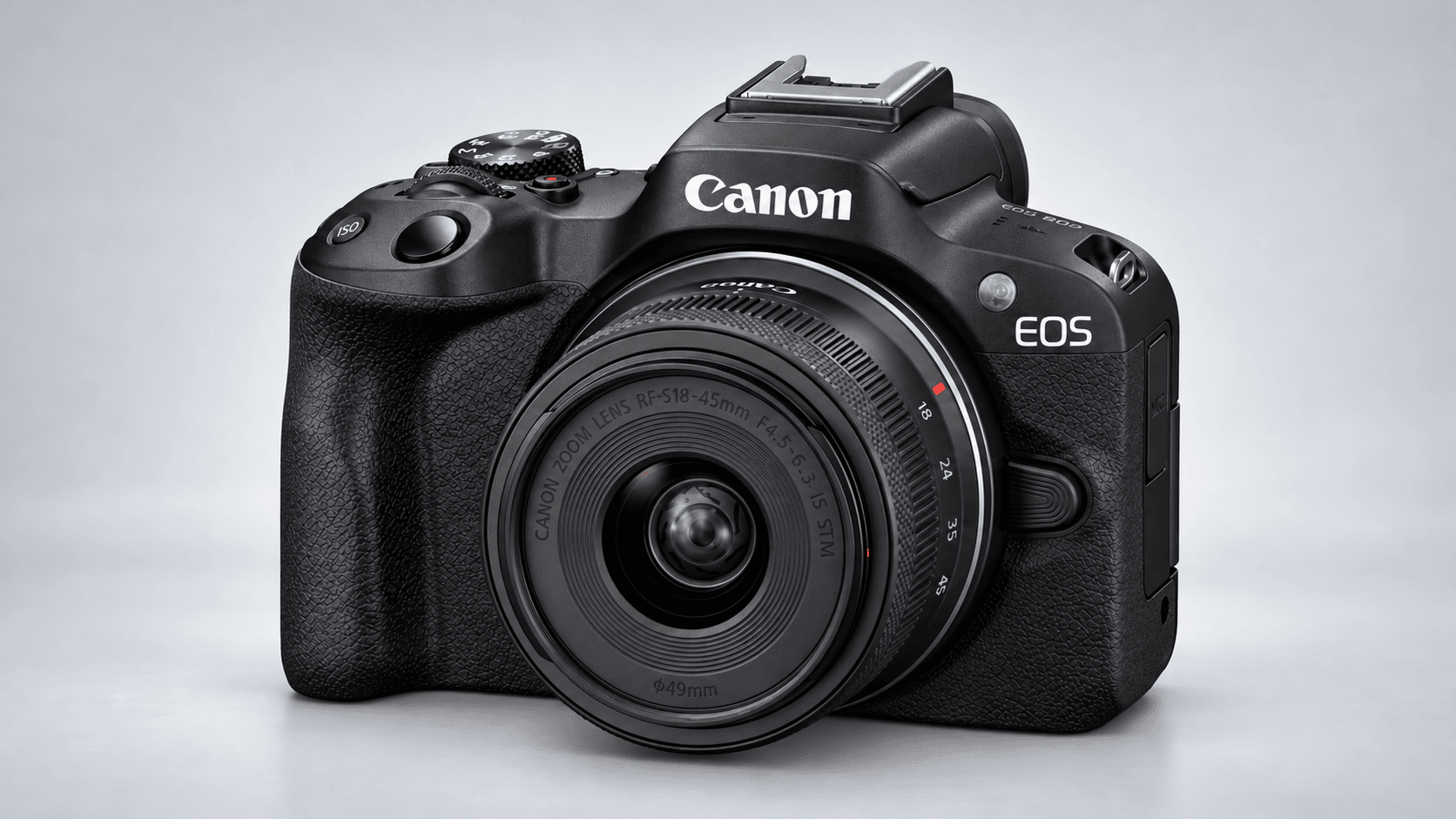
Canon announced the R50 in February 2023 and started selling it in March. It pairs a 24.2MP APS-C sensor with Canon's DIGIC X processor. The included RF-S 18-45mm f/4.5-6.3 IS STM lens retracts when you're not using it and covers everyday framing from wide to short telephoto. Think people, street scenes, and filming yourself at your desk, not birds across a lake or indoor sports from the stands.
Compared with the more basic EOS R100, you get a flip-out touchscreen, better subject detection, and uncropped 4K recording at up to 30p. Those are worthwhile upgrades if you want to shoot both photos and video. Just plan on buying a different lens once your interests outgrow this small zoom.
Some links in this article are affiliate links, which helps support GadgetPickr at no extra cost to you.
The Quick Take
Buy the R50 kit if you want a compact camera for family photos and video where you can control the framing and lighting. Subject detection and the flip-out screen make that easy. Skip this bundle if you mostly want to shoot distant action, indoor subjects in dim light, or wide walking vlogs, because the included lens doesn't zoom far and doesn't let in much light.
Verdict
This Canon EOS R50 review recommends the 18-45mm kit for beginners who want to mix family photos, travel, and video in controlled settings. The single biggest reason to buy it is subject-detection autofocus paired with a flip-out touchscreen. That combo makes it useful whether you're photographing other people or filming yourself.
Skip this kit if distant action or tough low-light shooting is your main focus, because the kit lens is its biggest weakness. Its limited zoom and aperture will push you toward another lens fast. For everyday subjects and tripod-based video, buy the R50. For those more specialized needs, pick your lens and camera around the job first.
Canon EOS R50 with 18-45mm Lens
A compact RF-mount kit for everyday photos, travel, and vlogging from a tripod. The linked listing is the black R50 with the 18-45mm lens in a retailer bundle.
Inside, there's a 24.2MP APS-C CMOS sensor and a DIGIC X processor. That APS-C sensor is physically much larger than the ones in typical smartphones. And because you can swap lenses, you can change how wide or tight your shot is, how much light comes in, and how blurry the background gets as your skills grow.
Autofocus is the bigger everyday draw. Dual Pixel CMOS AF II can detect people, animals (including dogs, cats, and birds), and vehicles like cars and motorcycles. In Whole Area AF, it uses up to 651 automatically selected zones for photos. That number refers to zones, not the number of focus points you can pick yourself.
If you're photographing a kid running toward you or a pet darting around the garden, subject tracking gives you a big head start. How well it locks on still depends on the subject, lens, light, and settings, though. Picking a fast enough shutter speed is still up to you, because tracking a subject doesn't freeze its motion.
Burst shooting tops out at 12fps with the electronic first-curtain shutter, or 15fps with the fully electronic shutter, under Canon's stated conditions. That's plenty for catching a quick run of facial expressions or a moment of action. It's less suited to holding down the shutter through an entire play.
Video goes up to uncropped 4K at 30p. Canon records it by downsampling from a 6K readout, rather than cropping into the sensor. The 3.0-inch flip-out touchscreen lets you check your framing from in front of the camera, and rotation data means vertical clips play back the right way up on compatible devices.
Canon lists the black body at about 375g with the battery and memory card, before you add a lens. It's made from aluminum alloy and engineering plastic, with a simplified set of controls. In short, it puts portability and touchscreen control ahead of lots of dedicated buttons and dials.
Key Specs and Compatibility
It helps to keep the camera's features separate from the lens's. The body has no in-body stabilization, while the kit zoom has optical stabilization built in. For video, there's also digital stabilization, which crops the image a bit more. And 10-bit recording is only available through HDR PQ, not as a standard option in every video mode.
Spec
Canon EOS R50 (18-45mm kit)
Sensor
24.2MP APS-C CMOS
Processor
DIGIC X
Autofocus
Dual Pixel CMOS AF II; up to 651 automatic AF zones for stills
Video
Uncropped 4K up to 30p, downsampled from 6K
Burst shooting
Up to 15fps electronic / 12fps electronic first-curtain
Screen
3.0-inch fully articulating touchscreen
Kit lens
RF-S 18-45mm f/4.5-6.3 IS STM
Stabilization
Lens optical IS rated up to 4 stops; no IBIS; cropped Movie Digital IS available
Aspect ratio
16:9 video / 3:2 photos
Ports
USB-C, micro-HDMI, 3.5mm mic input; no headphone jack
Weight
About 375g (black body with battery and card, no lens)
The R50 uses Canon's RF mount, so RF-S and RF lenses fit directly. Compatible EF and EF-S lenses work with Canon's EF-EOS R adapter, but EF-M lenses are a different system and won't work. It runs on an LP-E17 battery, and the Canon Camera Connect app handles pairing with your phone, remote control, and file transfers.
Canon EOS R50 Review: What Stands Out
For beginners, good autofocus and a good screen matter more than a long list of headline specs. Subject detection can follow the person or animal you're shooting, and you can tap the screen to move the focus point. Both help when you'd rather focus on the moment than dig through menus.
The same combination helps when you're filming yourself. Face and eye detection handle focus, while the screen shows you whether you've cut off the top of your head or drifted out of frame. On a tripod, the lens not being especially wide is less of a problem, because you can just move the camera back.
Uncropped 4K is another real advantage over the R100, which crops its 4K. You keep the lens's full field of view, unless you turn on digital stabilization. That really matters in a small room where you can't step back any further.
Video color depth takes a bit more thought than the specs suggest. Normal video is 8-bit, while HDR PQ unlocks 10-bit 4:2:2 recording. Canon Log isn't supported. Only use HDR PQ if your editing software and the screens you're publishing to support it, rather than treating it as a simple quality boost.
For everyday clips, the standard recording mode is usually the more practical choice. If you're making an HDR project, the extra color information opens up a different way to finish your video. Figure out how you'll edit and share your footage before you shoot a whole trip in an unfamiliar format.
It stays portable because of the lens as much as the body. Canon lists the zoom at about 130g, and its 18-45mm range works out to roughly 29-72mm in full-frame terms on this camera. That covers general scenes and closer portraits without turning a small camera into a bulky setup.
The lens retracts to save space in your bag, but you have to extend it before you can shoot. Once it's out, the zoom range is a great way to learn which focal lengths you like best. That'll help you make a smarter choice when you buy your next lens.
Strengths
Beginner-friendly controls make it easy to ease into exposure settings. Creative Assist gives you simple sliders for things like brightness and background blur, and the usual exposure modes are there too. You can start in full auto, then take control of one setting at a time.
For family photos, subject detection paired with short bursts matters more than megapixels. You can capture several expressions in a row without having to refocus each time. Look through the sequence afterward and pick the shot you wanted, rather than expecting every frame to be a keeper.
The flip-out screen is handy for more than just selfies and vlogs. Flip it out for a low-angle shot, angle it down when holding the camera above a crowd, or face it forward when filming yourself sitting down. With a fixed screen, checking those shots would be much harder.
It also works as a USB webcam thanks to UVC/UAC support. With a compatible computer, app, and USB cable, it can send video and audio without a separate HDMI capture card. It's especially good for a desk setup, where you can set the lighting, distance, and camera position once and leave them.
For sending photos to your phone, Bluetooth handles pairing and Wi-Fi handles viewing and transferring files through Camera Connect. That means you can get shots onto social media without opening a laptop first. Your phone still does the posting, while the R50 does the shooting.
The kit lens's optical stabilization is rated for up to four stops under Canon's test conditions. It helps reduce camera shake in handheld photos, especially of things that aren't moving. It won't freeze a moving child, though, or turn walking footage into a smooth tracking shot.
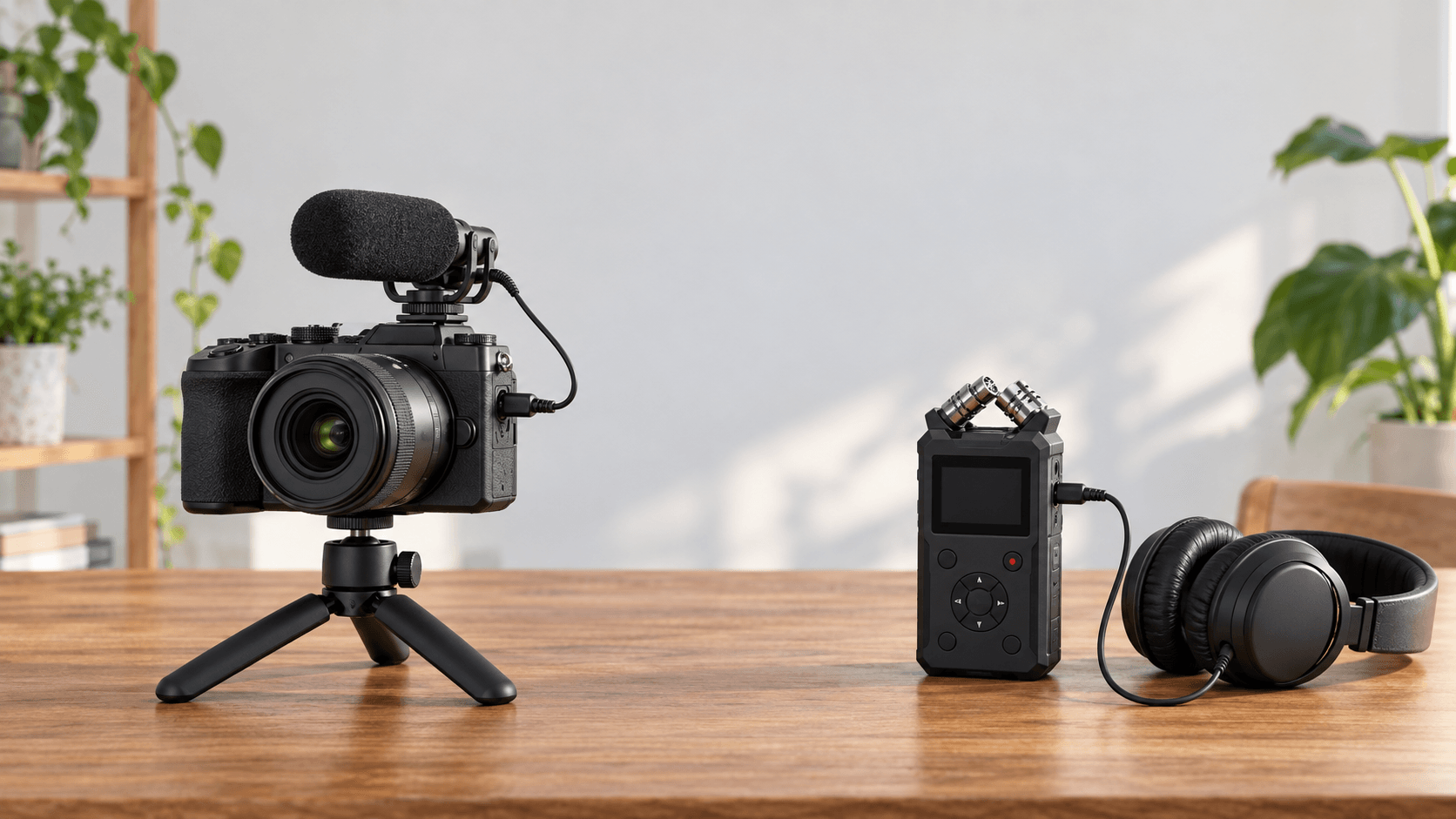
The STM motor keeps lens focusing quiet, and there's a 3.5mm input for an external microphone. Canon still warns that the built-in mic can pick up camera and lens noise, so where you put your microphone matters. For talking-head videos, getting the mic closer to your mouth makes a real difference.
Weaknesses
Most people will hit the lens's limits long before the sensor's resolution matters. Its maximum aperture goes from f/4.5 at the wide end to f/6.3 when zoomed in. Indoors, that can mean higher ISO, a slower shutter speed, or adding more light.
Keep your expectations realistic for background blur too. You can get more separation by moving closer to your subject, keeping the background far away, and zooming in. But a faster lens gives you much more room to blur backgrounds or shoot moving subjects in low light.
Zoom reach is the other obvious limit. At 45mm, it's still a short zoom, so distant wildlife or players across a sports field will look small in the frame. A longer lens fixes that. Changing autofocus settings won't.
For vlogging at arm's length, the roughly 29mm-equivalent wide end can feel tight. Turning on Movie Digital IS crops in even more, and stronger stabilization crops more again. A wider lens, more distance from the camera, or a different filming setup are the practical fixes.
Without in-body stabilization, photos rely on a stabilized lens or a tripod to reduce shake. Video has a separate digital option that works even with compatible non-stabilized lenses, but it crops the image. Lens IS, digital movie IS, and in-body stabilization are not the same thing.
How many shots it can take in a burst says more about its action limits than the 15fps headline. Canon rates it at about seven RAW shots in a row at either high-speed setting, with longer runs if you shoot JPEG, under its test conditions. Use short bursts for an expression or a jump. For long action sequences, you'll need a different approach or a different camera.
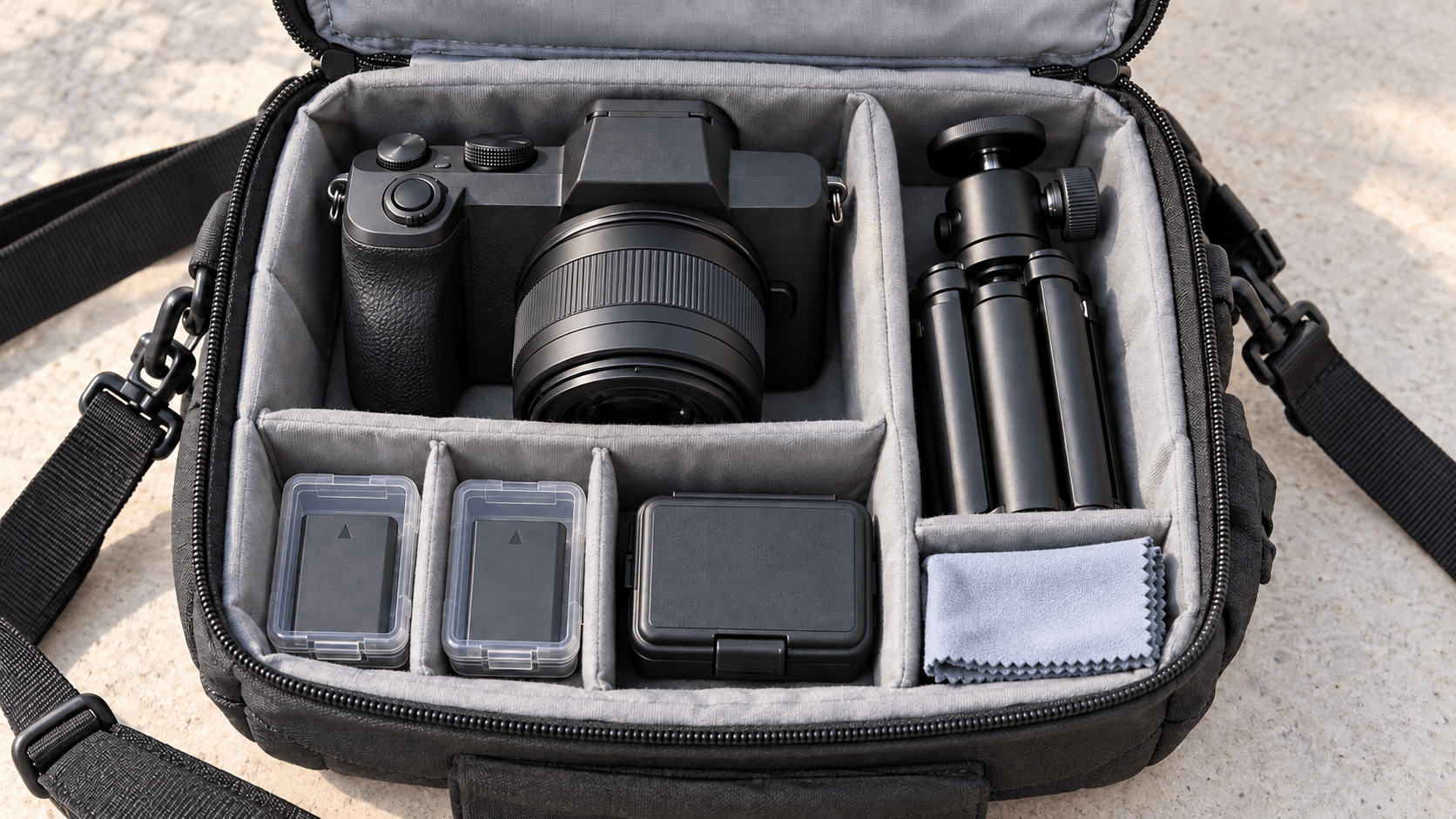
Plan ahead for battery life too. Canon rates it at about 440 shots using the screen or 310 using the viewfinder, at 23°C under its test conditions. Those are reference numbers, not an all-day promise, so a spare LP-E17 battery makes sense for a trip or a day of shooting lots of video.
It also has fewer physical controls than cameras made for constant manual adjustments. If you change shutter speed, aperture, and ISO quickly and often, it's worth paying for a camera with more dedicated dials. If you mostly shoot in auto or aperture priority, it's much less of an issue.
Audio is the last compromise. You can watch the on-screen level meter and adjust recording levels, but there's no headphone jack to listen in. That matters if you need to catch wind noise, cable rustle, or a mic cutting out during a take.
Best Alternatives
The Canon EOS R100 kit is the cheaper way into the RF system. In exchange, you get an older DIGIC 8 processor, up to 143 autofocus zones, a fixed screen without touch, and cropped 4K video, instead of the R50's flip-out touchscreen and uncropped 4K.
The Sony a6700 is a pricier step up, with a 26MP sensor, five-axis in-body stabilization, and a headphone jack. The trade-off is a different lens mount and a bigger investment than the R50 kit.
The Canon EOS R10 is the pick if you want faster action shooting without leaving the RF system. It adds a 15fps mechanical shutter mode, compared with the R50's 12fps electronic first-curtain mode.
Who Should Buy It
If you want a first camera for vacations, family get-togethers, and the occasional video, this kit makes a lot of sense. The biggest reason is subject-detection autofocus combined with a screen you can see from either side of the camera. You get real help with focusing and framing without carrying a bigger camera.
Parents and pet owners should think of it as a camera for subjects that are close by and moments that are quick. A garden, park, or bright room suits the kit lens much better than a faraway field or a dark arena. In those everyday situations, the zoom range and short bursts are a good match.
If you film sit-down tutorials, interviews, or presentations, a tripod and controlled lighting solve a lot of the kit's limits. You can put the camera far enough back, keep your framing consistent, and plug in a microphone. That's a better way to start than expecting the kit lens to handle every handheld shot.
Beginner photographers also have a clear upgrade path. Keep the body and add a lens that solves a specific problem, whether that's wider shots, more zoom, or a brighter aperture. Native RF and RF-S lenses, plus compatible adapted EF and EF-S lenses, give you options without replacing the whole camera.
Commission may be earned from this link, at no extra cost to you.
Who Should Skip It
Skip the 18-45mm kit if distant sports or wildlife are the main reason you want a camera. The lens just doesn't zoom far enough for that. The camera can track supported subjects, but autofocus can't help if your subject only fills a tiny part of the frame.
For indoor action in dim light, the lens's limited aperture is the bigger problem. Stabilization helps with your hand shake, but a moving subject still needs a fast shutter speed and enough light. Budget for a faster lens, or pick a kit built around that from the start.
Walking vloggers should also look beyond this particular kit. The tight wide end gets even tighter with digital stabilization, and there's no in-body stabilization. Go for a wider lens and a gimbal or grip, or a camera kit whose stabilization and framing better suit how you film.
Experienced photographers who want lots of physical controls, or videographers who need to monitor audio through headphones, have good reasons to step up. Canon also lists no weather sealing and no dual card slots for the R50. Choose a camera that specifically offers those features. The a6700 adds in-body stabilization and a headphone jack, but it also has just one card slot.
Sources & References
Specifications and claims in this analysis were cross-referenced against the sources below.
Yes, especially on a tripod. It has a flip-around touchscreen, subject-detection autofocus, and uncropped 4K up to 30p. For walking or arm's-length filming, though, the lens's roughly 29mm-equivalent wide end and the crop from digital stabilization can make your framing tight.