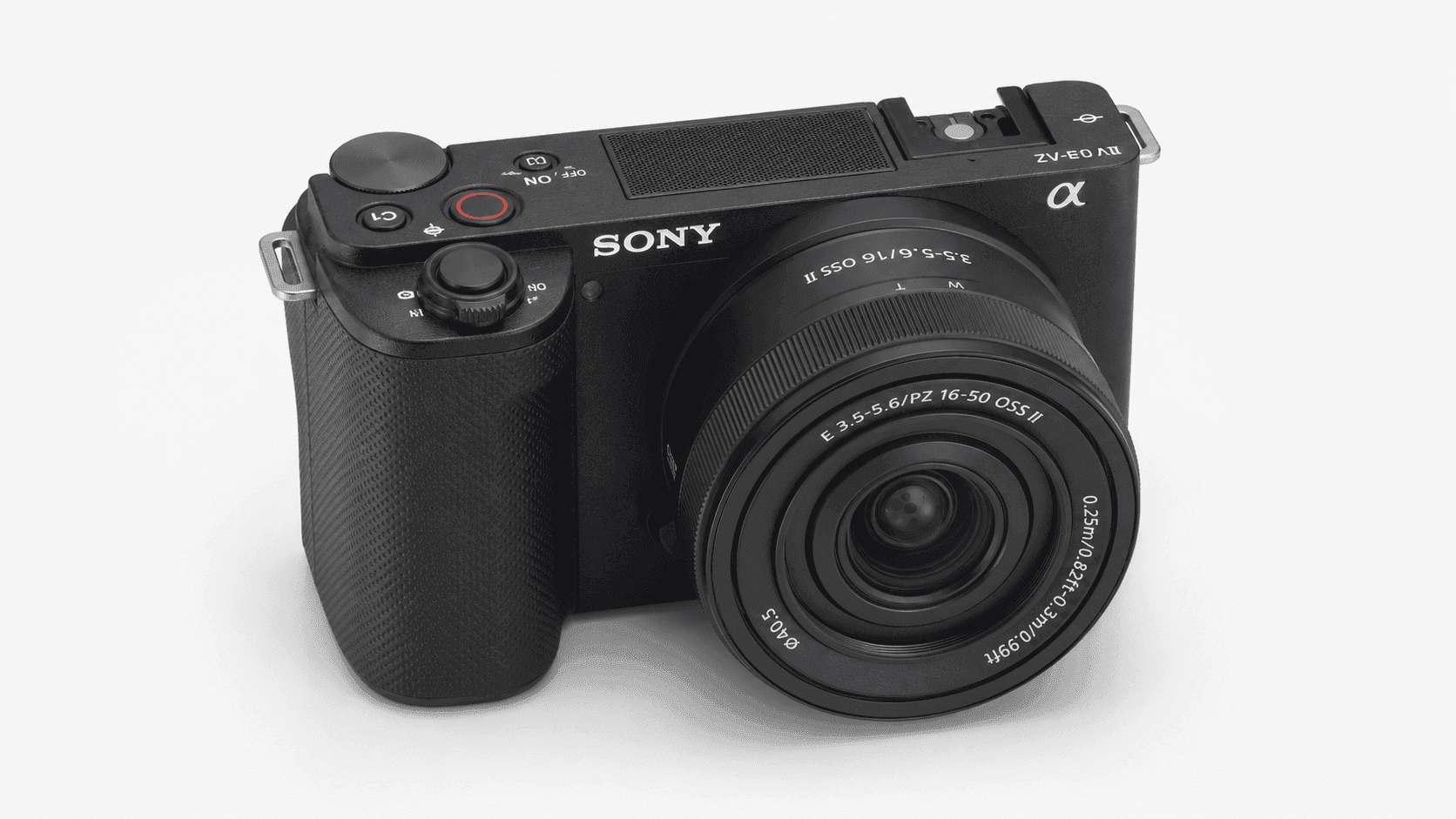
A look at the Sony ZV-E10 II and its 35-piece Pro Video Bundle: the 26.0MP APS-C sensor, 759-point phase-detection autofocus, 4K60p video, and the missing IBIS and viewfinder that decide whether it belongs in your bag.
Buying a creator camera usually means trading portability for control, or control for portability. Sony's second-generation vlogging body tries to sidestep that trade entirely. This Sony ZV-E10 II review works through what actually changed on the spec sheet — a new sensor, a denser autofocus array, faster video — and, more importantly, which creators those changes are aimed at. If you've been sitting on a first-gen ZV-E10 or shooting everything on a phone, the answer isn't the same for both of you.
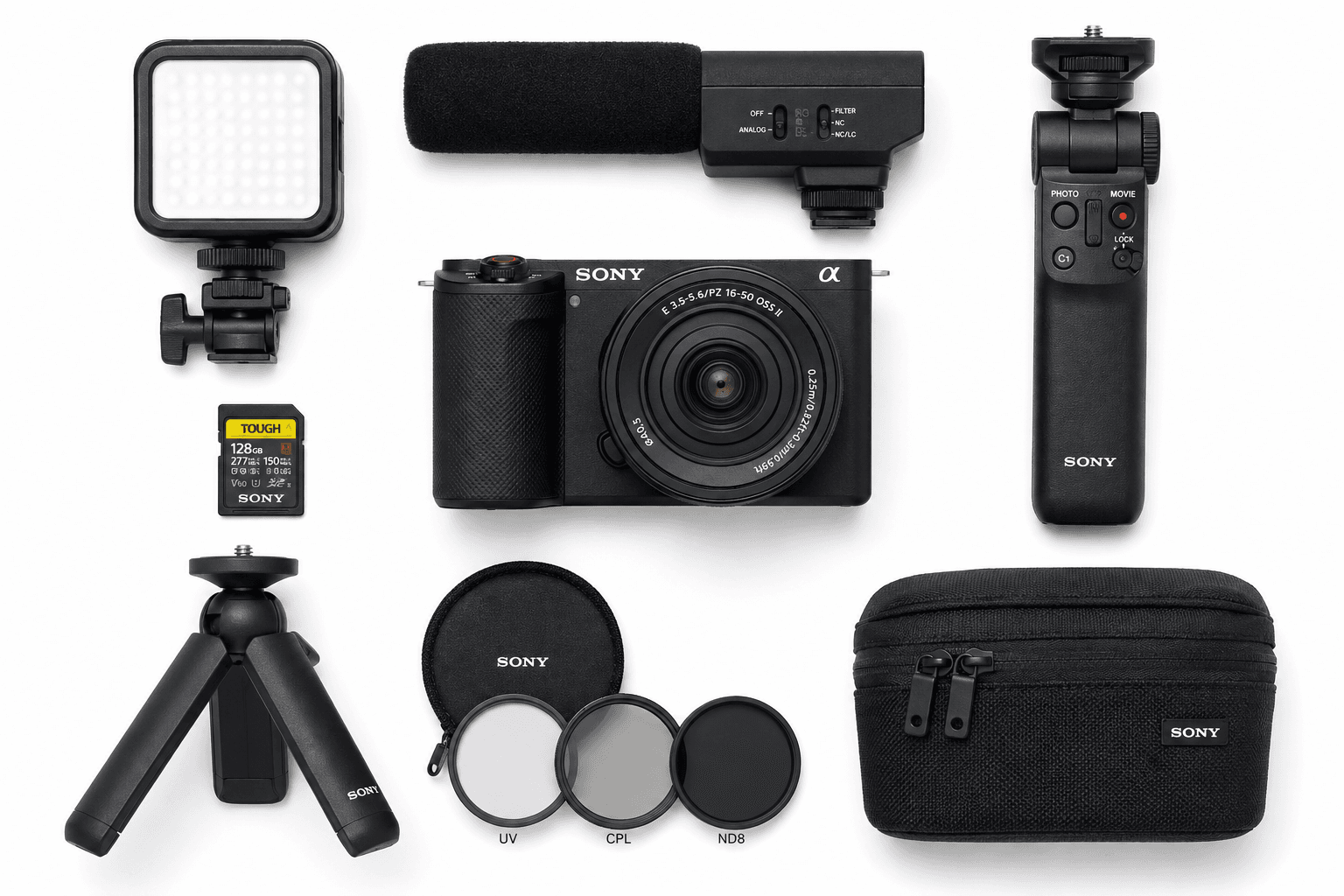
The subject of this analysis isn't a bare body — it's the 35-piece Pro Video Bundle, which wraps the camera in a 16-50mm f/3.5-5.6 OSS lens, an LED light, an external microphone, a 128GB high-speed SD card, a U-Grip stabilizer, and a stack of smaller accessories. That framing matters, because it changes who the package makes sense for: people who want to shoot this weekend, not assemble a kit over three months. Set against compact rivals like the Canon EOS R50 and Fujifilm X-S20, the real question is whether Sony's updated platform earns the space in your bag.
Some links in this article are affiliate links, which helps support GadgetPickr at no extra cost to you.
The Quick Take
A focused, unshowy upgrade. Moving to the 26.0MP APS-C Exmor R CMOS sensor and a 759-point phase-detection autofocus system fixes the two things that held the original ZV-E10 back for video-first creators, and the bundle removes the usual accessory scramble.
Closing out this Sony ZV-E10 II review: this is a targeted fix, not a reinvention. The 26.0MP APS-C Exmor R CMOS sensor and 759-point phase-detection autofocus system resolve the exact bottlenecks that frustrated first-gen owners, and 4K recording at up to 60p delivers the fluid motion and slow-motion headroom that social platforms reward. For vloggers, solo shooters, and travel creators, it lands in a useful middle ground between phone footage and a cinema rig, with a workflow built around speed and subject tracking.
The trade-offs are real and worth naming twice. That 16-50mm f/3.5-5.6 kit lens is portable and stabilized, but its variable aperture caps low-light work, so a bright prime is in your future. No sensor-based stabilization means handheld walk-and-talk depends on OSS glass or the electronic mode and its crop. Still photographers will miss the viewfinder. Weigh all that, and the calculation is simple: if your output is YouTube videos, TikToks, or travel vlogs and you want to shoot rather than shop, this bundle covers the body, lens, audio, and lighting in one purchase and gets you working immediately.
Sony ZV-E10 II
Best for creators comparing camera features, compatibility, and upgrade trade-offs.
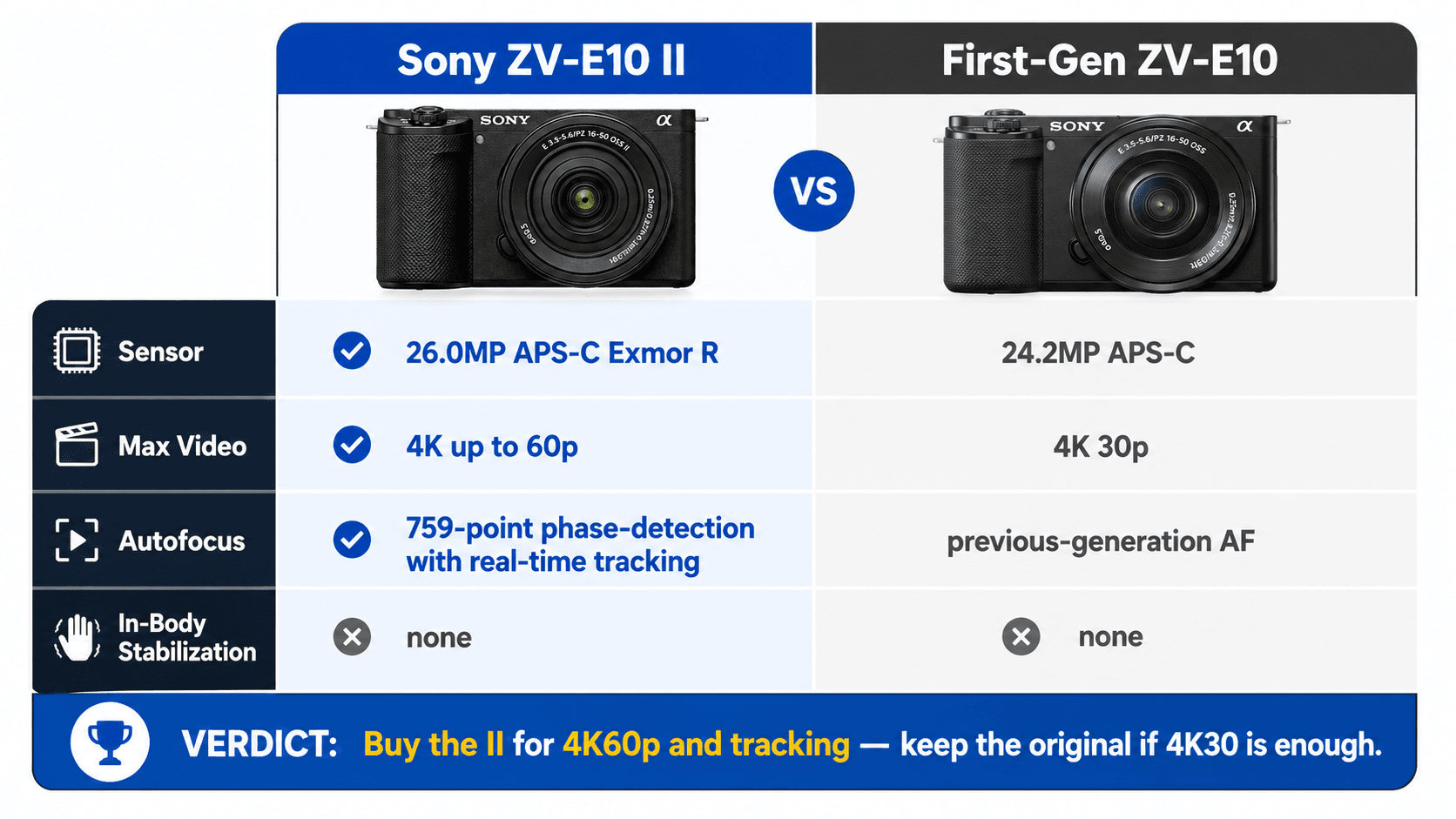
At the center of this body sits an upgraded 26.0-megapixel APS-C Exmor R CMOS sensor — that's 1.8MP more than the 24.2-megapixel chip in the camera it replaces. Back-illuminated architecture improves light collection efficiency and readout speed, and both of those feed straight into image quality and video behavior. Pair the sensor with a faster processing engine and you get 4K recording at up to 60 frames per second.
That frame rate is the headline. Sixty frames buys you smooth motion for b-roll and half-speed slow motion in the edit, without the old compromise of dropping to 1080p every time you wanted a slower shot.
Autofocus is where Sony's mirrorless line usually pulls ahead, and this model carries a 759-point phase-detection autofocus system. Those points blanket most of the imaging area and work alongside real-time tracking to hold a subject that won't sit still. Filming yourself? That's exactly the scenario this array targets — fewer focus hunts when you lean in, step back, or push a product toward the lens.
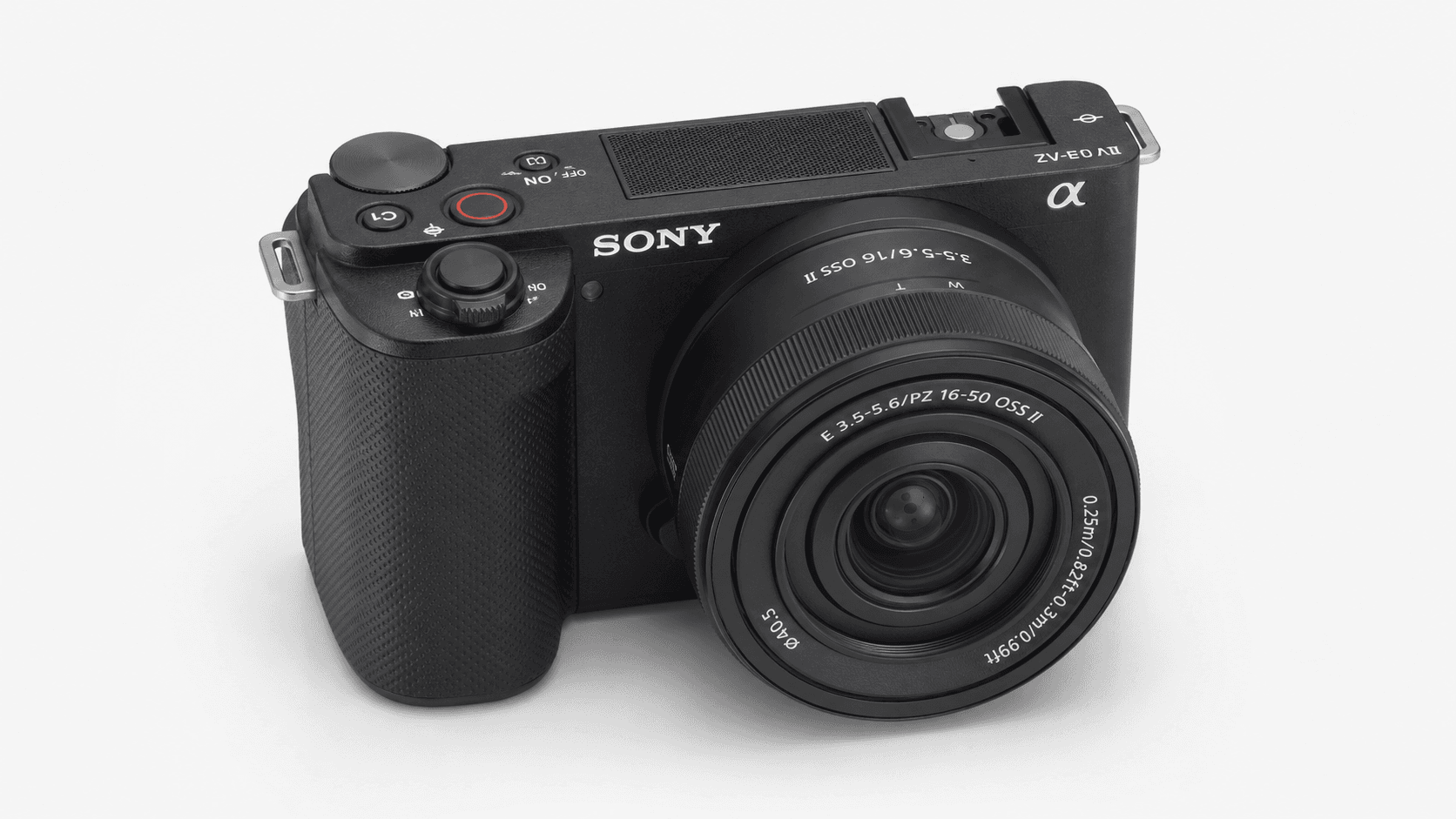
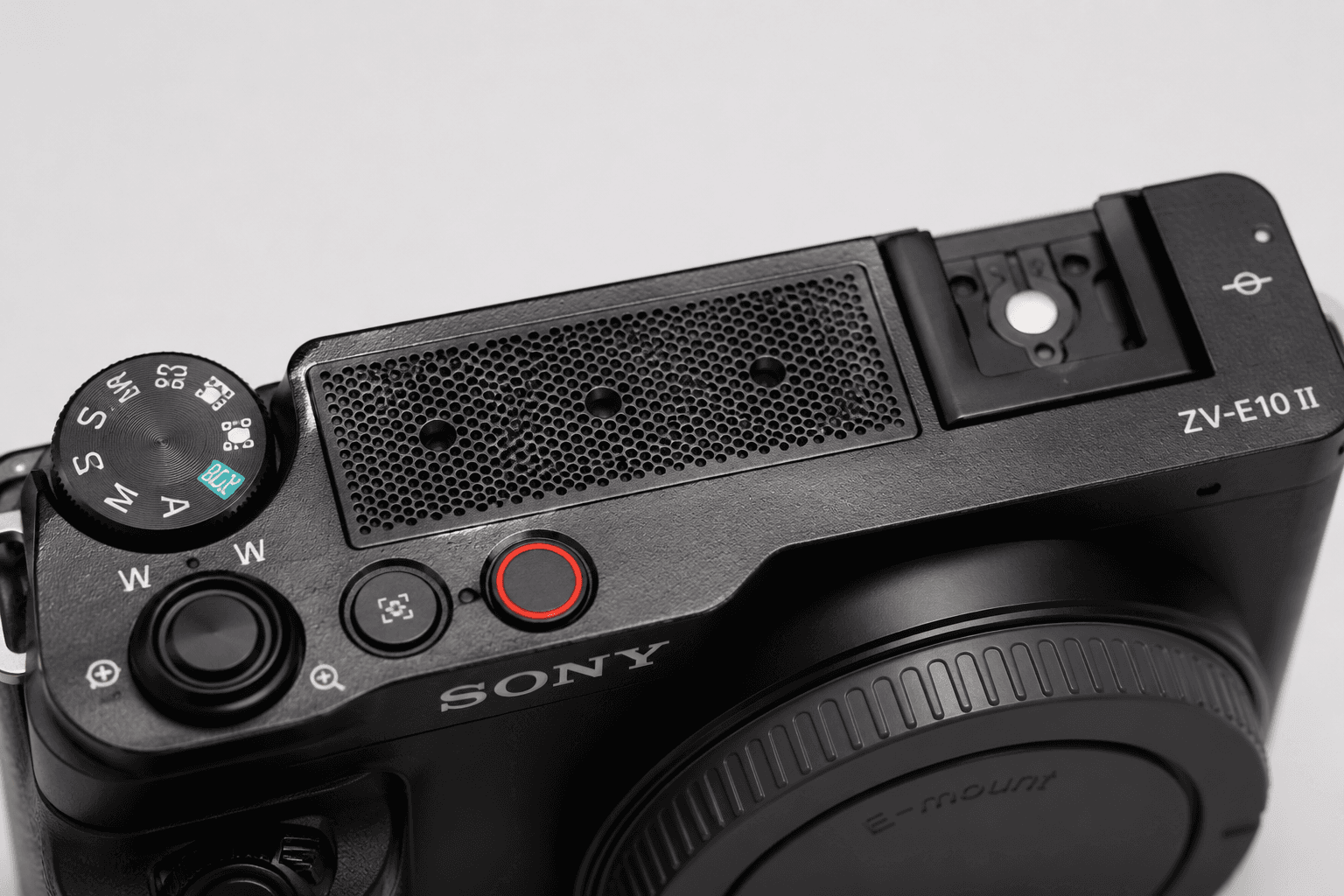
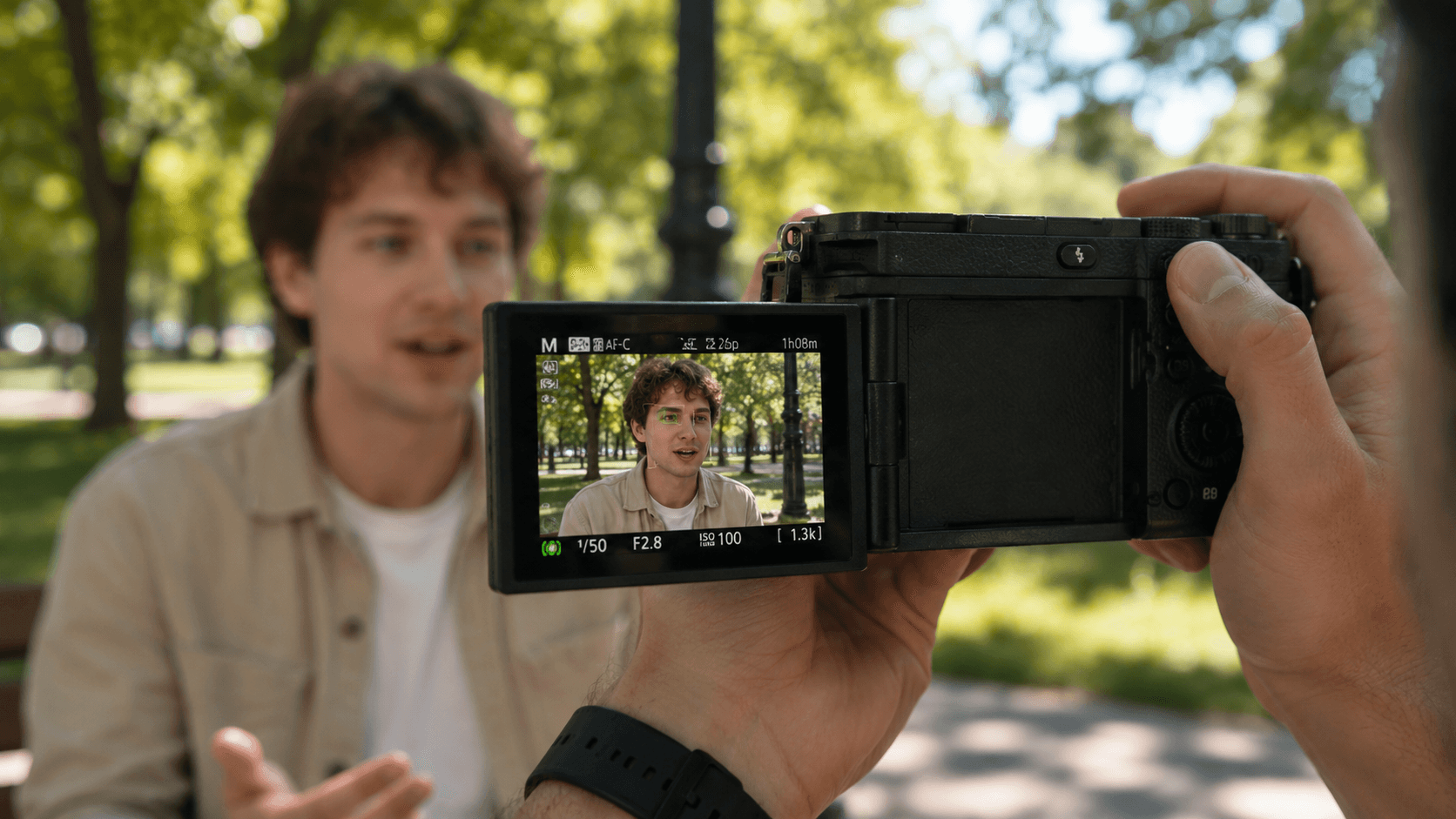
Physically, the chassis stays light and compact, built around handheld shooting and self-recording. There's no electronic viewfinder; a side-opening vari-angle LCD touchscreen takes its place, which is the more useful choice for framing yourself, shooting overhead, or working from the floor. Up top, a three-capsule directional microphone with an included wind screen makes the audio-first intent obvious.
Around that core, the 35-piece bundle builds out a working production kit. The 16-50mm f/3.5-5.6 OSS power zoom adds optical stabilization for walk-and-talk footage, while the LED light and external microphone solve the two problems that sink most amateur shoots: dim rooms and wind noise. Add the U-Grip stabilizer and compact tripod and you have an integrated solution for a static desk setup or a low-angle tracking shot, ready to deploy without a second shopping trip.
Sony ZV-E10 II Review: Key Specs and Compatibility
Here's the short version of what you're actually buying, drawn from the published specifications and the bundle listing.
Specification
Value
Sensor Technology
26.0 Megapixel APS-C Exmor R CMOS Sensor
Autofocus System
759-point Phase-Detection Autofocus with Real-Time Tracking
Maximum Video Resolution
4K UHD video recording at up to 60p
Kit Lens Model
E PZ 16-50mm f/3.5-5.6 OSS Power Zoom Lens
Rear Monitor
3.0-inch Side-Opening Vari-Angle Touchscreen LCD
Built-In Audio Hardware
Directional 3-Capsule Microphone with Dedicated Wind Screen
Bundle Storage Capacity
128GB Extreme Speed SDXC Memory Card
Stabilization Accessories
U-Grip Handheld Stabilizer and Compact Tabletop Tripod
Lighting and External Audio
Multi-LED Video Light and Auxiliary Shotgun Microphone
Camera Generation
Second Generation ZV-E10 Series Mirrorless Body
Target Use Cases
Vlogging, Content Creation, YouTube Video Production, Travel Photography
Primary Competitors
Sony ZV-E10, Fujifilm X-S20, Canon EOS R50, Panasonic Lumix G100
E-mount is the quiet advantage in that list. Native and third-party glass runs deep and cheap at the wide end, and the updated battery type plus a USB-C port cover longer shooting sessions and faster offloads to your editing machine.
What Stands Out
Three upgrades carry this generation, and the sensor swap is the foundation. Going from 24.2MP to 26.0MP on a back-illuminated APS-C chip sharpens clarity and improves light gathering, which matters most in the situations that usually defeat a small sensor — dim apartments, evening streets, restaurant interiors. The extra resolution also gives you room to crop into a 4K frame in post without the shot falling apart.
Then there's the autofocus. Density matters with phase detection, and 759 points spread across most of the frame is what keeps a subject locked as it drifts, turns, or walks toward the lens. Real-time tracking handles the handoff between face, eye, and body. The practical payoff is boring in the best way: you stop checking whether you're in focus and start paying attention to what you're saying.
Video is the third pillar. Support for 4K at up to 60p is the addition creators asked loudest for, and oversampling from the wider sensor readout is the reason 4K off an APS-C chip preserves fine texture — hair, fabric, skin tone — rather than smearing it. Internal processing has also been optimized to handle these demanding video modes while managing heat generation more effectively than the original model, which points to longer continuous recording sessions on shoot days that run long.
Strengths
Where this kit earns its keep is in removing friction. The bundled 16-50mm f/3.5-5.6 OSS power zoom is a useful walkaround range, and its built-in Optical SteadyShot works with the camera's electronic stabilization modes to settle handheld footage. For anyone filming while walking, that pairing takes the edge off the shakes that make a good take unusable.
Controls follow the same logic. The side-opening vari-angle LCD swings clear of the body and any top-mounted accessory, so framing a high-angle crowd shot or a floor-level product shot doesn't require guesswork. Touch input keeps setting changes off the menu screens.
The showcase and background defocus buttons are the other reason this body sells. One press shifts focus from your face to whatever you're holding up; another softens the background to isolate you from a cluttered room. Those are shortcuts around aperture math and manual focus pulls, and for a solo creator with no second pair of hands, they're the difference between a polished clip and a reshoot.
Weaknesses
Now the compromises, and there are real ones. No electronic viewfinder is the big structural omission for hybrid shooters — the vari-angle LCD covers video monitoring, but a rear screen alone is the known weak point for stills in direct sun. If you assess exposure through a finder out of habit, this body will annoy you, which is a fair reminder that it's a video tool first.
Stabilization is the second gap. There's no in-body image stabilization, so with an unstabilized prime you're relying entirely on the digital mode, and that introduces a crop. Your 16mm suddenly frames tighter than 16mm. Fixing it means backing up or buying wider glass. Sensor readout is quicker than the previous generation, which cuts rolling shutter, though fast pans on APS-C sensors in this class can still produce vertical distortion.
Small body, small grip. Larger hands and heavier lenses will feel the imbalance unless you add a cage or an external grip. And with a single UHS-II SD card slot, there's no live backup while you record, which is the usual trade for a camera this size.
Best Alternatives
Start inside Sony's own lineup. The original first-generation ZV-E10 costs meaningfully less and shares the E-mount and the vlogging control layout, but you give up the 26.0MP sensor, 4K60p, and the 759-point phase-detection autofocus system — a fine trade if 4K30 talking-head video is all you shoot.
Fujifilm's X-S20 is the ecosystem jump. It adds in-body image stabilization and the film simulation profiles that let you skip color grading entirely, though it sits above the ZV-E10 II on price, so you're paying for stabilization and looks rather than tracking speed.
Canon's EOS R50 is the simpler machine. Dual-pixel autofocus and an intuitive menu system make it welcoming for beginners, but the RF-S lens catalogue is thin next to Sony's mature E-mount, which limits where you can take it later. The Panasonic Lumix G100 goes smaller still for travel vloggers, trading away versatility with contrast-detect autofocus and a heavier 4K crop. Weigh those against each other and the ZV-E10 II holds a competitive middle: fast tracking and 4K60p in a body you can carry all day.
Who Should Buy It
Buy this if you make video for a living or want to. Solo creators, vloggers, and YouTube producers get the single strongest reason to pick it: a 759-point phase-detection system that keeps you sharp while you move, with no assistant behind the camera. Product reviewers and tutorial makers benefit twice over, since the bundled 16-50mm f/3.5-5.6 OSS lens and the showcase modes were built for exactly that hold-it-up-to-the-lens moment. Travel vloggers get a body that fits in a daypack, plus 4K60p for slow-motion b-roll that actually holds together. And if you're graduating from phone filmmaking, this bundle hands you a lens-interchangeable system with the accessories already sorted.
Commission may be earned from this link, at no extra cost to you.
Who Should Skip It
Skip it if stills are your main output. That's the clearest line here: no electronic viewfinder means bright-daylight framing is a struggle, and the ergonomics are laid out for video rather than fast shooting. Action and sports shooters will find the controls awkward for quick adjustments mid-burst. Filmmakers who need mechanical in-body image stabilization for handheld walking shots should look at a sensor-shift body instead, because electronic stabilization plus a crop only goes so far. And if your work runs through 10-bit internal recording workflows or demands dual card slots for instant backup on client shoots, this compact vlogging camera will feel too restrictive.
Sources & References
Specifications and claims in this analysis were cross-referenced against the sources below.
Upgrade if you want 4K60p and the denser 759-point autofocus. If you shoot 4K30 talking-head video and already own E-mount glass, the first-generation body still covers that job for considerably less.