A look at the Anker 737 PowerCore 24K: 140W Power Delivery 3.1 output, a 24,000mAh reserve, three ports, and the buyers who actually need that much wattage in a bag.
Running a laptop away from a wall outlet used to mean hauling a brick that could barely keep the machine asleep, let alone awake. That math has changed. This Anker 737 PowerCore 24K review looks at a pack built around 140W Power Delivery 3.1 output and a 24,000mAh cell, which is enough headroom to keep a MacBook Pro or a Steam Deck running at working speed instead of trickling along in standby. Three ports carry the load here: two USB-C and one USB-A, with the USB-C side running in both directions so the pack refills about as aggressively as it drains. The real question is not whether 140W is a lot of power. It is whether your bag actually needs it.
Some links in this article are affiliate links, which helps support GadgetPickr at no extra cost to you.
The Quick Take
A 140W ceiling and a 24,000mAh reserve put this pack in a different class than the phone-first batteries most people carry. If your daily kit includes a power-hungry notebook or a handheld console, that wattage headroom is the whole point. If it does not, you are paying in weight for capability you will never touch.
Verdict
Buy the Anker 737 PowerCore 24K if you regularly work off-grid with a laptop or handheld console — 140W over a bidirectional USB-C port is the one thing phone-first batteries cannot do, and it is the reason to choose this pack. Skip it if you mainly charge a phone, because the weight buys capability you will not use.
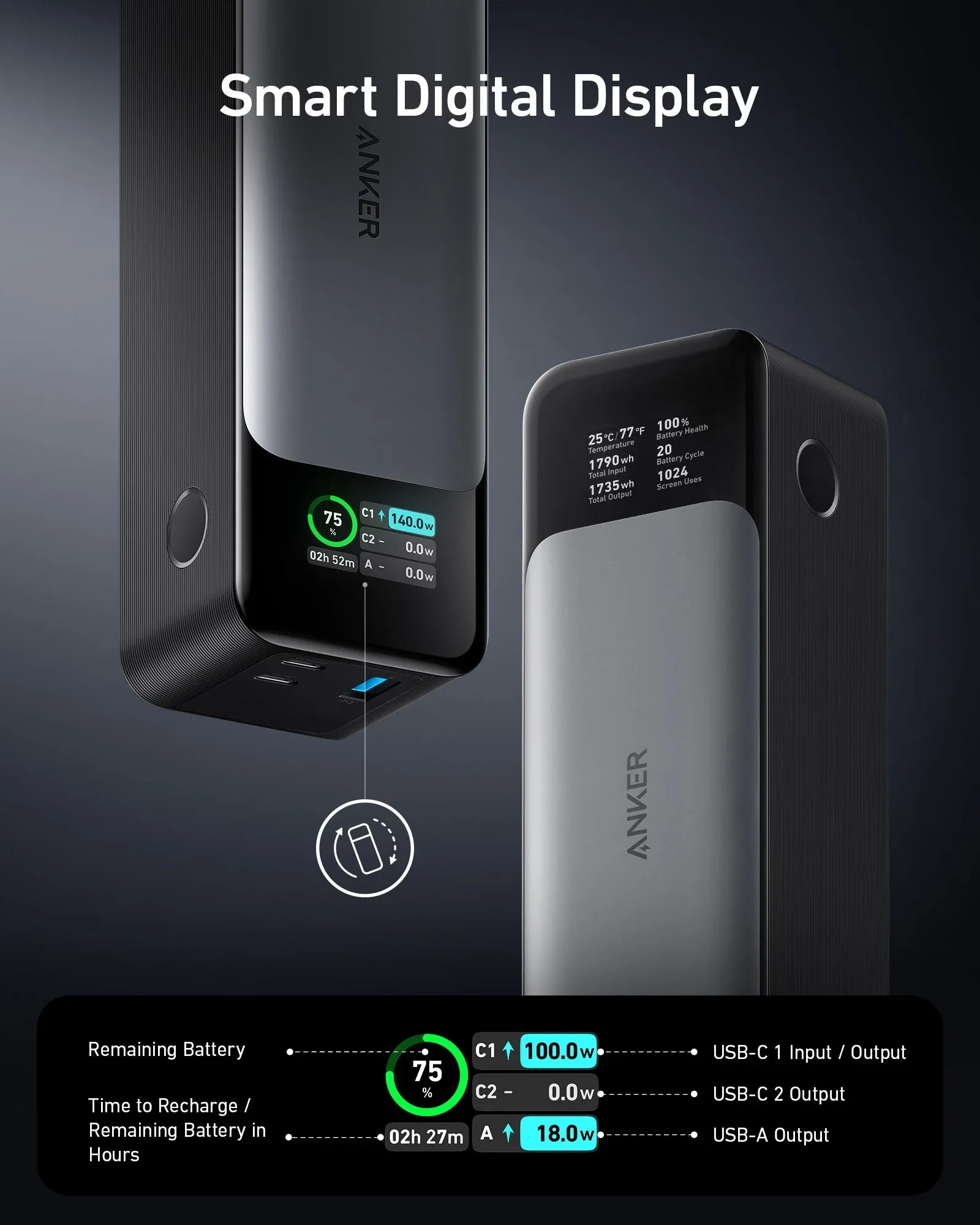
The display backs that verdict up in daily use, reporting live input and output wattage, battery health, and remaining runtime instead of leaving you to guess. A 24,000mAh reserve behind it refills thin-and-light laptops, tablets, or flagship phones several times over.
Trade-offs are real and worth naming. It is heavy and shaped like a brick, multi-port use splits the wattage pool and slows your laptop, and full-speed refills demand a high-wattage adapter plus a 140W-rated E-Marker cable. None of that is a defect. It is the cost of the ceiling.
Weighed as a whole, this Anker 737 PowerCore 24K review lands on a straightforward recommendation: for fast laptop charging, flight-legal capacity, and clear telemetry, it is a practical buy that sits neatly between pocket batteries and portable power stations.
Anker 737 PowerCore 24K
Best for buyers who want a high-wattage travel battery with the specs covered in this review.
Positioned above entry-level 20,000mAh packs
Anker 737 PowerCore 24K Review: Product Overview
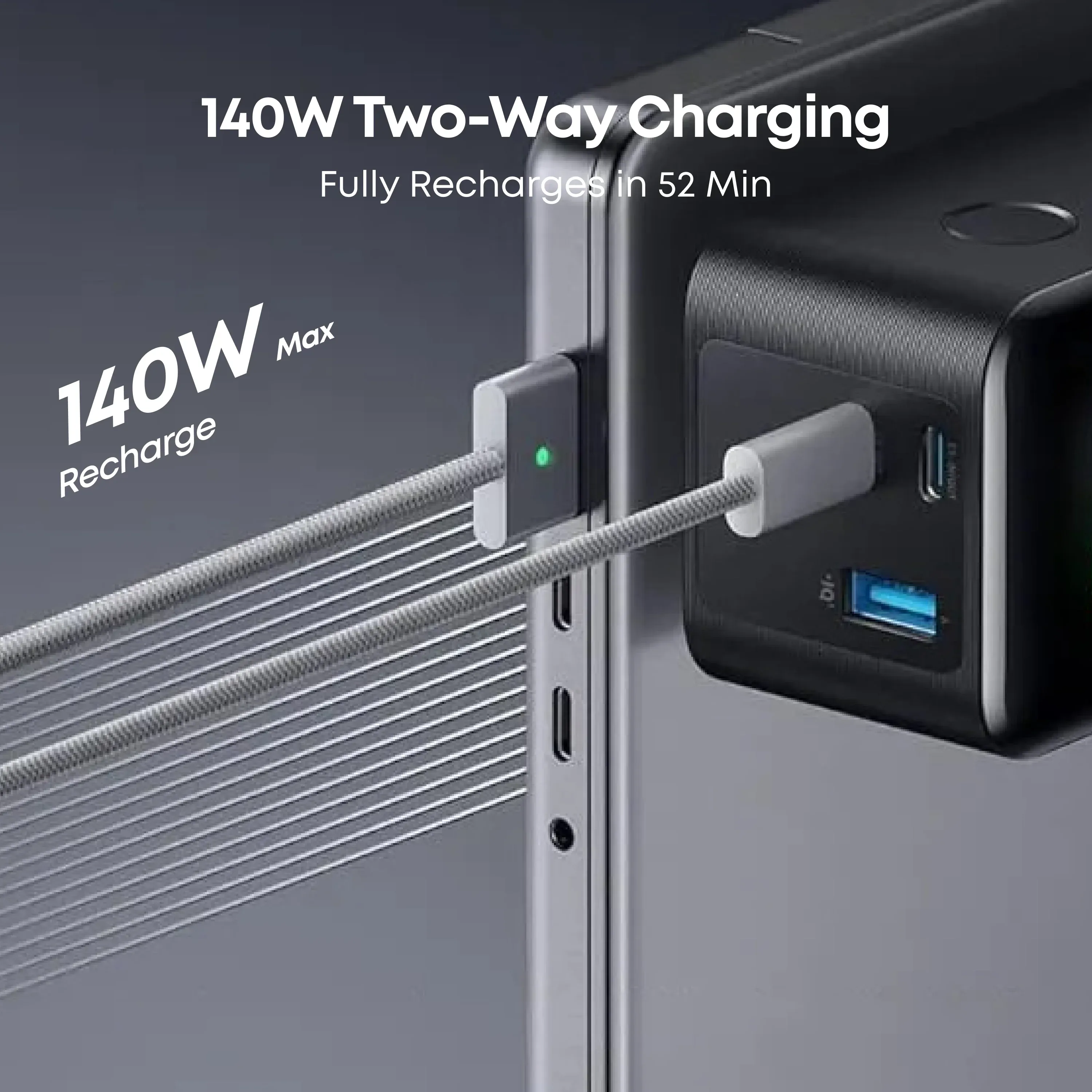
Mobile charging is a balancing act between how much energy you store and how fast you can move it. Anker's answer here is a 24,000mAh cell paired with a 140W maximum output over USB Power Delivery 3.1, which is the newer PD revision that unlocked wattage above the old 100W cap.
That capacity sits in useful territory for air travel, landing under the 100 watt-hour threshold airlines generally enforce on lithium batteries in carry-on bags. You get meaningful off-grid runtime without a gate agent conversation.
What 140W buys you is active-use charging. Push that much through a single USB-C connection and a MacBook Pro, a Dell XPS, or a Steam Deck keeps drawing at full operational speed while you actually use it, rather than gaining a few percent per hour with the lid closed. Under a heavy compile or an export, that gap matters.
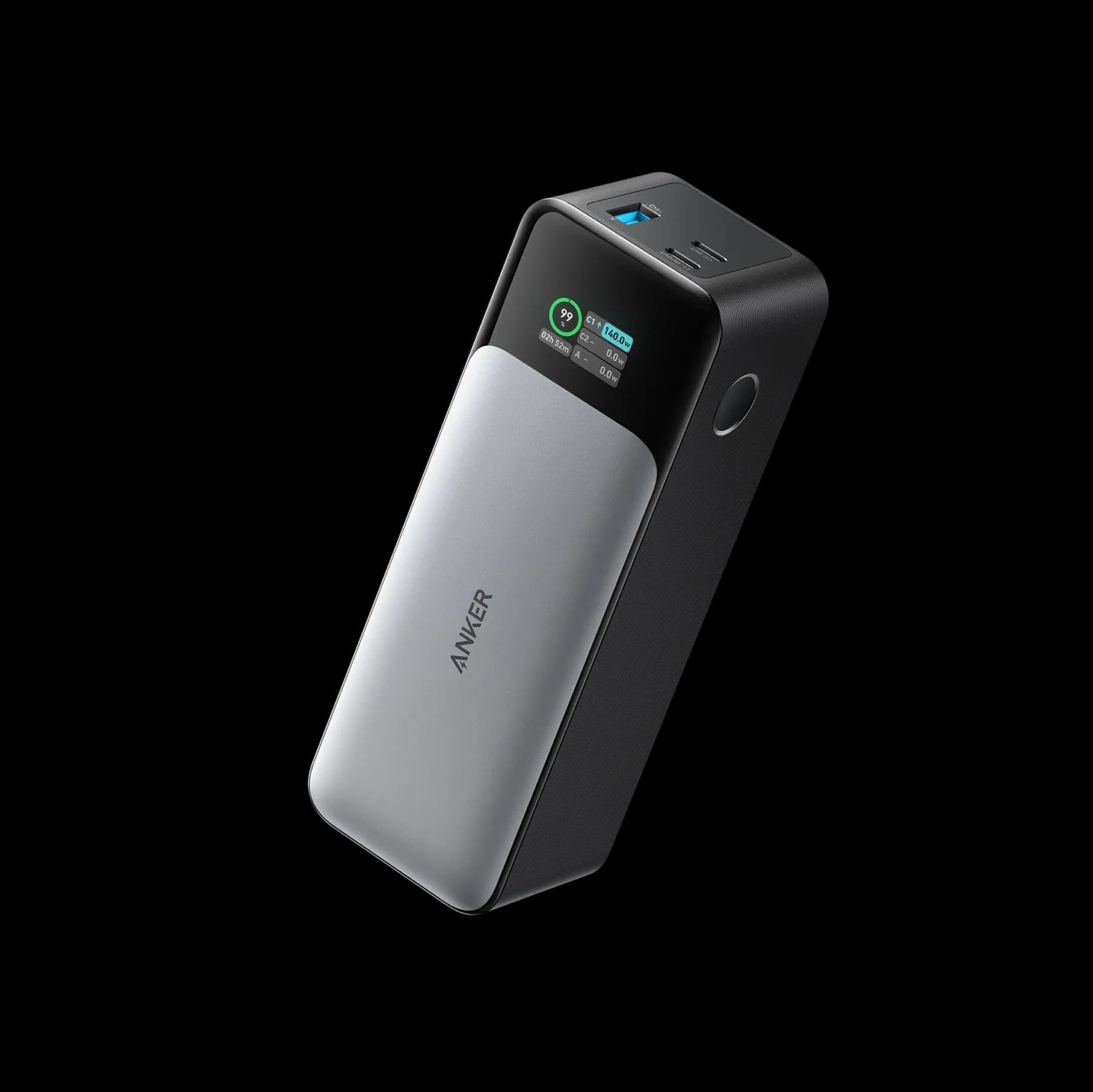
Port count is deliberately lean: two USB-C, one USB-A, three total. Both USB-C ports handle bidirectional traffic, so the same connection that dumps 140W into a laptop also accepts high-wattage input to refill the pack. That single USB-A holdover covers older cables, wearables, and the accessory gear that has not made the switch yet.
Plug in more than one device and internal power-management circuitry redistributes wattage across the connected load, holding voltage lines stable and keeping thermals in check. For hardware using Programmable Power Supply (PPS) — Samsung Galaxy S series phones, recent iPads — the pack steps output voltage down in fine increments. Less heat inside the phone, better sustained charging, healthier cells over the long run. Anker rates the capacity at roughly 4.13 charges for an iPhone 16 Pro, or about 1.33 for a 2024 13-inch iPad Pro.
Compatibility spans USB-C and USB-A gear across macOS, iOS, Android, and handheld gaming platforms, with Power Delivery 3.1 and PPS both supported.
What Stands Apart
Plenty of batteries advertise a big number on the box and then throttle the moment a real laptop negotiates for power. Holding a full laptop-grade profile is the harder trick, and it is where the 140W ceiling earns its keep. Power Delivery 3.1 negotiation plus smart allocation lets the pack track what each connected device is asking for and adjust as the workload shifts.
Then there is the screen. Instead of four ambiguous LEDs, this class of pack uses a color display reporting live input and output wattage, estimated time to full or empty at the current draw, battery health, and internal temperature. You stop guessing. During a remote edit or a long-haul flight, knowing you have 90 minutes of laptop runtime left is worth more than a blinking dot.
Thermal management matters just as much at this wattage. Moving 140W in either direction generates real heat, and the design leans on internal heat-dissipation layers plus temperature monitoring that eases power parameters before thresholds are hit. Power gets trimmed, not cut — your render session does not die mid-frame.
Refill speed closes the loop. Because the primary USB-C port accepts up to 140W input, a 24,000mAh reserve tops up in a fraction of the time a standard pack needs, assuming you bring a matching high-wattage wall adapter and a 5A USB-C cable. One airport layover is often enough.
Strengths
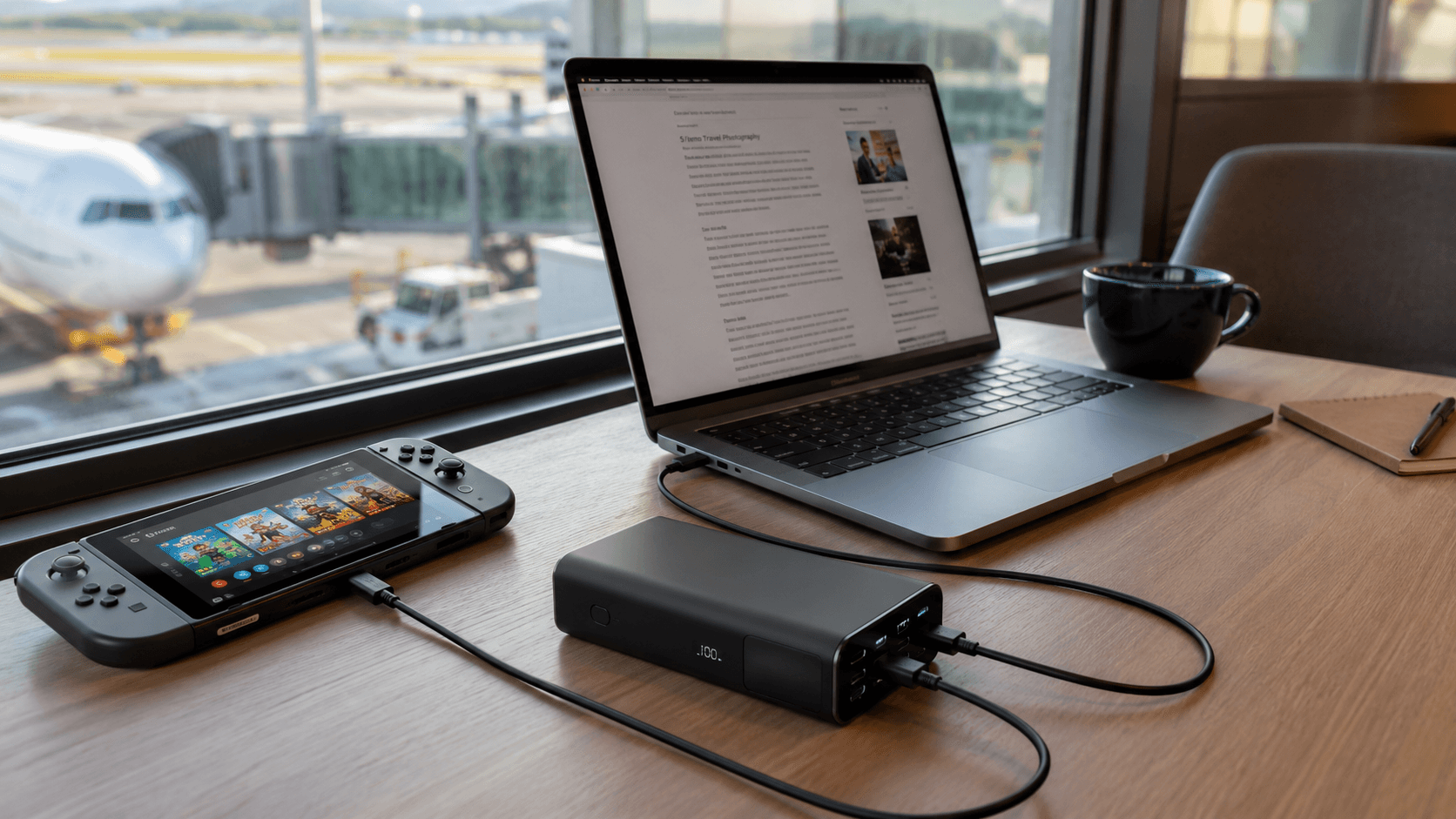
Think of it as a wall outlet you packed. For remote workers and media crews, the practical win is uninterrupted workflow: laptop on one USB-C port, phone or camera battery on another, and no scavenging for sockets in an airport lounge or on a shoot. A full day of computing away from fixed power is realistic rather than aspirational.
Port mix pulls its weight too. Two high-speed USB-C connections handle the modern half of your kit while the USB-A port keeps older headphones, field monitors, and cables useful. With several devices attached, the controller splits available wattage and holds each one to a stable voltage inside its safe intake limit.
Travel practicality rounds it out. Sitting under the 100 watt-hour carry-on limit means it flies with you, and the dense enclosure shrugs off the knocks that come with living in a camera bag. Add a fitted sleeve and it survives being wedged between a laptop and a fistful of cables without scratching either.
Weaknesses
Physics sends a bill. Packing 24,000mAh alongside thermal layers and display electronics produces a heavy, brick-shaped object that belongs in a backpack, not a jacket pocket. Nobody is carrying this to brunch.
Power splitting is the second catch. Single-port mode gives a laptop the full envelope; add a phone or a camera dock and the controller divides that envelope across everything connected. Your notebook drops to a lower power tier, and charge times stretch for every device on the pack.
Maximum speed also brings accessory dependencies. Hitting full input and output requires a high-wattage wall charger and a 140W-rated E-Marker USB-C cable, neither of which you likely already own. Conversion at this wattage sheds energy as heat as well, so usable output delivered to your devices always lands below the nominal cell rating.
Best Alternatives
Different priorities point to different packs, whether you want more total wattage, more capacity, or less bulk in the bag.
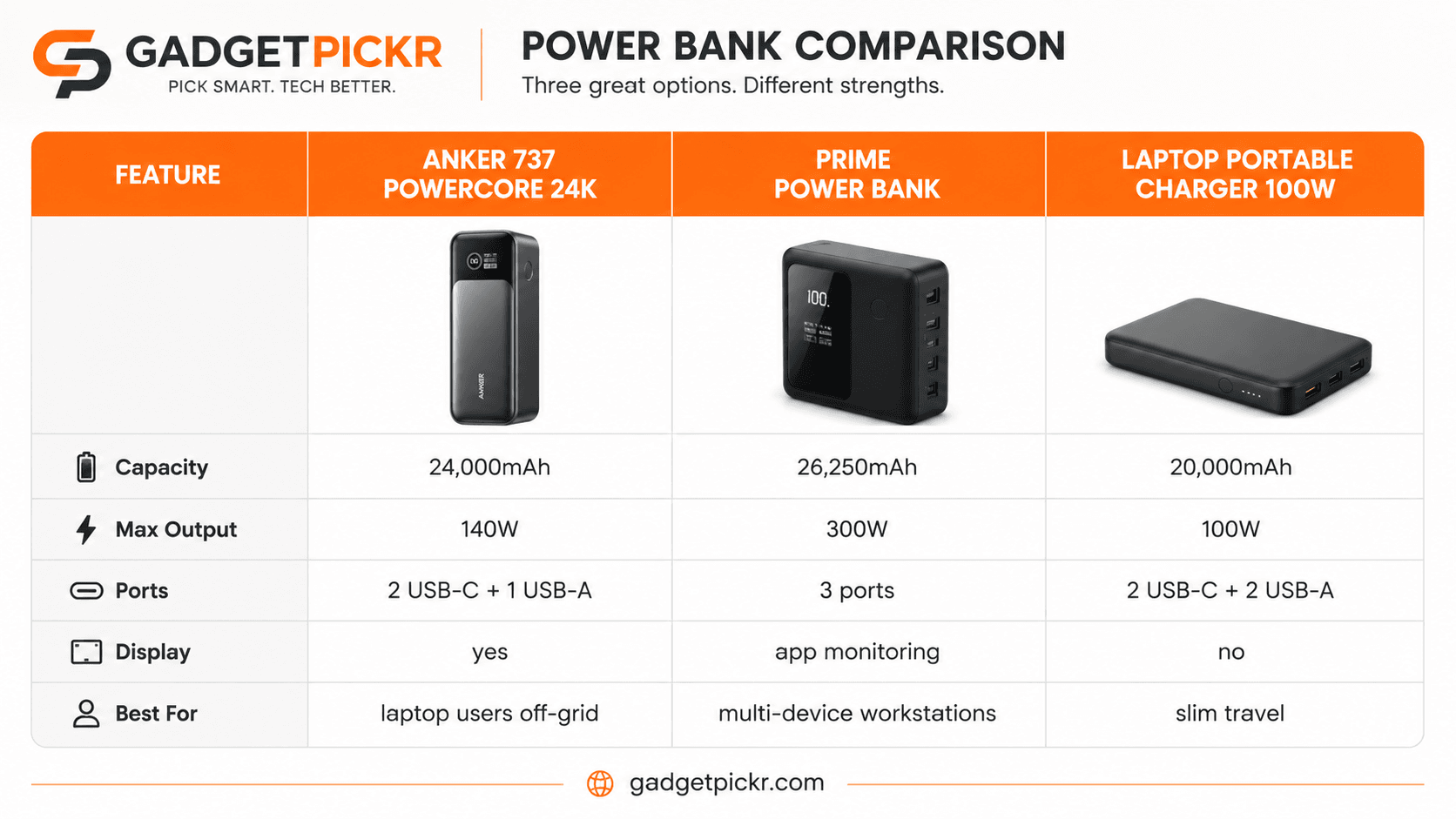
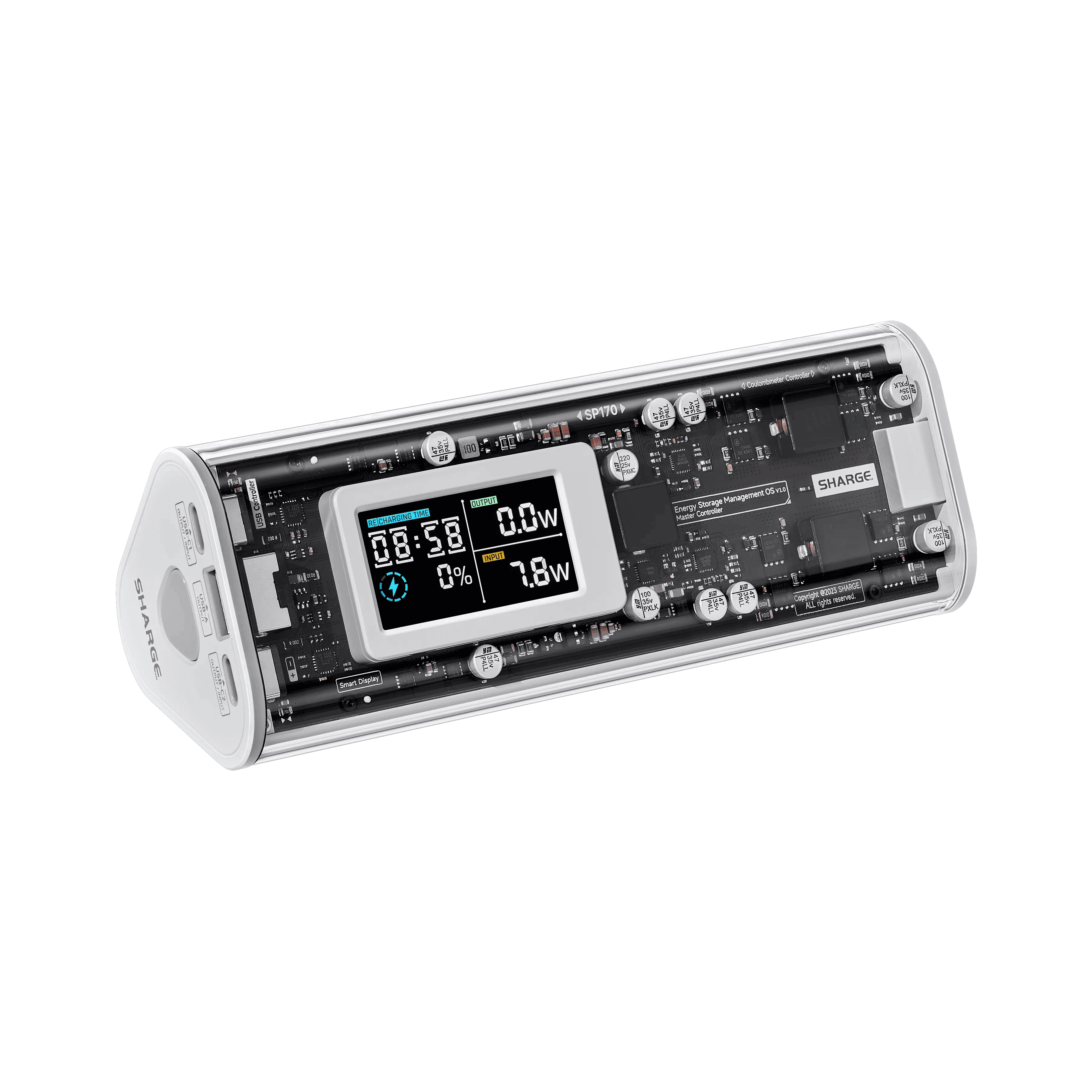
The Prime Power Bank, at 26,250mAh and a 300W maximum aggregate output, trades a higher price and a bigger footprint for enough headroom to feed a workstation-class laptop and a fast-charging phone at once, with app-based monitoring and airline compliance intact.
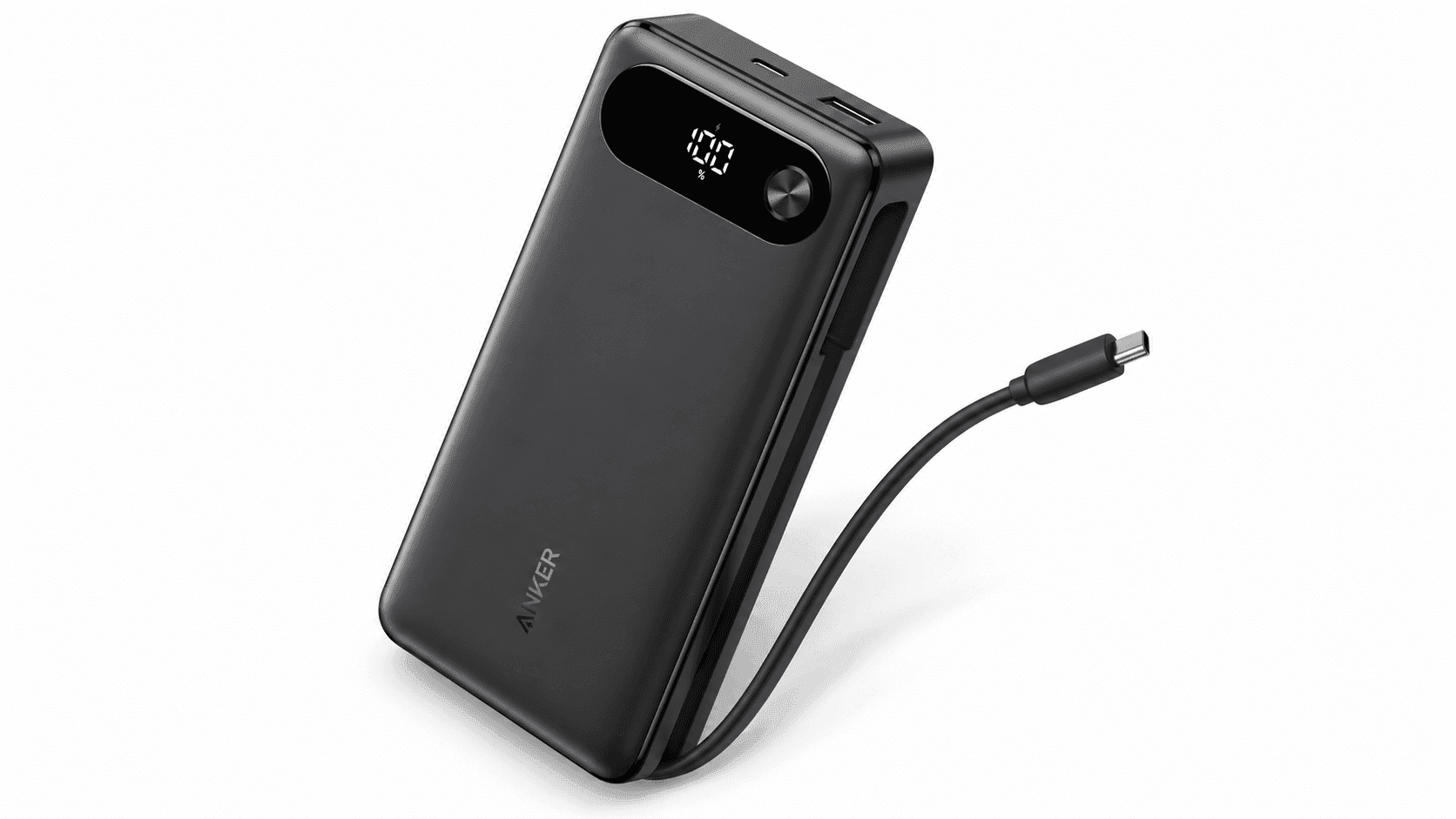
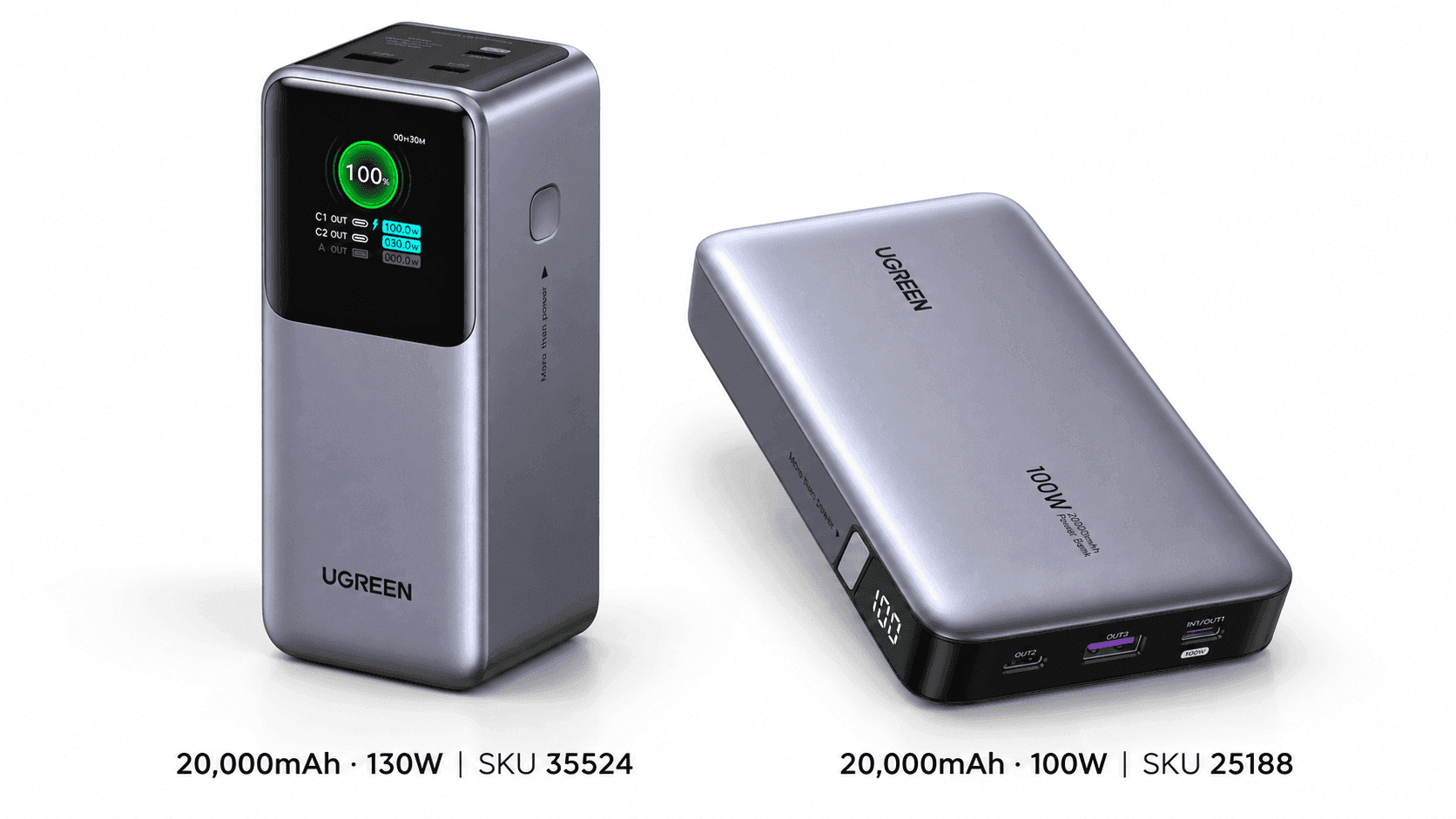
Going the other direction, the Laptop Portable Charger 100W 20,000mAh trades peak wattage and capacity for a flat-pack shape that slides into a laptop sleeve, with 100W single-port output that still covers most notebooks, tablets, and a Steam Deck.
And the Travel Case for Anker 737 Power Bank 24000mAh is not a power source at all — it is a hard EVA shell that trades a little pack space for protection against port damage and stray button presses in a crowded bag.
Who Should Buy It
Buy it if your work depends on a laptop that draws real current away from outlets. Remote professionals, digital nomads, and anyone whose day runs on a MacBook Pro, a high-end Windows ultrabook, or a Steam Deck get the single strongest reason to choose this pack: 140W of single-port output keeps those machines running at full performance instead of slowly losing ground.
The display sweetens it for anyone who plans around numbers. Watching exact draw, remaining percentage, and time-to-full turns a coffee-shop stop into a decision you can make on evidence. One pack, a laptop and a flagship phone charging together — that is the use case this hardware was shaped around.
Commission may be earned from this link, at no extra cost to you.
Who Should Skip It
Skip it if your charging life is a phone and a set of earbuds. Here is the single strongest reason: you would be carrying a brick-sized battery for wattage you will never request, when a 10,000mAh to 20,000mAh pack does the same job at a fraction of the weight.
Ultralight travelers counting ounces should look elsewhere on principle. So should budget buyers who need nothing beyond 18W to 30W speeds, since simpler packs cover that for far less. Prefer slim, quiet packing over fast laptop charging and live telemetry? A flat-style charger fits your life better.
Sources & References
Specifications and claims in this analysis were cross-referenced against the sources below.
Yes. Its 140W Power Delivery 3.1 output over a single USB-C port supplies enough wattage to keep a MacBook Pro running at full speed under load, rather than only topping it up in sleep mode.