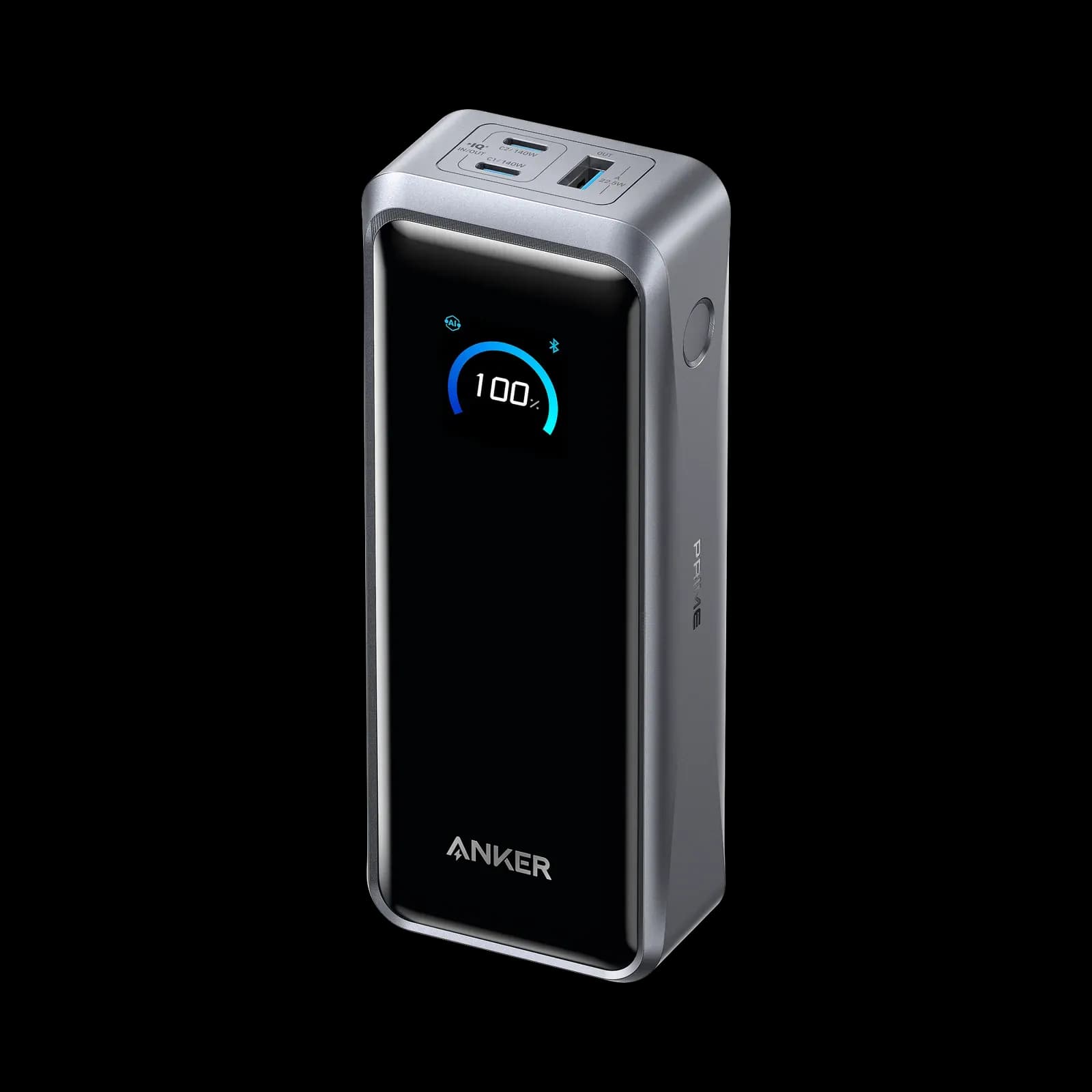
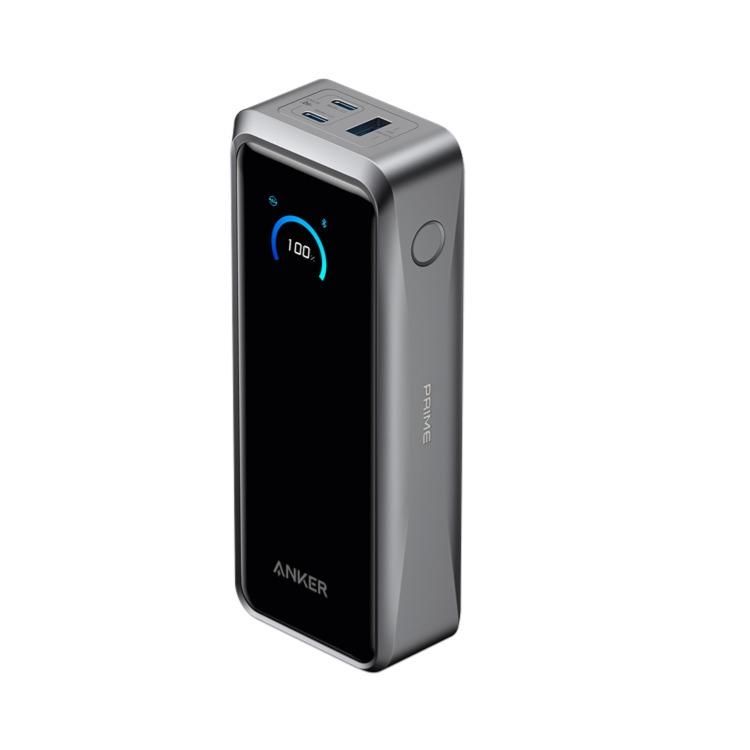
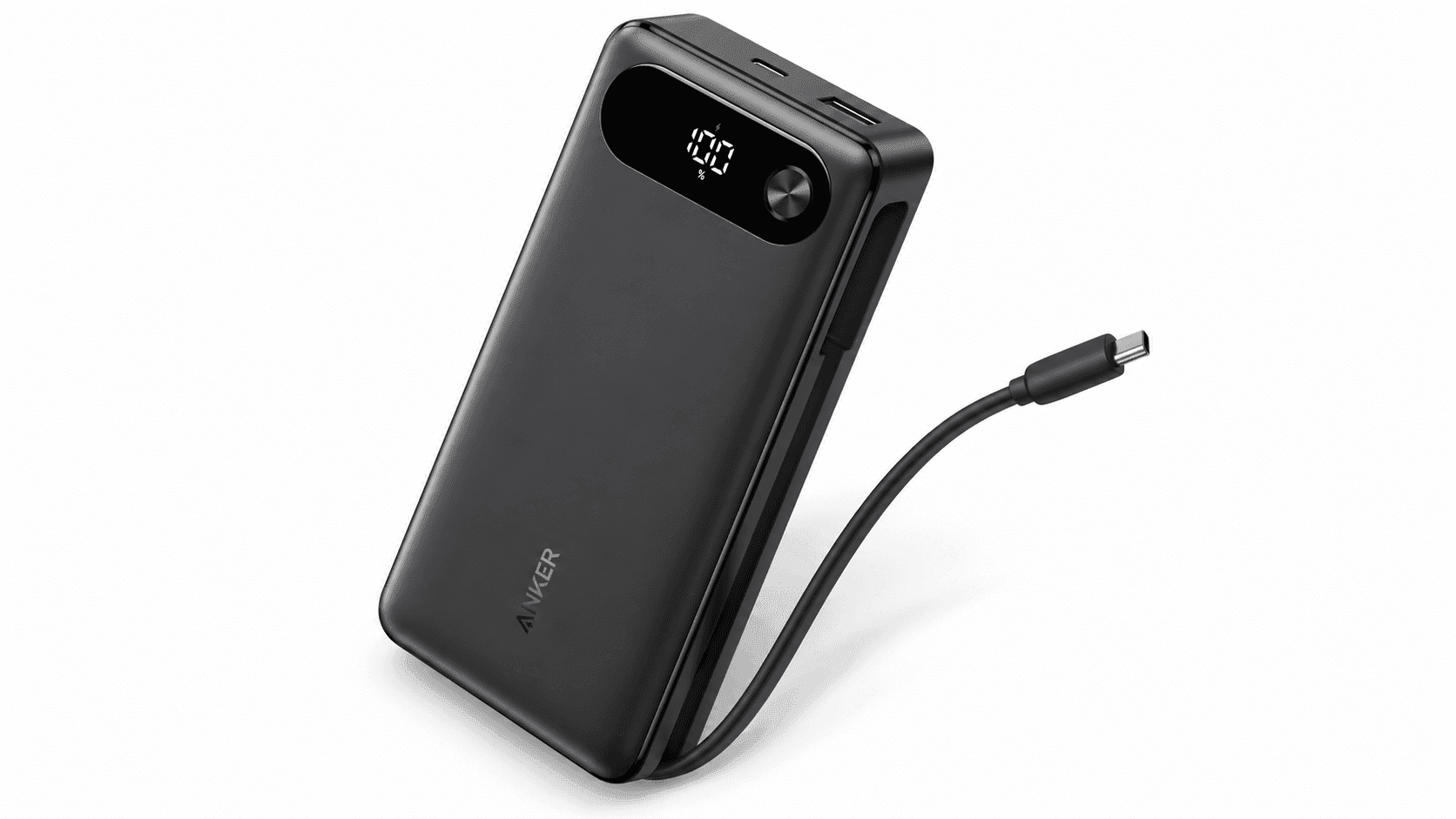
A look at the Anker Prime 20000 power bank: 200W combined output, three-port power sharing, onboard telemetry, and whether its capacity class actually fits your gear.
Laptops got hungrier. Phones and tablets followed, and the 10,000mAh brick that used to live in your bag quietly stopped being enough around the time USB-C became the only charging port that mattered. Anker's Prime line answers that shift with a battery built for people whose daily kit draws real wattage rather than trickle amounts.
Three ports, two-way fast charging, a smart display, and a combined output ceiling of up to 200W — that is the pitch, and it is aimed squarely at anyone running a laptop, a tablet, and a phone off one pack between outlets. Capacity here is engineered around an aviation regulation rather than a round marketing number, which turns out to matter more than it sounds. This Anker Prime 20000 review looks past the milliamp-hour headline at how power actually gets split between ports, what the heat budget costs you, and who genuinely needs this much reserve.
Some links in this article are affiliate links, which helps support GadgetPickr at no extra cost to you.
The Quick Take
Dense reserve power, laptop-grade output through USB-C, and a screen that tells you exactly what is happening. Buy it if you charge a notebook away from outlets. Skip it if your heaviest load is a phone.
Buy it if you regularly charge a USB-C laptop away from outlets — the single strongest reason is that laptop-grade output through one port lets you leave the wall brick at home entirely, which no 10,000mAh pack can match. Skip it if your heaviest device is a phone, for the equally simple reason that you would be hauling roughly triple the weight and price for reserve capacity you will never drain.
Go in knowing two things. Aggregate output is shared, not multiplied, so a phone and tablet plugged in alongside your notebook will slow that notebook down. And the rated speeds assume 100W-rated E-marker USB-C cables — cheap cables cap performance no matter what the pack is capable of.
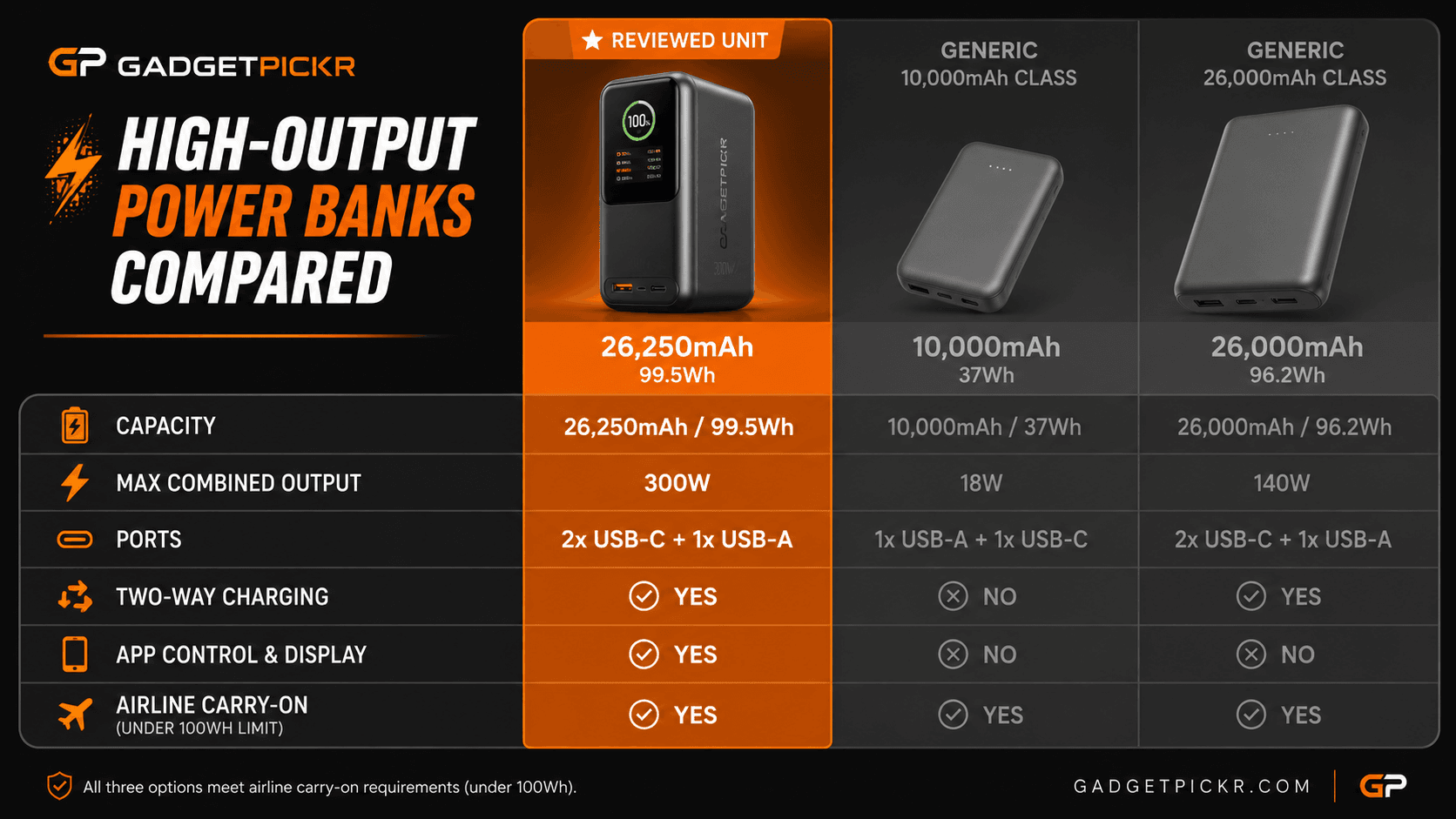
Against neighboring capacity classes, this footprint balances runtime against the reality of carrying it: 26,000mAh-class banks stretch further on multi-day trips but weigh more, while 10,000mAh units travel beautifully and run out of headroom the moment a laptop appears. Closing out this Anker Prime 20000 review, the buyer profile is narrow but well served — dense reserve energy, fast laptop top-ups, and a live wattage readout in one portable chassis.
Anker Prime 20,000mAh
Best for travelers and remote workers charging a USB-C laptop plus two smaller devices from one pack.
A mid-range option within the high-output power bank class
Inside sits a dense cell stack paired with power-management circuitry that handles all the negotiating. The unit features a total energy capacity of 20,100mAh, equivalent to roughly 72.36Wh of stored energy. That number is not an accident — commercial aviation caps lithium-ion batteries in hand luggage at 100Wh without prior airline approval, so parking just below the ceiling buys frequent flyers every watt-hour they are legally allowed to carry.
Distribution runs across three ports, two USB-C and one USB-A, so a notebook, a tablet, and a handset can all draw simultaneously. The maximum total combined output cap reaches up to 200W across its active ports. Two-way charging means refill speed scales with whatever wall brick you own, and USB Power Delivery plus Programmable Power Supply handle voltage and current negotiation device by device.
Where this gets interesting is the monitoring. An onboard smart display shows the remaining battery percentage and live input and output wattage. Ever wondered why your laptop slowed down the moment you plugged a phone into the second port? This tells you, in numbers, instead of leaving you guessing.
Heat is the enemy of any converter working at these levels, and the housing is built to shed it while surviving life in a backpack. Compact outer dimensions keep the pack manageable despite the cell density packed inside. For someone currently juggling two or three separate batteries, one unit does the whole job.
Key Specs and Compatibility
Here is the full spec sheet at a glance, pulled from published manufacturer figures.
Specification
Value
Total Battery Capacity
20,000mAh (72.36Wh)
Maximum Combined Output
200W
Port Selection
3 Ports
Charging Architecture
Two-Way Fast Charging
Flight Safety Status
Compliant with FAA and airline carry-on rules (under 100Wh limit)
Control & Telemetry
Smart Digital Display
Supported Protocols
USB Power Delivery (USB-PD), PPS
Primary Compatibility
MacBook, iPhone 12 and later, USB-C laptops
Protocol support is broad enough to cover macOS, iOS, Android, and Windows hardware without hunting for a proprietary adapter.
What Stands Out
Output is the headline feature, and it earns the billing. Dual USB-C ports plus a legacy USB-A connector mean your ultrabook and your five-year-old headphone case can share the same pack, no dongles involved. Pull maximum wattage through a single port and a modern notebook charges at or near the rate its own wall adapter delivers.
One caveat on cables. Use a USB-C cable with an E-Marker chip rated for 100W or higher and the connection holds full continuous power; use the freebie that came with your phone and the negotiation quietly drops you to a fraction of what the pack can supply.
Refill speed is the other genuinely useful trait. Big banks traditionally punish you with a four-hour recharge over a standard brick, which makes them awkward for back-to-back travel days. High-wattage input flips that math — pair it with a capable wall charger and a layover becomes enough time to meaningfully top the cells back up.
Then there is the screen. Four LED dots tell you roughly nothing; a digital readout gives exact percentage, live per-port wattage, and time remaining for both discharge and recharge. Add the smart display's live wattage readout, and you can see exactly what each device is drawing. For anyone rationing energy across a long transit day, that visibility is the difference between managing your charge and hoping.
Strengths
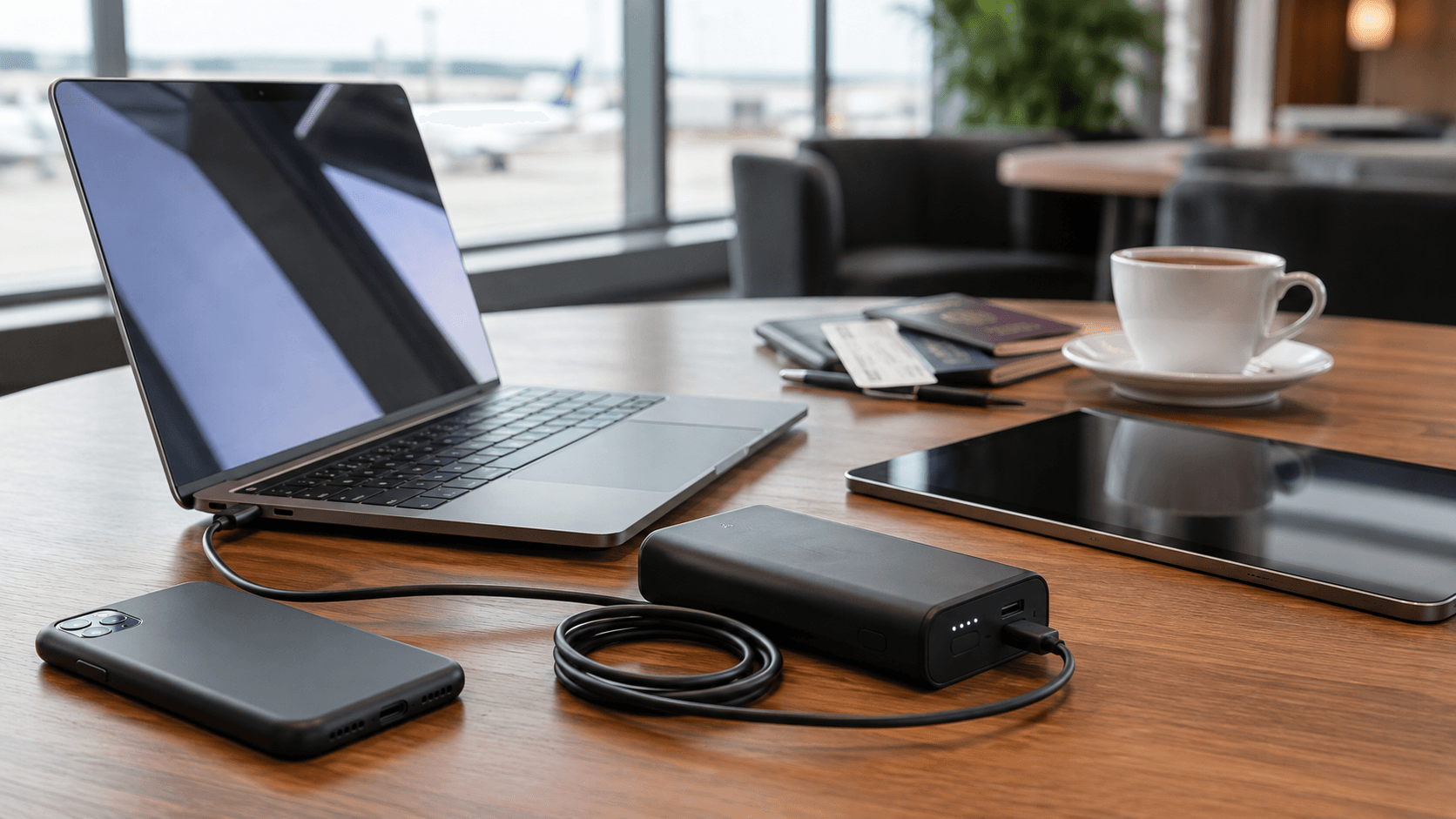
Day to day, this capacity class sits in a useful middle ground between reserve and portability. It offers sufficient reserve power to fully recharge an average laptop once or replenish a standard smartphone about 3 to 4 times, making it a reliable single-source power reservoir for full workdays away from an outlet. No more scanning a coffee shop wall for a free socket.
Fast USB-C output shines in short bursts, too. Fifteen or twenty minutes plugged in before a meeting puts a real dent in an empty phone. And that USB-A port keeps older gear alive — smartwatch cradles, earbud cases, camera battery chargers — so you are not packing a second low-power adapter alongside it.
Shape matters more than spec sheets admit. A tall, column-style enclosure eats far less desk than the wide flat slabs, which is the difference between fitting on an airline tray table beside a laptop and not. Staying under the 100Wh carry-on threshold also means security lines stay boring: no declarations, no gate-side negotiation, no TSA override.
Weaknesses
Physics sends a bill for all of this. Dense cells plus serious conversion hardware add up to a heavy chassis, and while it slips into a backpack or briefcase pocket easily enough, it is strictly a bag-stored accessory. Coat pocket? Not a chance.
The bigger thing to understand is power sharing. Feed a single notebook and it gets the primary port's full headroom. Plug in a second and third device and the pack redistributes internally — the aggregate ceiling is split across everything active, so your laptop charge rate drops the moment a phone and tablet join the party. Single-port and multi-port charging are effectively two different products.
Expect the casing to run warm during sustained high-wattage discharge, which is simply what energy conversion at this level produces. Thermal safeguards keep operation safe, but repeated heat cycling nudges cell degradation along over the years. One more cost worth budgeting: hitting the rapid recharge figures requires a high-output wall charger and an E-marker cable, neither of which comes free if they are not already in your kit.
Best Alternatives
Choosing in the 20,000mAh to 26,000mAh bracket usually comes down to three levers — output ceiling, portability, or cost. The step-up option inside Anker's own lineup is the flagship Prime Power Bank (26,250mAh, 300W Max Output), which buys you extra headroom and app-driven charge profiles at the cost of a higher price and a heavier, larger body in your bag.
Already own a big pack and just want it to survive your luggage? The Travel Case for Anker 737 Power Bank is a soft fabric shell that guards the display and ports from scratches and drops — a small accessory purchase rather than a replacement, and the trade-off is that it adds protection without adding a single watt-hour.
For desk-bound charging, a multi-port wall block such as the 2 Pack 65W USB C Charger Block covers a different job entirely: dual-port PPS output with foldable plugs, far cheaper than any battery, but tethered to an outlet and therefore useless the moment you leave one behind.
Who Should Buy It
This tier exists for people whose tech stack drinks watts. If your week involves running a MacBook Pro or a Dell XPS from cafés, airport gates, or client offices where outlets are theoretical, laptop-grade USB-C Power Delivery is the specific bottleneck this solves.
Multi-device commuters get the most out of it — laptop, tablet, and flagship phone, all served from one chassis that still clears carry-on limits without paperwork. Photo crews, field researchers, and business travelers facing long transit days with no guaranteed socket are the natural buyers here.
Commission may be earned from this link, at no extra cost to you.
Who Should Skip It
Plenty of people should walk right past this. Casual phone users needing one evening top-up are paying in weight and money for capacity they will never touch — a pocketable 5,000mAh to 10,000mAh charger is cheaper, lighter, and better matched to the job.
Budget shoppers without laptop charging needs should also look elsewhere, since the internal conversion hardware is exactly what drives the price up. Charging earbuds and an e-reader off a high-wattage bank is diminishing returns in physical form. And if you rarely work outside range of a wall socket, a large external battery is just something heavy you carry around fully charged.
Sources & References
Specifications and claims in this analysis were cross-referenced against the sources below.
Yes, for USB-C laptops — provided the notebook has the port to itself. Add a second or third device and the shared output budget splits, dropping the laptop's charge rate accordingly.