Picogo 140W 4-Port Charger: The Cable Is the Reason
A look at the Picogo 140W 4-port USB-C charger and its bundled Baseus 100W retractable cable: how the wattage splits across four ports, where the cable caps out, and who this bundle actually fits.
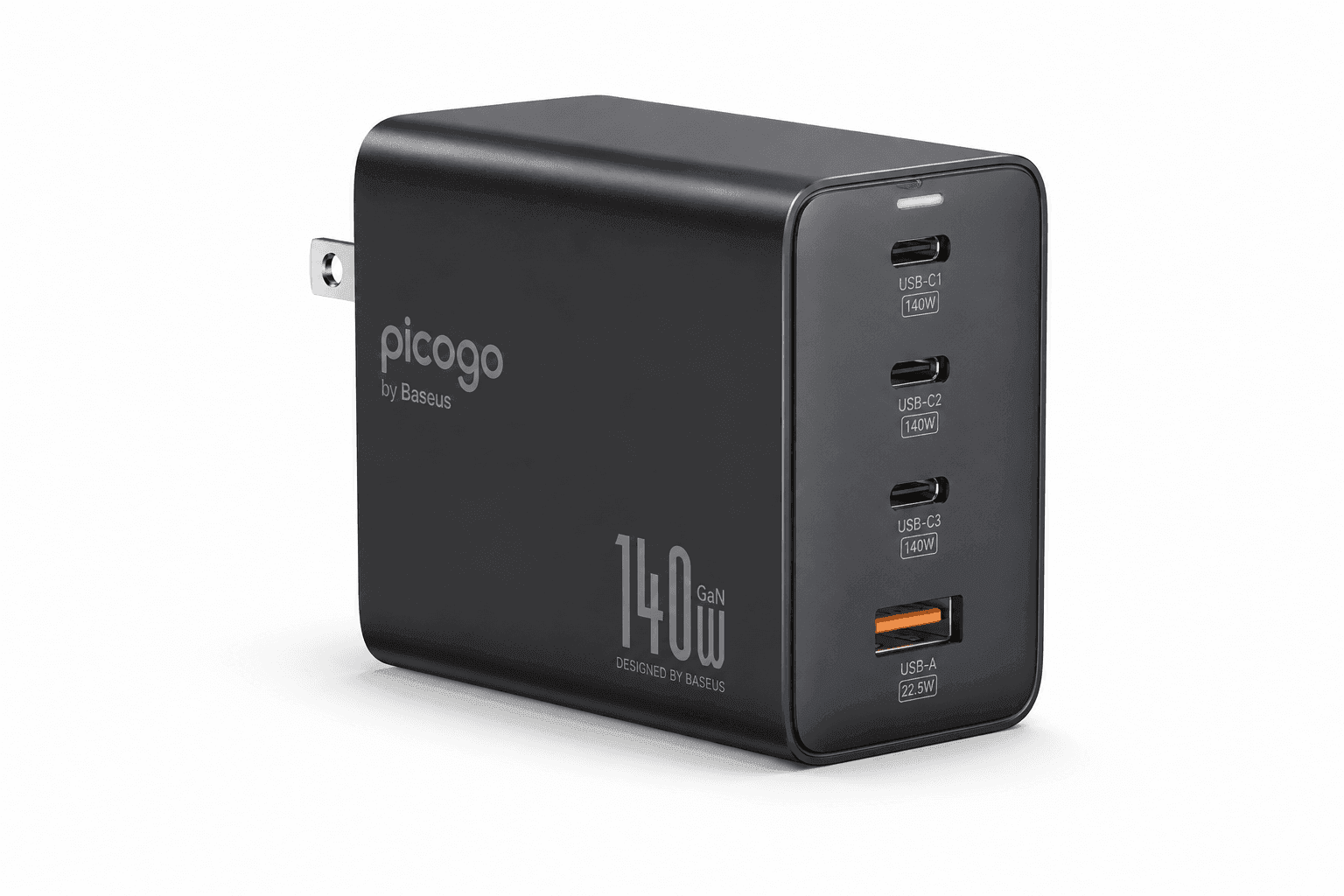
Four devices, one hotel outlet, and a bag full of mismatched bricks. That is the problem this bundle sets out to kill. Picogo's 140W 4-Port USB-C Charger pairs a high-output wall block with a Baseus 100W retractable USB-C cable, aiming at people who travel with a laptop, a phone, a tablet, and one more thing that always needs topping off.
What follows in this Picogo 140W 4-port USB-C charger review is a read of the published specs against what else your money can buy right now. A 140W total rating drops this model straight into the fight with multi-port units from UGREEN and Anker. Bundling a 100W 5A retractable cable changes the math, though — no separate hunt for an e-marked cable before your laptop can pull serious wattage.
Some links in this article are affiliate links, which helps support GadgetPickr at no extra cost to you.
The Quick Take
Solid power density, and the bundled cable is the reason to care. One block covers a laptop plus three accessories, and the retractable cord means you are not buying a high-wattage cable separately. Bulk, clutter, and weak secondary ports — this combination handles all three.
Everything in this Picogo 140W 4-port USB-C charger review points one direction: buy it if you charge three or more devices from a single outlet on a regular basis, because the bundled 100W cable means you reach full laptop-class charging on day one without a second purchase. Skip it if you carry one device, since a 65W single-port plug does that job at a fraction of the size and weight. Flexibility is the real strength here — 140W of shared budget keeps a demanding laptop moving while tablets, handhelds, and phones fill in behind it. The catch is the same feature viewed from the other side. Total wattage is shared, so a third and fourth device pull headroom away from your laptop, and a workstation machine under sustained load will charge more slowly with every port occupied. The reel mechanism is also a wear item in a way a braided cable is not. As a mid-range option, the pairing still costs less than a comparable charger and a 100W-rated cable bought separately, which is the practical case for it.
Picogo 140W 4-Port USB-C Charger with Baseus Cable
Multi-device fast charging for laptops, tablets, and smartphones
Inside sits a gallium nitride (GaN) power stage rated for 140 watts total, split across four outputs: three USB-C and one USB-A. Total is the word that matters. Multi-port chargers hand out wattage dynamically, adjusting per port depending on what you have plugged in, so a laptop pulling hard on port one changes what your phone gets on port three. With 140W in the pool, there is enough overhead to run a hungry notebook alongside a tablet, a phone, or earbuds without everything crawling.
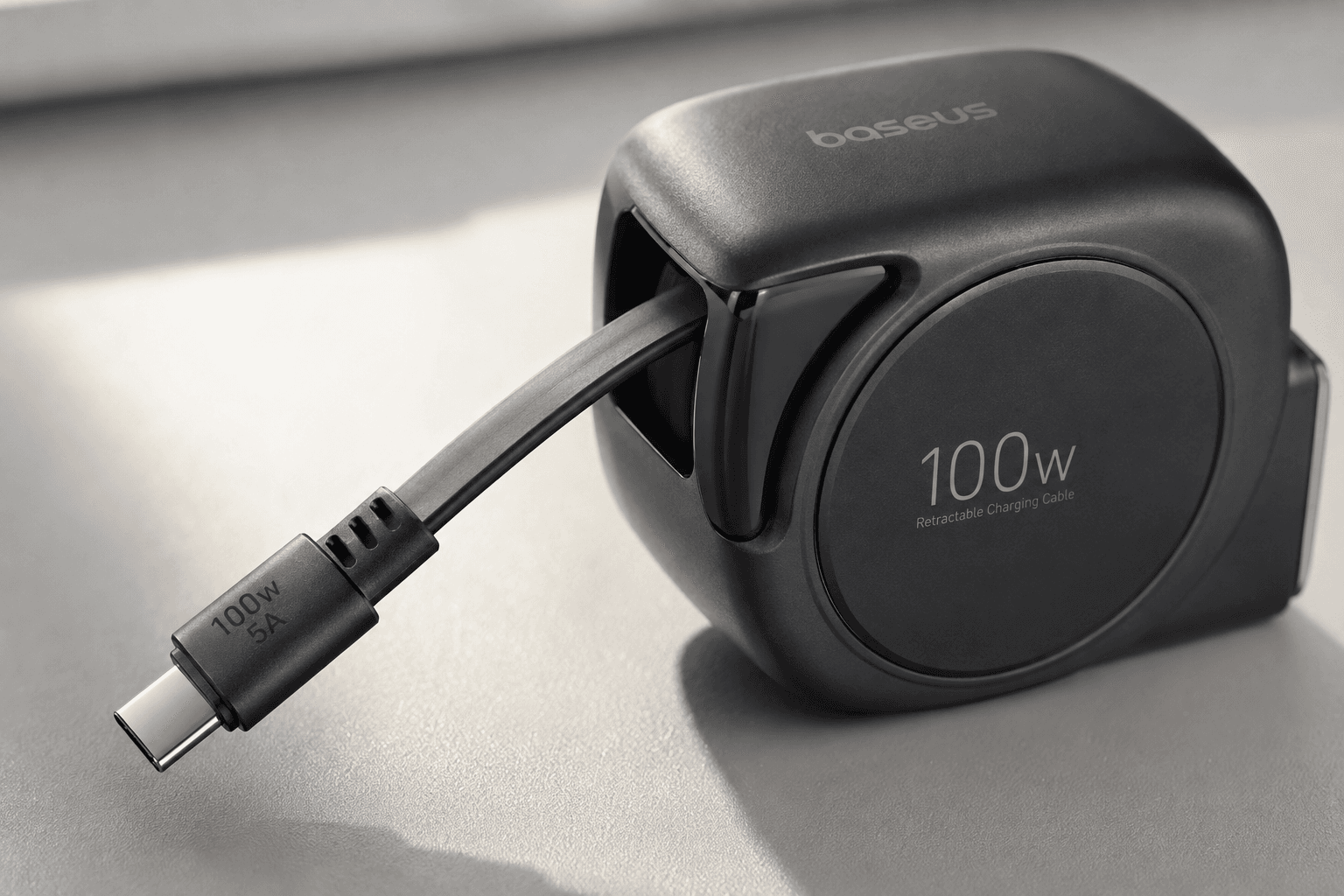
Cable management is the other half of the pitch. Rated for up to 5A high-current transmission, this cable supports USB Power Delivery 3.0 standards, allowing high-draw laptops like a MacBook Pro or Dell XPS to draw up to 100W directly through the cable. Anyone who has fished a tangled charging cord out of a backpack pocket knows why the reel exists. Pull out four inches on a plane tray, pull out three feet at a hotel desk, snap it back when you leave.
Power switching happens in the controller, not in your hands. Engage a single USB-C port and the charger sends its maximum single-port wattage to that load. Add a second or third device and the internal logic renegotiates every active channel — a laptop might sit at 65W or 100W while a phone and a smartwatch split 20W to 30W between them. You will notice the handshake when it happens.
Heat is the tax on compactness. Squeezing 140W of potential output into a plug-sized enclosure demands passive cooling structures and layered safety logic, which here means over-voltage protection, over-current limits, short-circuit protection, and real-time thermal monitoring during long high-wattage sessions. Support for PD 3.1, PPS, and QC 3.0 covers essentially everything with a modern battery in it. One block, one cable, and your travel pouch gets noticeably lighter.
Picogo 140W 4-Port USB-C Charger Review: Key Specs and Compatibility
Here is the short version of what the manufacturer and retail listings put on paper.
Specification
Value
Product Name
Picogo 140W 4-Port USB-C Charger
Total Output Power
140W
Port Count
4 Ports (3x USB-C, 1x USB-A)
Bundled Cable
Baseus 100W Retractable USB-C Cable
Cable Current Rating
5A (100W Max)
Power Protocols
USB Power Delivery 3.1, PPS, QC 3.0
Power Distribution
Dynamic Multi-Port Allocation
Market Positioning
Mid-Range Multi-Port Fast Charger
Primary Competitors
Anker Prime 100W, UGREEN Nexode 140W
PD and PPS support means macOS, Windows, iOS, and Android hardware all negotiate properly, and the lone USB-A port picks up QC 3.0 for older phones and accessories that never made the switch to USB-C.
What Stands Out
Consolidation is the headline benefit. A 140W aggregate ceiling lets one adapter act as both desk hub and travel kit, feeding a 16-inch-class laptop while secondary gear tops off behind it. Dynamic allocation is what makes that workable — the controller shifts headroom toward whatever is drawing hardest instead of locking each port to a fixed, mediocre number.
Then there is the cable, which is quietly the best part of the package. Buy a bare 140W charger and you often discover your existing cords cap out at 60W, sending you back to checkout for an e-marked replacement. That does not happen here. The Baseus cord supports full 100W delivery out of the box, with a spring-loaded reel that keeps it from knotting itself around your headphones.
GaN switching is what keeps the enclosure small despite a 140W thermal load, and the four-port layout means you are not choosing between capacity and count. Laptop, tablet, phone, power bank — all four at once, with the big draw still getting priority. For digital nomads unpacking and repacking at a different coffee shop every afternoon, that combination saves real minutes.
Strengths
Day to day, this bundle earns its space by retiring three other chargers. Run a laptop, a tablet, a phone, and a set of wireless headphones off one socket and the math works. Single-port use unlocks the top output tier for fast laptop charging; fill the rest and the allocation logic keeps the primary device moving while smaller gear sips what is left.
Travel is where the retractable cord stops being a gimmick. High-wattage cables are thick, stiff, and hostile to backpack pockets. Pull only the length you need — a few inches on a cramped tray table, the full run at a desk — and the excess stays inside the housing. Because the cord is rated for 100W transfer, laptops and power banks pull maximum safe current instead of throttling the way they do on under-spec third-party wires.
Four ports also fit how hotel rooms and airport lounges actually work, which is to say one reachable socket, usually behind a nightstand. Plug in once and the entire kit recharges overnight. No power strip, no daisy chain of wall warts, less weight in the bag.
Weaknesses
Real trade-offs exist, and the biggest one is baked into how power sharing works. That 140W figure is an aggregate cap, not a per-port promise. Every device you add subtracts from what the others can pull. Plug in all four and the primary port scales down, which can slow a high-draw laptop under load compared with running it alone.
Renegotiation is the other quirk. Plugging or unplugging anything triggers a brief handshake in which the charger cuts and re-establishes delivery across every active port to reassign safe limits. Normal behavior for dynamic chargers, but it can make an external monitor blink, a small power bank drop out, or a device chime at you mid-cycle.
Mechanically, the reel deserves scrutiny. Retractable cables hide spring mechanisms and ribbon-style wiring that wear with use, and years of yanking and snapping the cord back can eventually degrade the retraction or the internal copper. There is also a ceiling issue: while the cable supports up to 100W maximum throughput, taking full advantage of the charger's 140W single-port limits on supported 140W USB-C Power Delivery laptops would require a separate 140W-rated cable. Buyers who prize durability over tidiness may still prefer a reinforced braided cord.
Best Alternatives
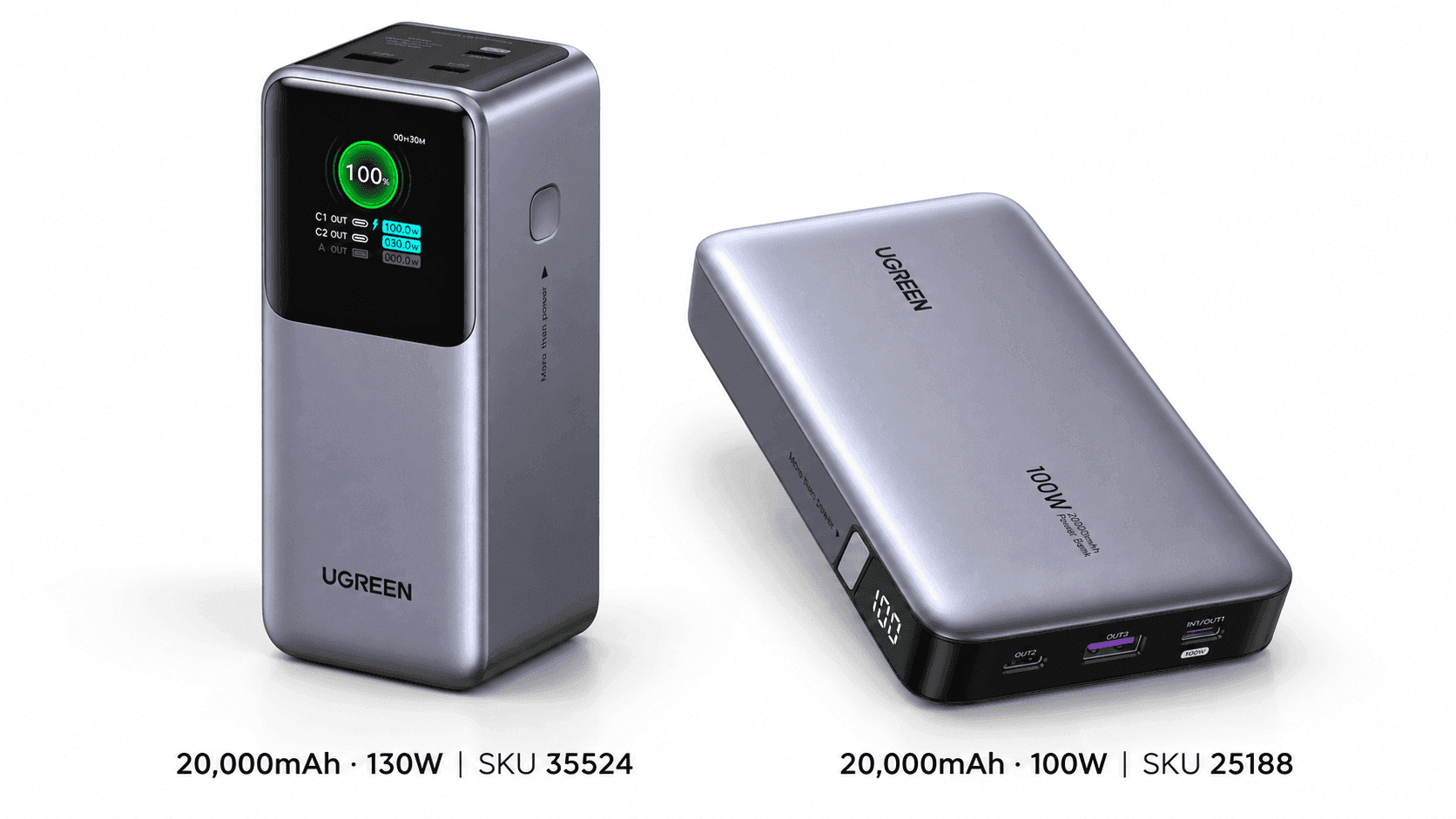
Three comparisons clarify where this bundle sits. Start with the UGREEN Nexode 140W Charger, which matches the total output rating but ships without a high-wattage cable — you will spend extra to reach the same starting line, so the Picogo package wins on out-of-box readiness.
Anker's Prime 100W Charger flips the priority toward pocketability. Its footprint is smaller for strict-carry travel, but a 100W ceiling cannot drive a 16-inch laptop at peak while also fast-charging a second device, so the choice comes down to whether your daily routine really loads more than two ports at once.
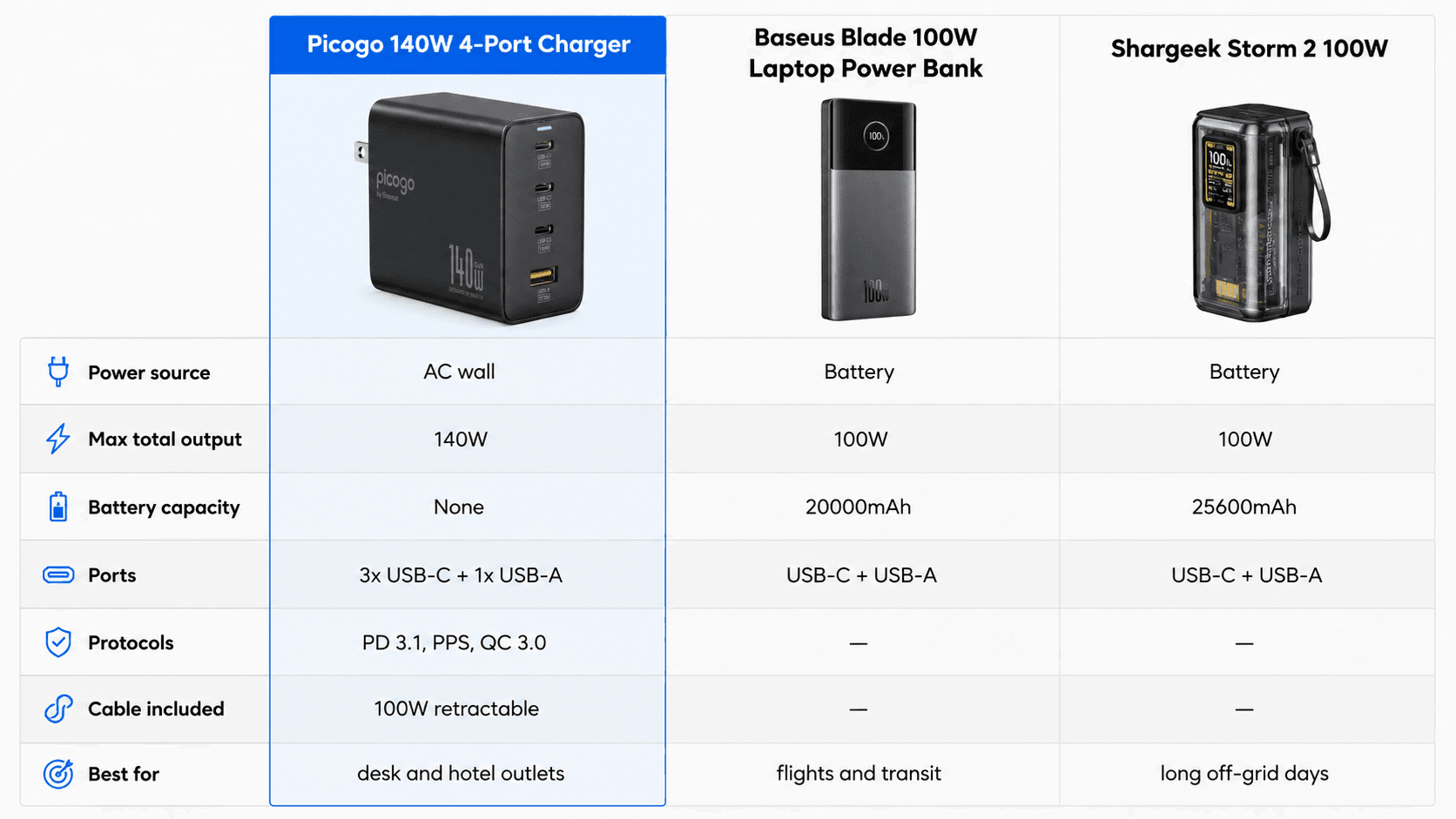
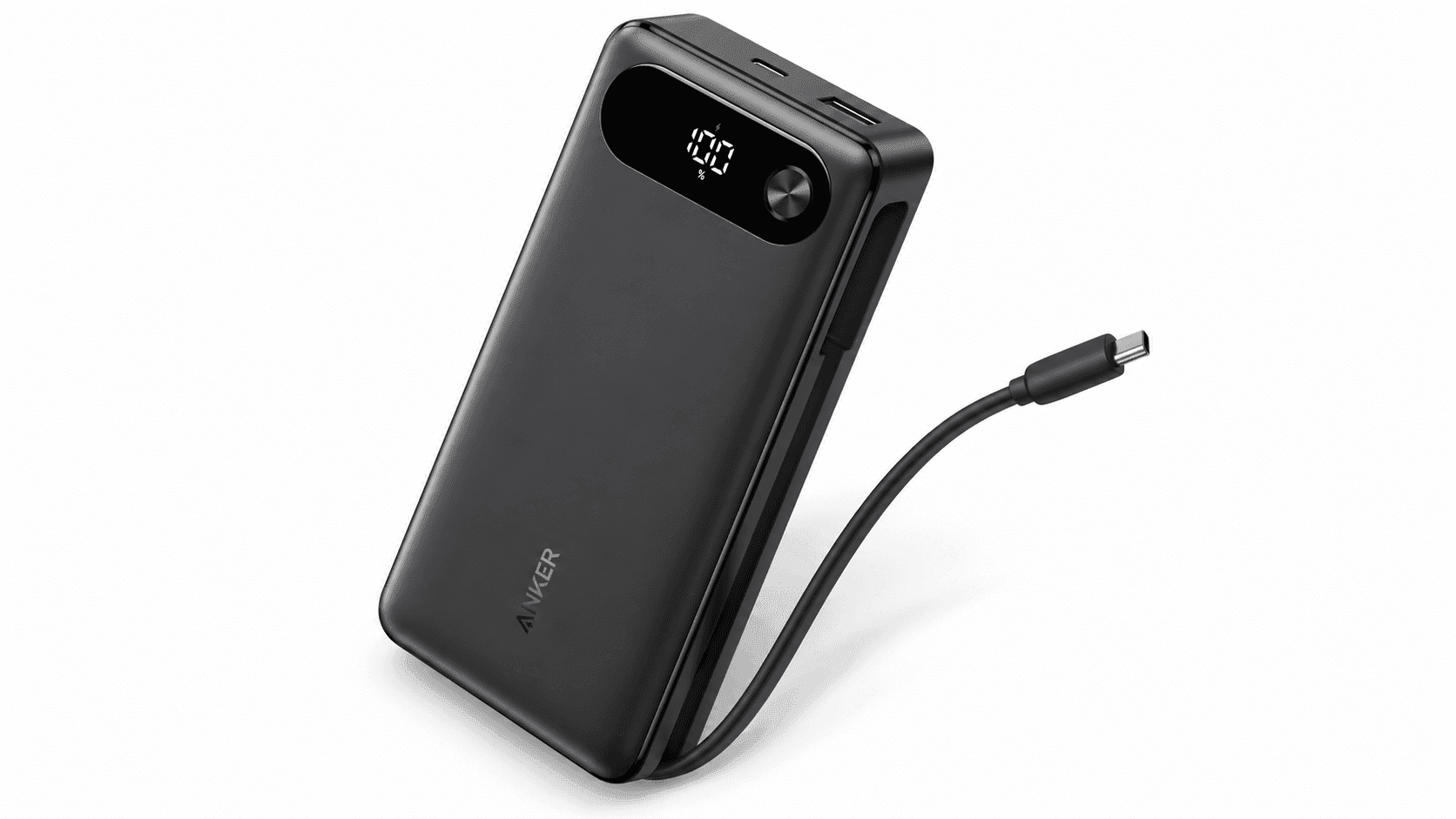
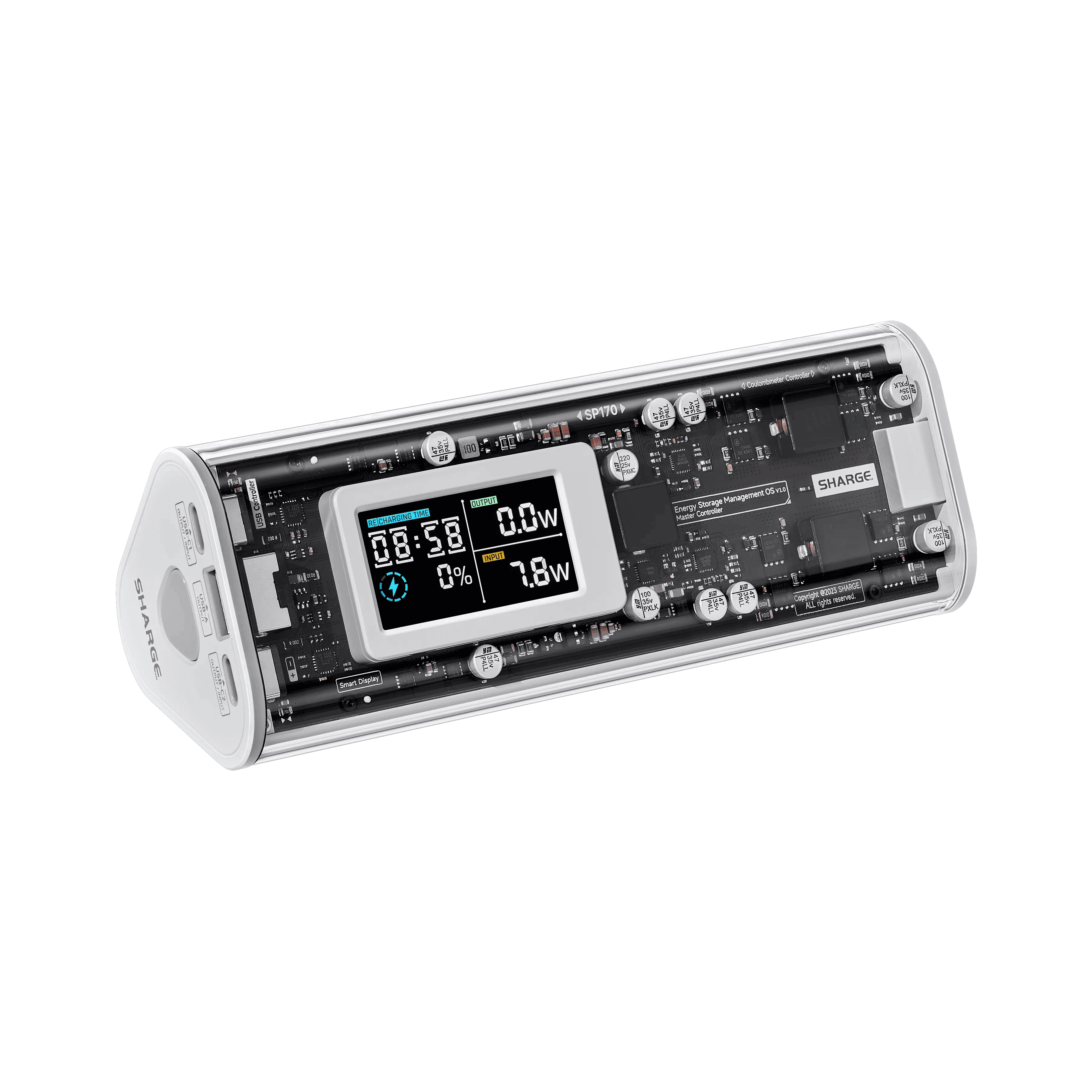
Off-grid needs are a different category entirely. The Baseus Blade 100W Laptop Power Bank, with its 20000mAh capacity and 2 USB-C + 2 USB-A layout, and the Shargeek Storm 2 100W 25600mAh Power Bank both give you power away from a wall — the trade being finite runtime and a battery that ages. For desks, hotel rooms, and offices, an AC charger like this one keeps supplying power indefinitely.
Who Should Buy It
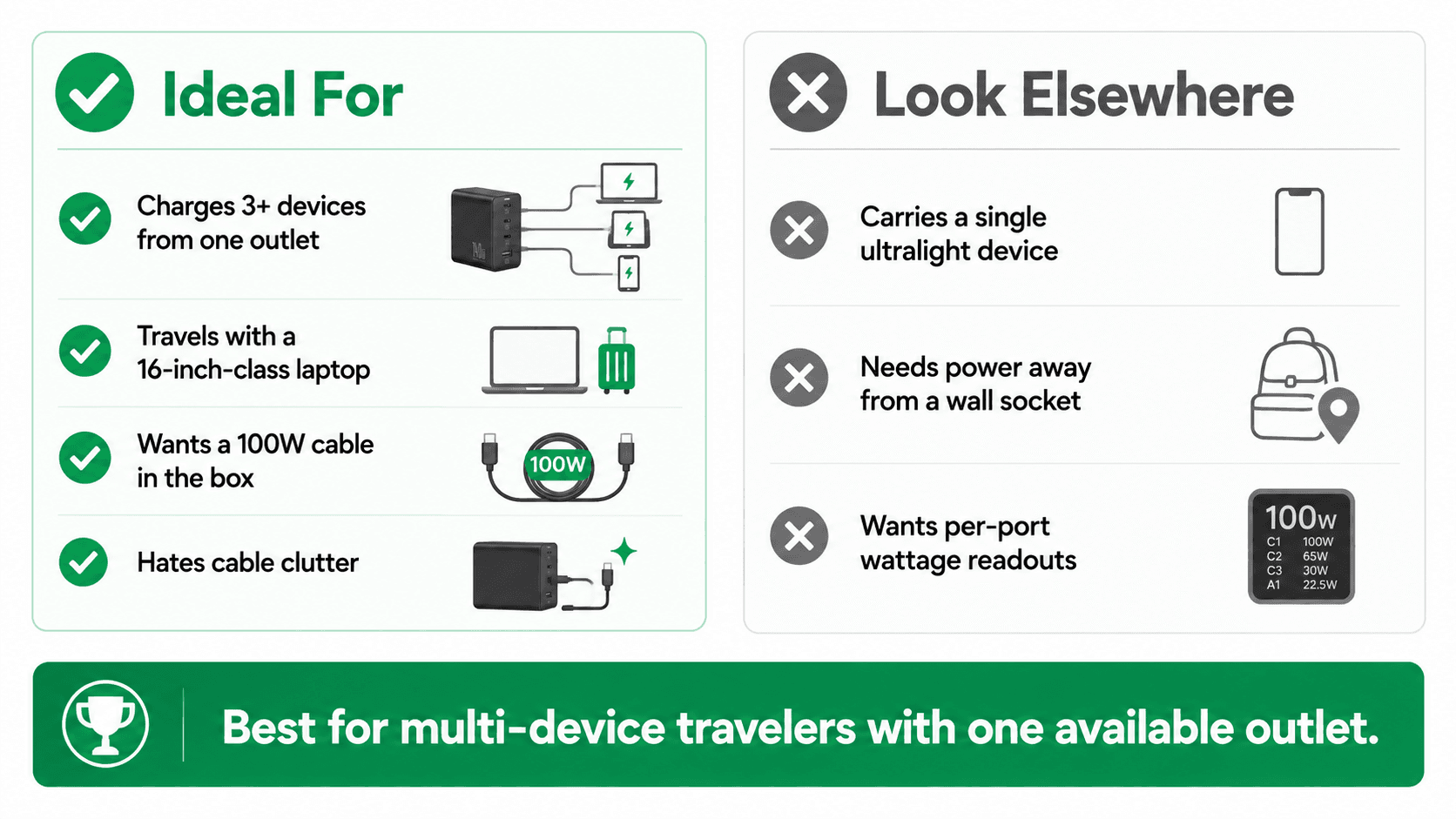
Frequent travelers running a dense device kit are the obvious audience. If a 16-inch MacBook Pro or a heavy Windows workstation anchors your day, 140W of headroom gives that machine room to charge quickly instead of trickling. Cable-clutter refugees get an extra reason: the included 100W-rated retractable cord replaces the stiff spare you keep meaning to organize.
Remote workers, digital nomads, and commuters charging four things at a single airport outlet benefit just as directly. One hub instead of four bricks for a laptop, tablet, phone, and earbuds. If a 5A-rated cable in the box and high aggregate output across four active ports describe what you have been shopping for, this matches the brief.
Commission may be earned from this link, at no extra cost to you.
Who Should Skip It
Not every kit needs this much. Minimalist travelers carrying one ultralight laptop or just a phone are better served by a 30W or 65W single-port plug, which weighs less and disappears into a jacket pocket. Buying 140W and four ports you never fill is paying in bulk for capacity you will not use.
Skip it, too, if your real problem is power without a socket. This is an AC charger, full stop — useless on a flight without outlets, on a train, or outdoors, where a high-capacity pack like the Baseus Blade 100W or Shargeek Storm 2 is the correct purchase. And anyone who wants per-port wattage readouts or software-configurable allocation profiles should shop the higher-end smart chargers instead.
Sources & References
Specifications and claims in this analysis were cross-referenced against the sources below.
No. That cable is rated 5A, or 100W maximum. To pull the charger's top single-port figure on a 140W-capable laptop, you need a separate 140W-rated USB-C cable.