Anker Prime 26,250mAh 300W: A Desk Charger in a Bag
A look at the Prime Power Bank 26,250mAh 300W: how its three-port power budget is shared, why 94.5Wh keeps it airline-legal, and which laptop owners it actually suits.
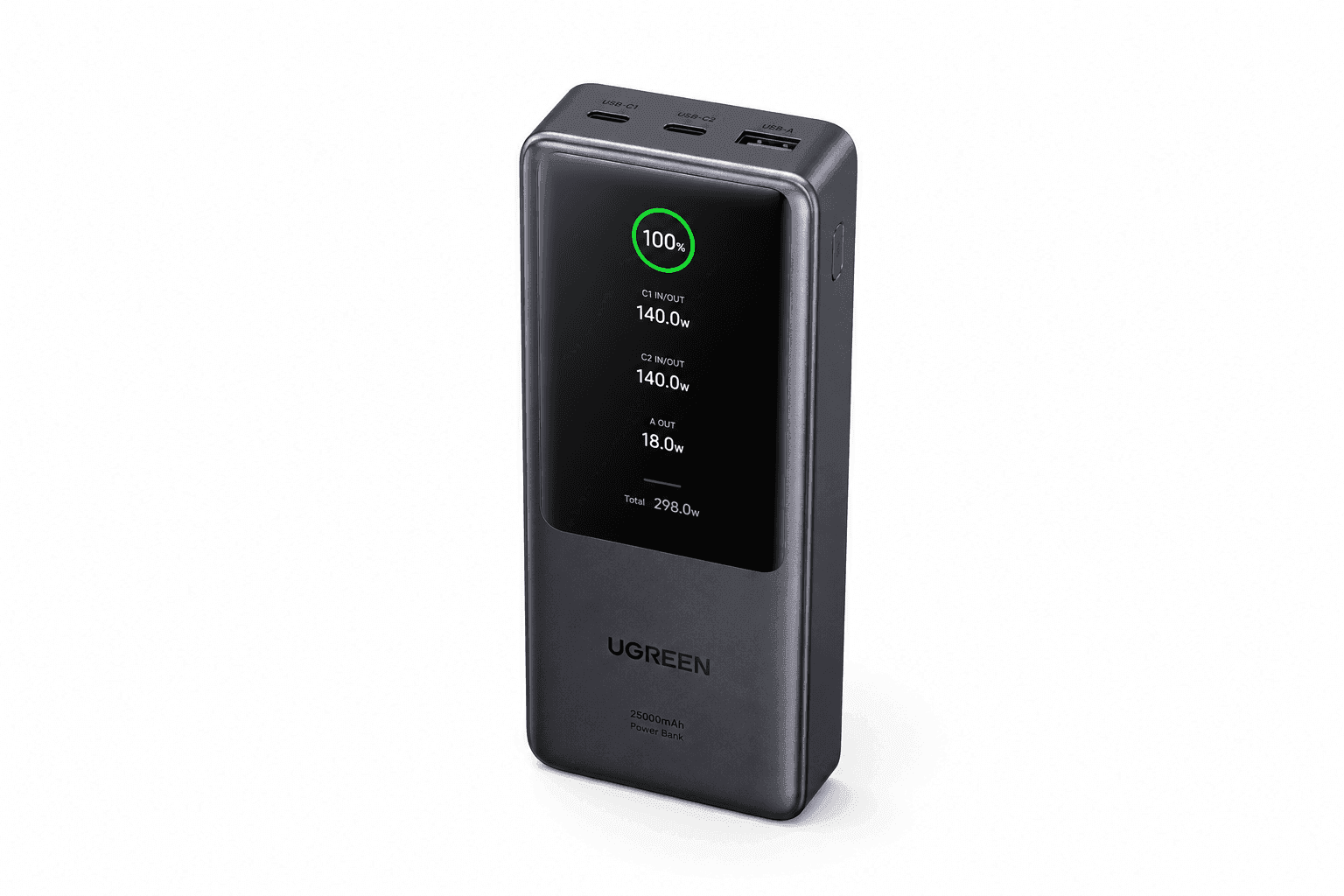
Laptops got hungrier. Phones started pulling 40W without blinking. Somewhere in that shift, the pocket-sized battery stopped being enough — and that gap is exactly what the Prime Power Bank 26,250mAh aims at, with a 300W maximum combined output spread across three ports. If your bag holds a workstation laptop plus two other devices that all want power at the same time, this is the class of hardware built for that problem.
What follows is a Prime Power Bank 26,250mAh 300W review built on the numbers: cell capacity, charging protocols, port behavior, and buyer fit. By working through concrete technical attributes — the TSA-compliant energy rating, two-way fast charging, the smart app layer — we can pin down where this external battery belongs in a travel workflow, and whether the high-output hardware inside earns the space it takes up in your bag.
Some links in this article are affiliate links, which helps support GadgetPickr at no extra cost to you.
The Quick Take
Think of this as a desktop-class charging brick that happens to fit in a backpack. A 26,250mAh cell paired with a 300W combined ceiling across three ports puts it well above everyday phone accessories and squarely in laptop-charging territory — without crossing the airline energy limit that grounds bigger packs.
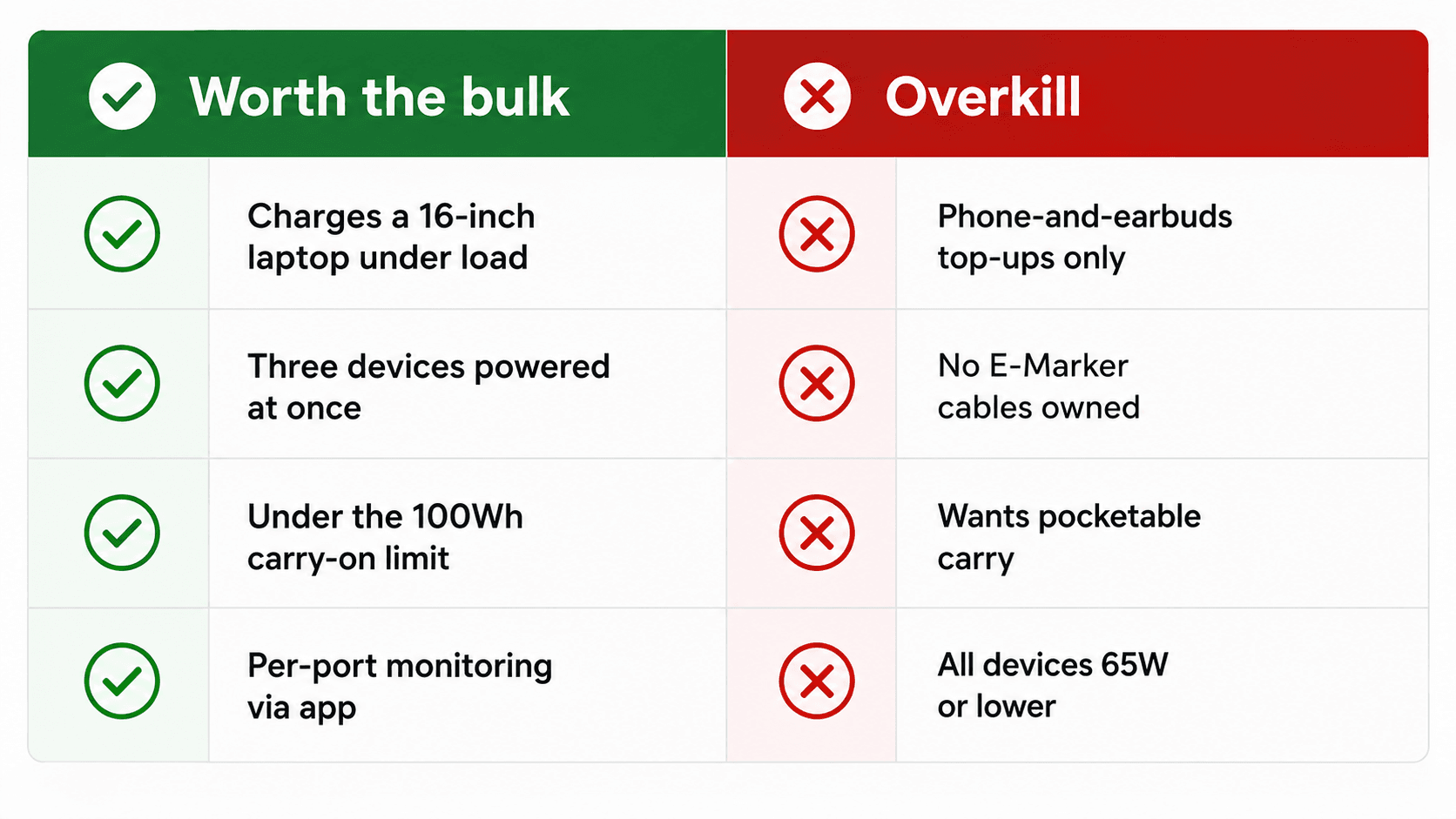
Buy it if you routinely charge a high-draw laptop and other devices at the same time, away from outlets. That is the single strongest reason: a 300W combined ceiling across three ports keeps a 16-inch MacBook Pro gaining charge under load instead of merely losing it slowly, which no 65W or 100W pack can do. Airline compliance at roughly 94.5Wh is the bonus that makes it travel-legal, and the display plus app give you real numbers instead of blinking lights.
Skip it if your charging needs top out at a phone and a tablet. The reason is just as simple: you are paying for wattage and weight you will never use, and a slim 20,000mAh pack covers that job better on every axis that matters to a light carrier. Two smaller caveats apply to everyone else — a shared power budget means all three ports at once trims what reaches the laptop, and full-speed laptop charging demands 100W-rated or 240W E-Marker USB-C cables you may not already own.
For mobile professionals running MacBook Pro laptops, high-performance Windows notebooks, or gaming handhelds through long travel days, this Prime Power Bank 26,250mAh 300W review lands on a clear yes — the bulk buys capability you will actually use. For everyone charging one phone a day, the Baseus Blade 100W is the smarter spend.
Prime Power Bank 26,250mAh 300W
Best for buyers who need a high-wattage, three-port travel battery with the specs covered in this review.
Architecture first. A high-density cell layout feeds a maximum combined output of 300W, which is enough throughput to run a 16-inch MacBook Pro at speed while a tablet and a phone hang off the other two ports. Most portable banks tap out long before that. This one has headroom to spare.
Energy storage is rated at 26,250mAh, or 26,250mAh (99.75Wh) depending on internal cell voltage configurations. That number is not an accident — it parks the pack just under the 100Wh ceiling that federal aviation and TSA guidelines set for carry-on batteries. Frequent flyers get the largest reserve the rules allow, in one unit, with no special approval paperwork.
Three output ports handle distribution, and USB Power Delivery splits the available wattage dynamically based on how many cables are plugged in. Recharging runs the same pipe in reverse: two-way fast charging lets the bank pull high wattage from a capable wall adapter, which cuts the dead time that normally comes with refilling a battery this size.
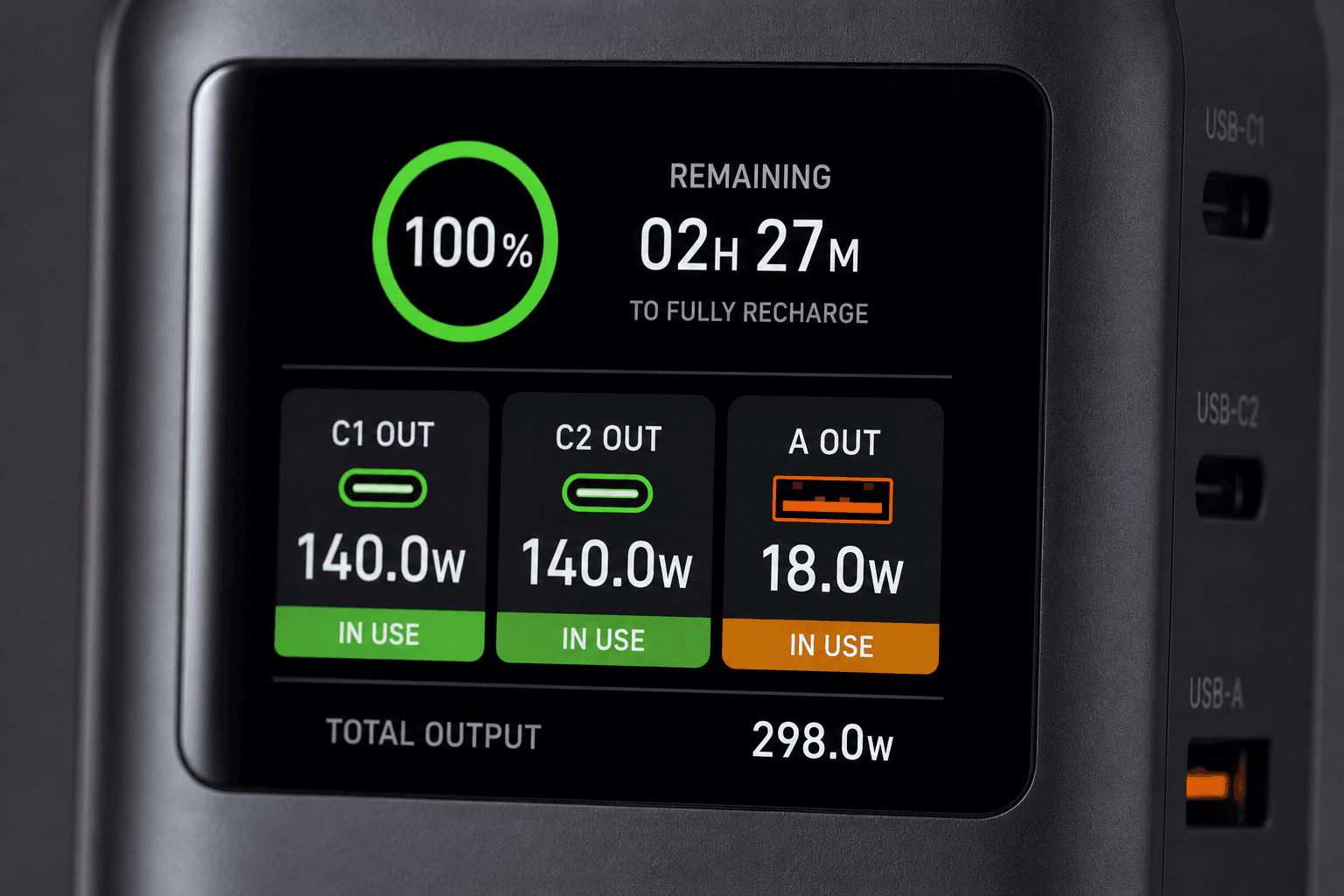
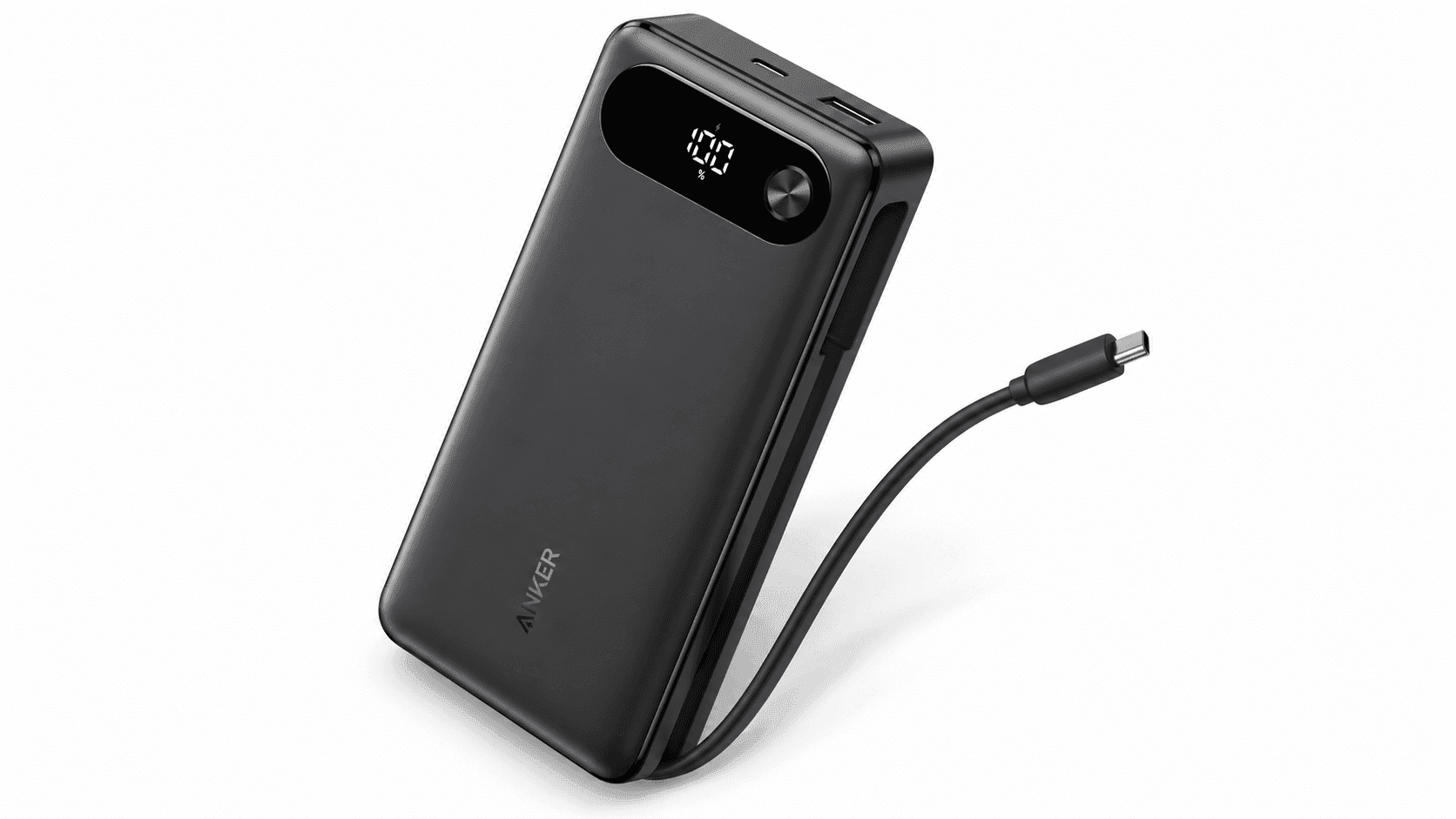
Onboard, a display screen reports real-time wattage per port, remaining battery percentage, estimated recharge time, and cell status. Going further, app control support lets you adjust charging parameters, check battery health metrics, and manage power optimization profiles wirelessly over Bluetooth.
Key Specs and Compatibility
Specification
Value
Total Capacity
26,250mAh (26,250mAh (99.75Wh))
Maximum Output Wattage
300W Max Combined
Port Configuration
3 Output Ports (USB-C & USB-A)
Recharging Protocol
Two-Way USB Fast Charging
Airline Clearance
Compliant with FAA and airline carry-on rules (<100Wh Limit)
Standardized USB Power Delivery does the heavy lifting for cross-brand compatibility here, with an optional docking base extending the setup for desk use. Nothing proprietary is required to get power out of it.
What Stands Out
Headline number: 300W. Spread across three ports, that ceiling is built for setups that trip the overload protection on ordinary 65W and 100W banks. A workstation laptop under a long compile or a heavy render can pull well past 100W on its own; add a tablet and a flagship phone, and mainstream chargers simply run out of budget. Here, connected devices get enough current to keep working at full speed while their own batteries refill.
Capacity is the quieter win. That 26,250mAh cell works out to roughly 94.5Wh at nominal voltage, which lands just beneath the 100Wh threshold the Federal Aviation Administration and international aviation authorities enforce for carry-on electronics. You are carrying the legal maximum, not a compromise — useful if you shoot in the field, work long-haul flights, or spend days away from a reliable outlet.
Two-way fast charging is the third piece, and it fixes a genuine annoyance. Big banks are usually crippled by slow input, sitting on a charger for four to six hours before they are useful again. This one draws high wattage from a capable wall adapter instead, so refilling that 26,250mAh reservoir takes a fraction of the usual wait. The app layer rounds it out with per-port monitoring, temperature readings, and battery health profiles. Instead of guessing at four blinking LEDs, you see the actual draw — handy for spotting a bad cable or a device pulling far more than it should.
Strengths
In a cafe, an airport lounge, or a client's conference room, the practical strength is adapter replacement. One brick stands in for the whole bundle of wall plugs you would otherwise carry, and nobody has to go hunting for a free outlet. Plug a MacBook Pro into the high-wattage port, hang your phone and a tablet off the others, and the internal controller allocates power across all three without abruptly dropping the small stuff.
For power-hungry laptops, accepting high wattage over USB-C means the machine never throttles to protect its battery. Lower-wattage banks tend to just slow the bleed during video rendering, 3D work, or a long build — the percentage still drops, only more gently. This unit has enough overhead to push the number back up while the CPU and GPU are working.
Smart app connectivity adds real utility on top of the basics. Charge cycle counts, battery health settings that limit premature capacity loss, day-to-day wattage tracking — all of it is visible, which makes troubleshooting a flaky cable a two-minute job rather than a guessing game. Compatibility is broad too, covering current iPhone 17 and 16 series handsets and more, tablets, and handheld gaming systems, so one purchase covers the whole kit with no proprietary adapters involved.
Weaknesses
All that capability costs you in size. Packing 26,250mAh of high-density cells plus the power management hardware to move 300W safely produces a genuinely chunky object. Nobody is slipping this into a jacket pocket. If your actual need is topping up a phone during a commute, the weight will annoy you every single day.
Port math matters too. That 300W figure is a shared budget, not a per-port guarantee. Engage all three ports and individual ceilings drop automatically to keep thermals and total current inside safe limits, so a second and third device eat directly into what is left for the laptop. Plan around that rather than expecting full speed everywhere at once.
Cables are the other catch. USB Power Delivery above 100W requires certified 100W or 240W E-Marker USB-C cables; plug in a generic unmarked cable and you are back to 60W, with the pack's headline capability sitting idle. Worth noting as well: no charging base ships in the box, and no high-wattage wall adapter either, so the fast two-way recharge depends on hardware you supply. Budget for the accessories before you judge the value.
Best Alternatives
Two rivals mark out the edges of this category, and each one gives up something specific to get what it offers.
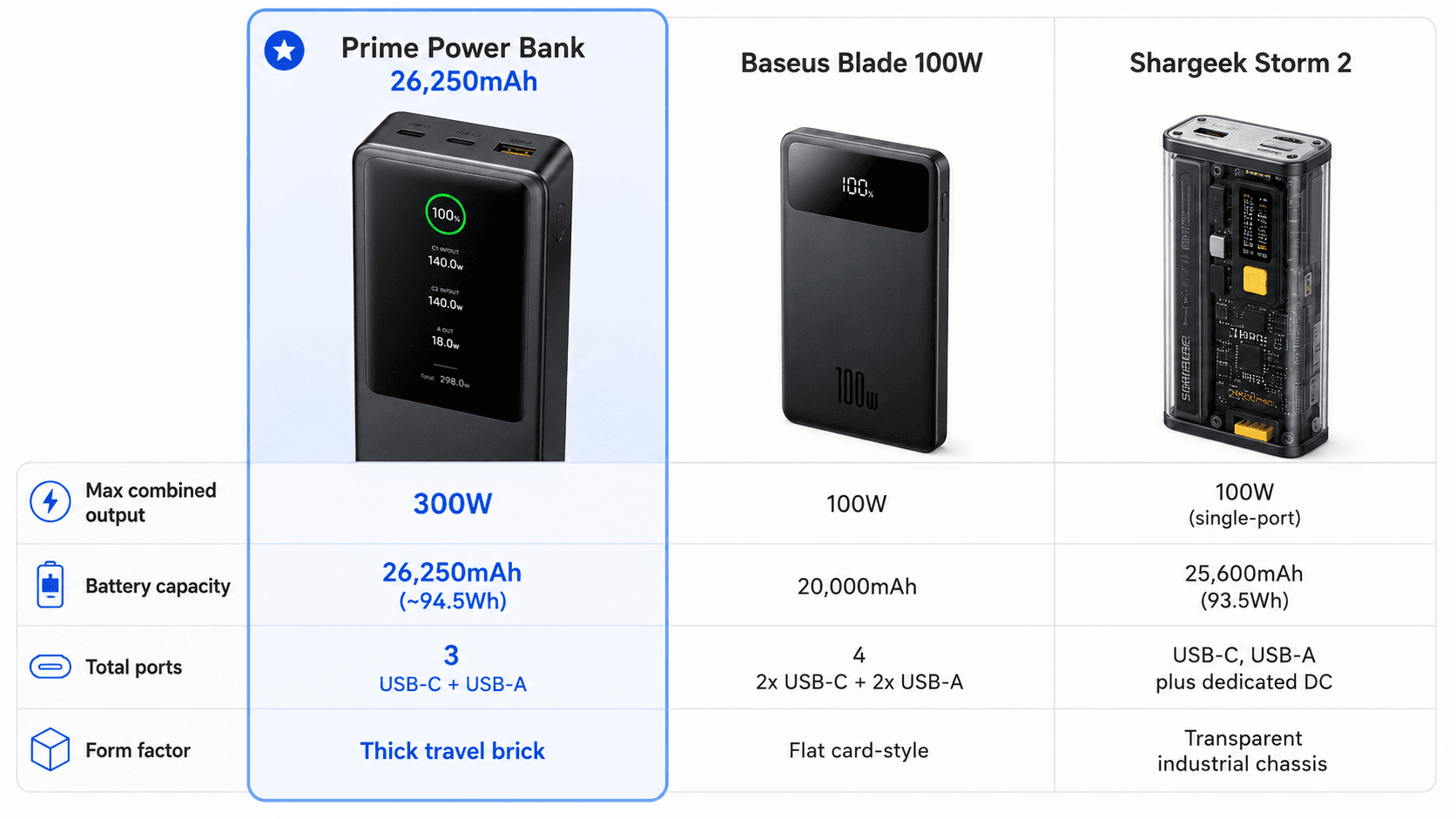
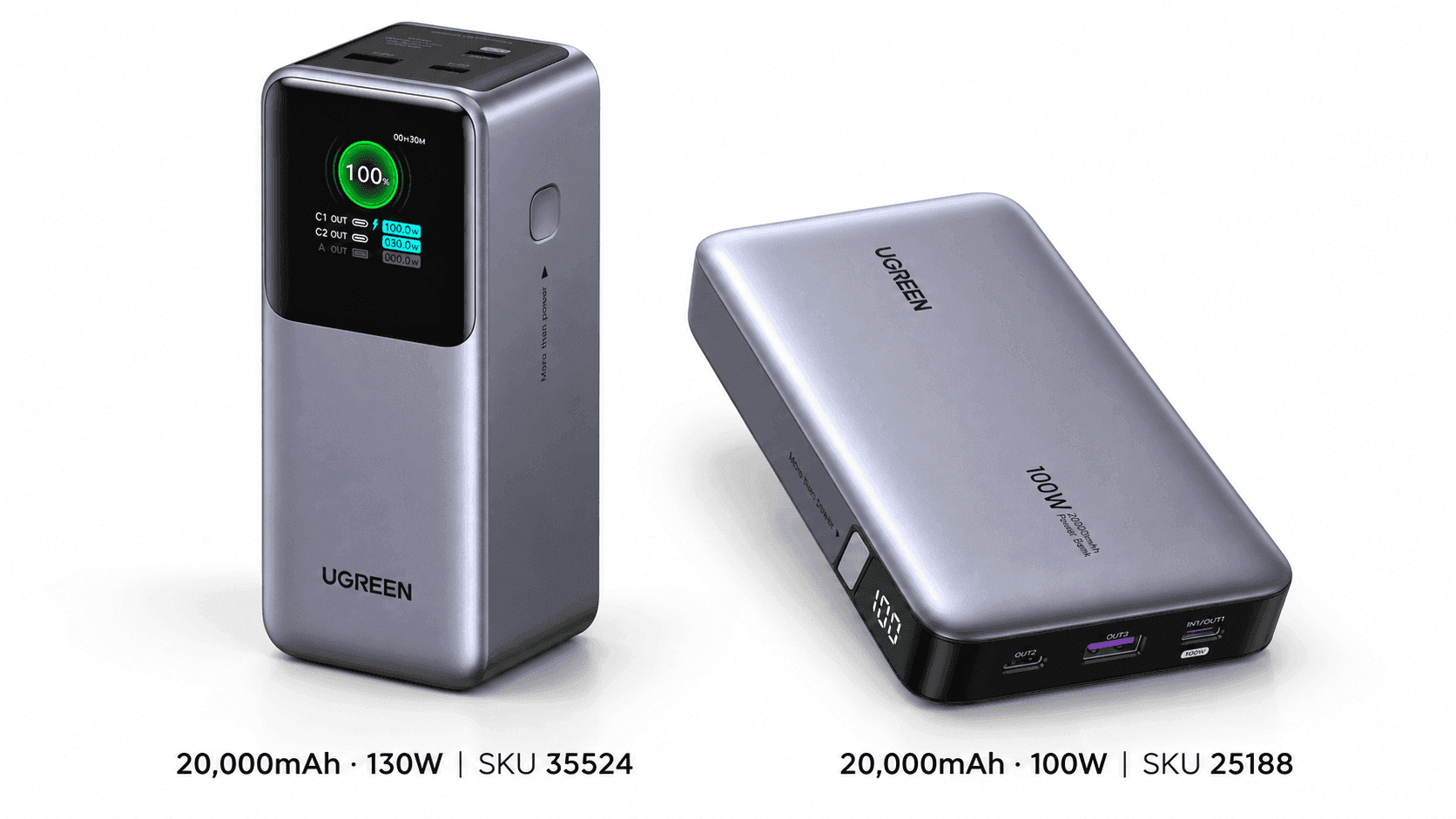
For users prioritizing an ultra-slim profile for daily laptop bag storage, the Baseus Blade 100W Laptop Power Bank takes the opposite approach. A flat, card-like body, a 20000mAh capacity, and 100W maximum output across two USB-C and two USB-A ports mean it slides into a sleeve the Prime cannot fit — the trade-off is a third of the wattage ceiling and roughly 6,000mAh less in reserve, so it suits one laptop, not a full kit, and costs considerably less.
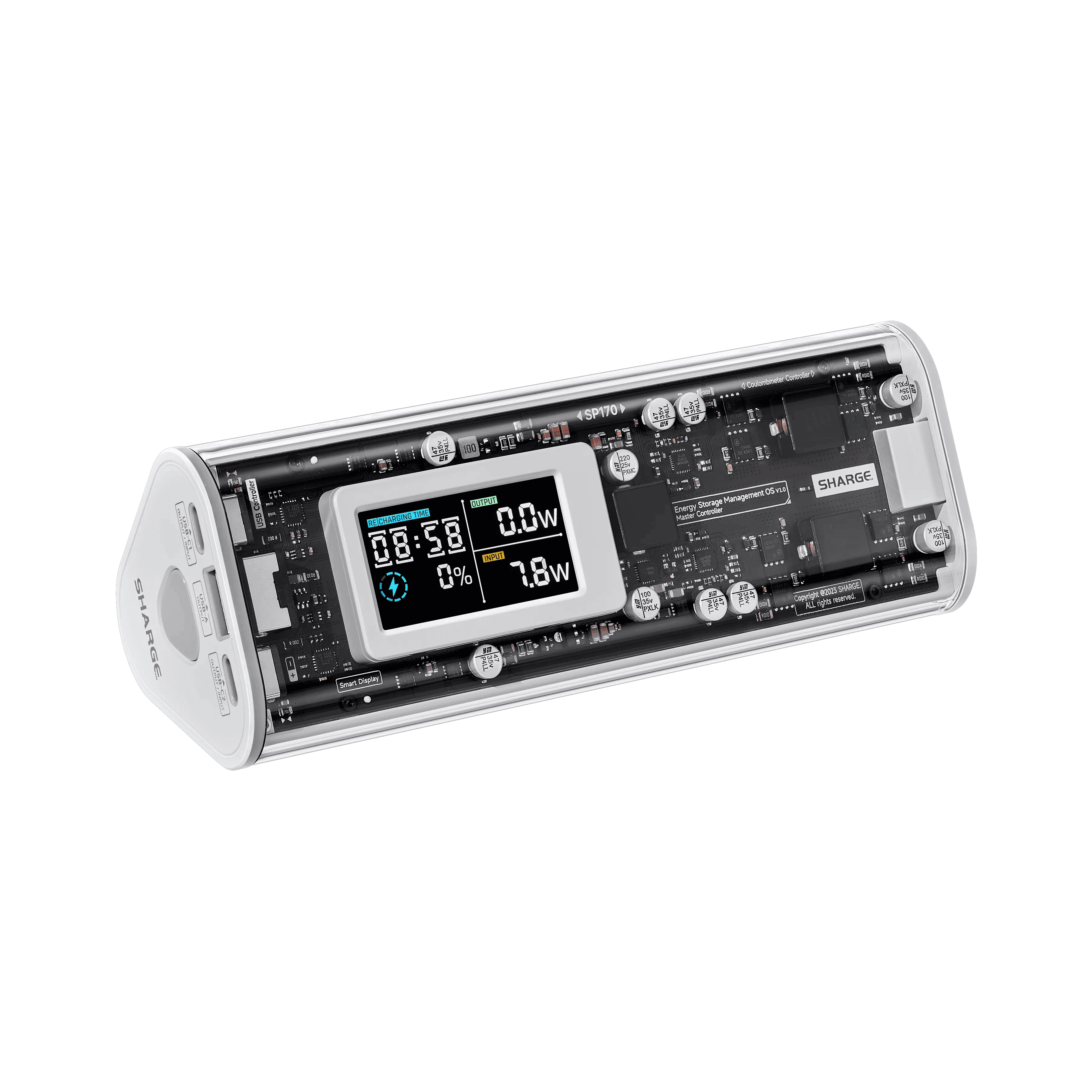
Shargeek's Storm 2 goes the other way, chasing visibility over raw power. An IPS color screen, a transparent chassis, 25600mAh (93.5Wh) of capacity and up to 100W single-port delivery alongside a dedicated DC port make it the pick for people who want to watch voltage, current, and pass-through in real time — but you surrender two-thirds of the combined ceiling to get that telemetry and that see-through shell.
Who Should Buy It
Mobile professionals, creative teams, and anyone tethered to power-hungry gear away from outlets are the target. A travel kit built around a 16-inch MacBook Pro plus an iPad, a flagship phone, and camera batteries is precisely the scenario the 300W ceiling exists for — nothing gets starved when it all goes on at once.
Frequent flyers get the second argument. Staying under the 100Wh airline restriction while carrying the largest reserve the rules permit means transcontinental flights without security friction and without rationing your battery. Add the app for health tracking, port distribution, and cycle counts, and it fits anyone who likes knowing what their hardware is actually doing.
Commission may be earned from this link, at no extra cost to you.
Who Should Skip It
Minimalist travelers and daily commuters should walk past. If topping off a phone and a set of earbuds is the whole job, a 10,000mAh or 20,000mAh slim pack does it for a fraction of the money and none of the bulk, and you will feel the difference every time you lift the bag.
Budget-conscious buyers should look elsewhere as well. Paying up for a 300W ceiling and app connectivity returns almost nothing if you never charge a high-draw laptop or run several devices at once. Same goes for anyone who wants plug-it-in-and-forget-it simplicity — the display and companion software are dead weight if you have no interest in reading them. A gear list topping out at 65W devices is better served by a cheaper multi-port charger.
Sources & References
Specifications and claims in this analysis were cross-referenced against the sources below.
Yes. With a 300W combined ceiling, there is enough headroom to raise the laptop's battery percentage even during heavy CPU and GPU loads, rather than just slowing the drain like lower-wattage packs do.