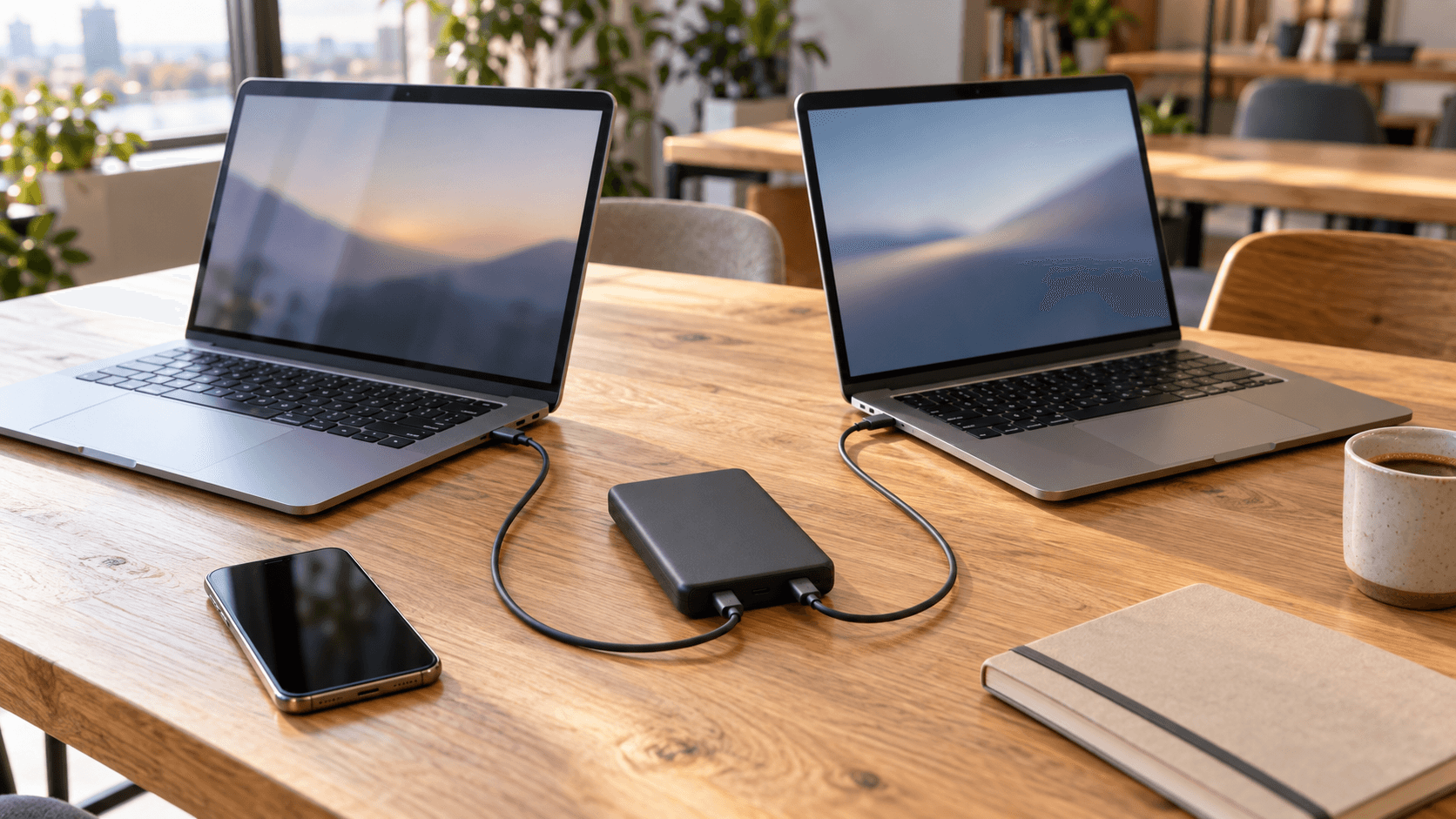
If your bag holds a laptop, a phone and another device that always seems to need charging, a small battery pack soon runs out of useful ports or power. In this UGREEN Nexode 200W review, the main attraction is its ability to share 200W across connected devices, including two laptops at up to 100W each. That makes it worth considering for a portable work setup with more demanding charging needs.
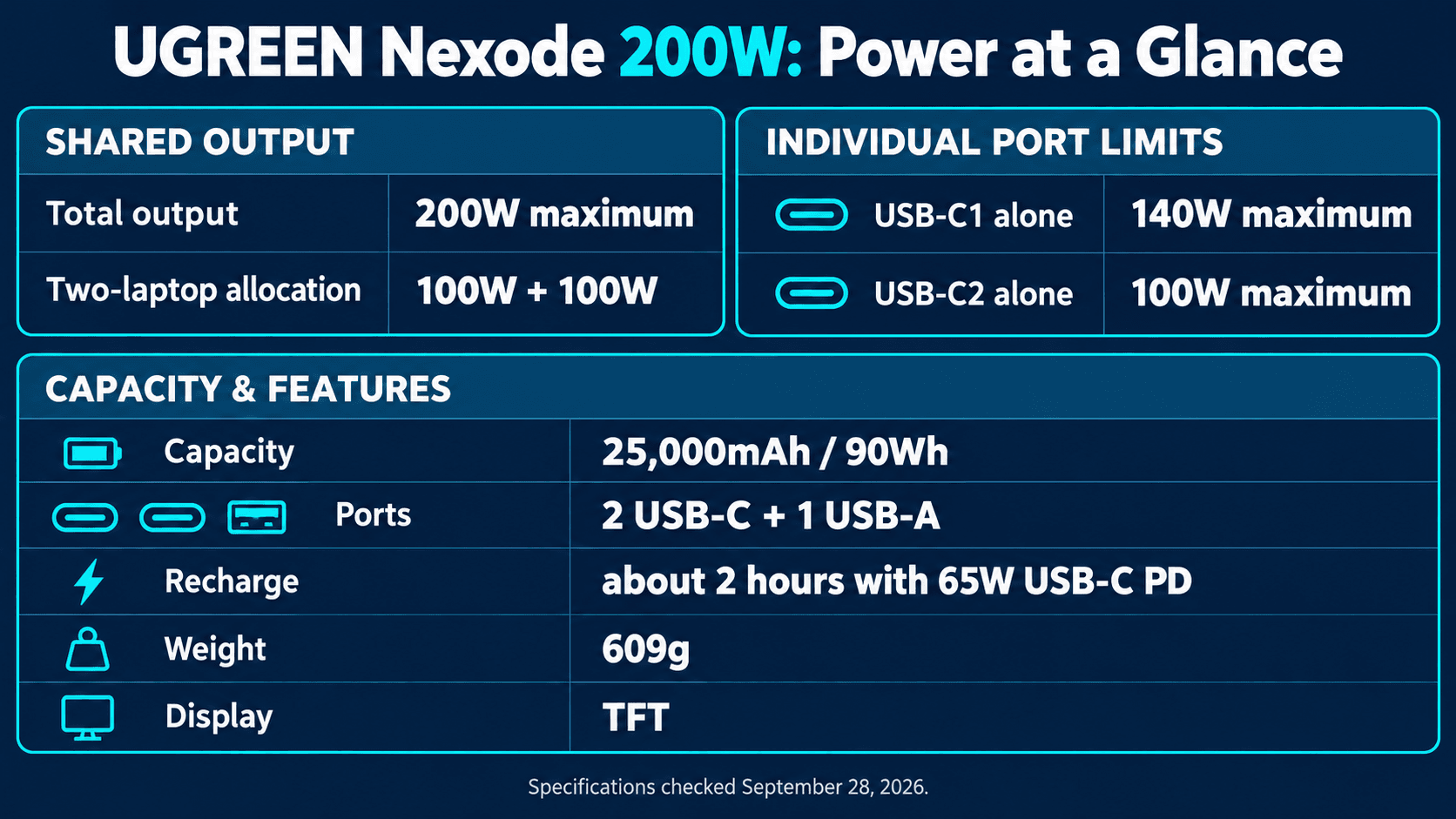
Look past the headline wattage and the proposition gets more interesting: 25,000mAh of capacity, a 90Wh energy rating and a primary USB-C port that reaches 140W. A second USB-C port supplies up to 100W when used alone, while USB-A handles another wired accessory. Those individual ceilings explain what each connection can do; the combined output still has to fit inside the bank's 200W budget.
There is a practical catch. At 592g, this is a deliberate addition to your laptop bag, especially if you already carry a charger and several cables. Buy it for the ability to power a demanding USB-C setup away from an outlet; choose something smaller if your entire charging problem is a phone that struggles to last until dinner.
Some links in this article are affiliate links, which helps support GadgetPickr at no extra cost to you.
The Quick Take
Buy the UGREEN Nexode 200W if you regularly need to charge two USB-C laptops: its shared 200W output is the strongest reason to carry it. Phone-only users should skip it because the 592g chassis adds more weight than their charging needs justify. Its TFT display is useful, but the port layout and power allocation should make the buying decision.
Verdict
This UGREEN Nexode 200W review ends with a clear recommendation for people who routinely charge two USB-C laptops: the 100W-plus-100W output arrangement is its strongest selling point. Phone-only users should buy a smaller bank because carrying 592g for occasional top-ups makes little sense. The 25,000mAh reserve, 140W primary USB-C port and TFT display make it a useful addition to a portable workstation, provided you accept its weight and choose your connections around the shared power budget.
UGREEN Nexode 200W Power Bank
A portable battery for USB-C laptops, phones and tablets, with 200W combined output and a display that shows where the power is going.
Inside the column-shaped enclosure is a lithium-ion battery rated at 25,000mAh, or 90Wh. Capacity and output answer different questions: the former describes the stored energy, while the latter sets the ceiling for how quickly compatible devices can receive it. For flight packing, the 90Wh figure matters most because it falls below the FAA's 100Wh limit for power banks carried without airline approval.
Across the top, two USB-C connectors and one USB-A connector give you three places to plug in. USB-C1 is the connection to choose for a laptop that can accept 140W through USB Power Delivery; USB-C2 has a 100W single-port ceiling. Connect both laptops and UGREEN specifies up to 100W per USB-C port, so the first port's solo maximum changes when that particular charging arrangement is active. Before committing to that setup, check the charging requirements of both computers against the shared allocation, especially if one normally relies on a higher-powered wall adapter while running demanding software.
Recharging the bank itself is a separate consideration, particularly if you expect to refill it between meetings or before a connection. UGREEN rates the input at 65W maximum over USB-C, so a higher output rating does not mean the battery accepts 200W from a wall adapter. By comparison, legacy power banks with standard 18W input limits often require roughly four hours to fill an equivalent battery capacity.
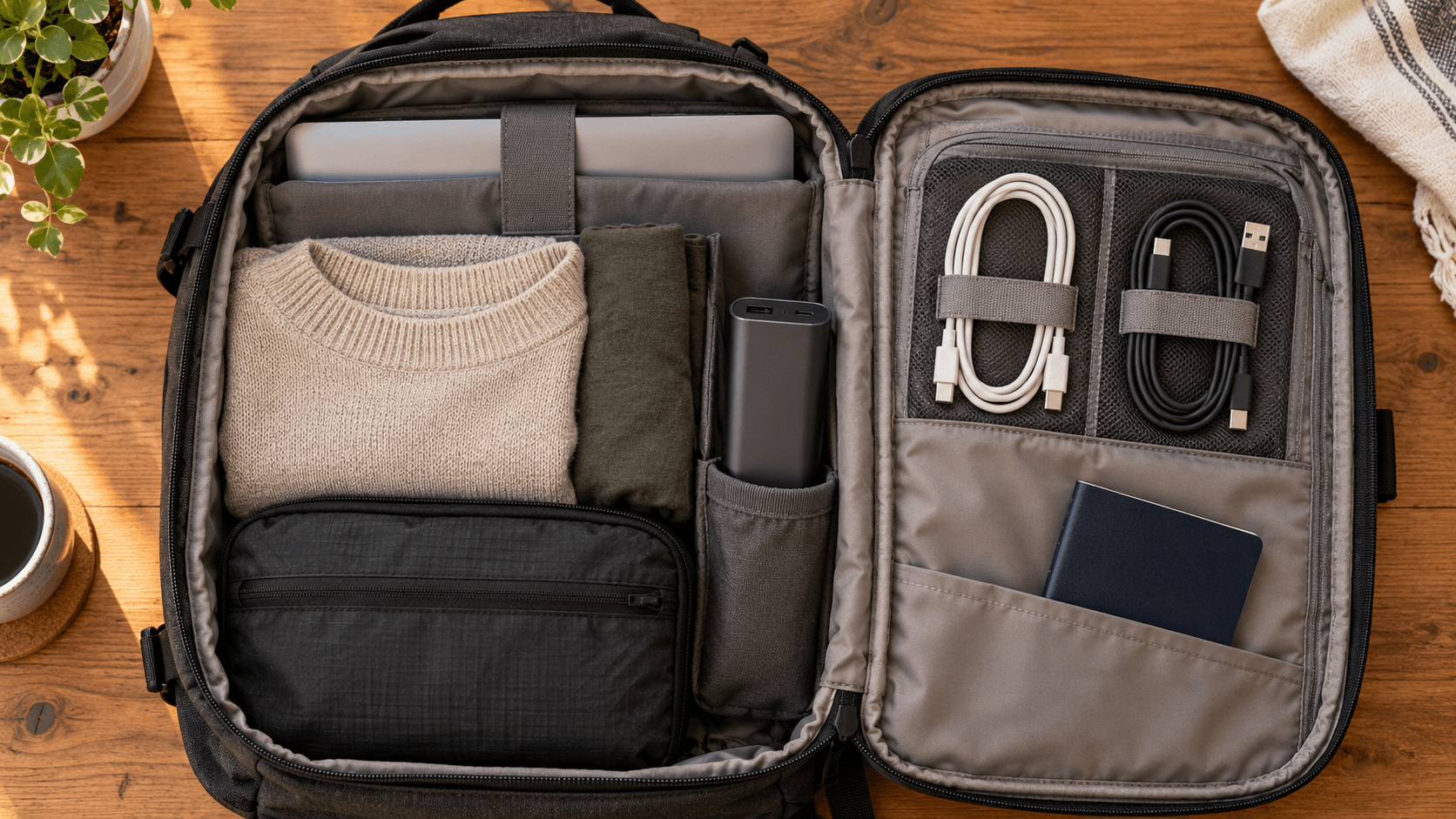
Grey is the finish here, with an elongated enclosure that makes more sense beside a laptop than inside a trouser pocket. Smooth rounded edges facilitate convenient stowage inside backpack sleeves or travel pouches, while internal heat sinking helps maintain operational temperatures within normal parameters during extended output cycles. Allow room for the bank and its charging cables when planning a travel pouch; the narrow column shape still occupies real space.
Key Specs and Compatibility
Start with the capacity, the individual USB-C limits and the recharge requirement rather than treating the 200W badge as a promise for every connected device. USB Power Delivery lets compatible laptops, tablets and phones request an appropriate charging level, while smaller accessories use their own supported charging connections. You still need the right cable and a device that accepts the power available from the chosen port. For a travel kit, match each cable to the device it will serve and include a suitable wall adapter for refilling the battery, so your charging plan covers both using the reserve and replenishing it.
Specification
Value
Brand
UGREEN
Battery Capacity
25,000 mAh / 90Wh
Battery Cell Type
Lithium Ion
Maximum Output Amperage
5 A
Full Recharge Time
65W max USB-C input (no full-recharge time published)
Color Finish
Grey
Product Weight
592 g
Device Compatibility
Compatible USB-C laptops, smartphones, tablets and wired accessories
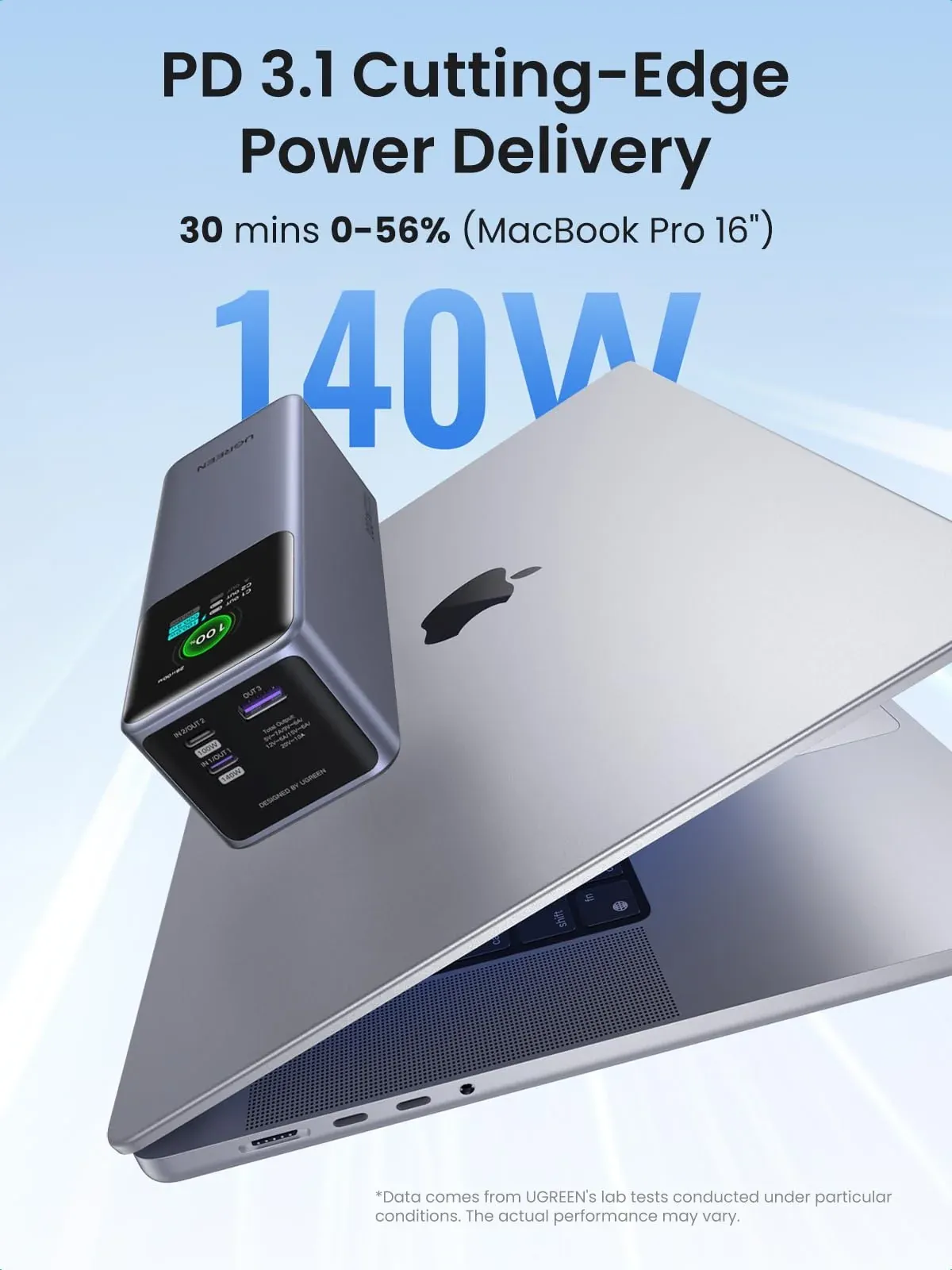
For a single demanding laptop, the useful number is 140W from USB-C1. That gives this model more single-port charging headroom than a 100W power bank, provided the laptop and cable support the required Power Delivery mode. For USB-C to USB-C charging at 140W, use an electronically marked 240W cable; a cable rated only for 100W cannot provide the bank's full single-port output.
Two-laptop charging is the better explanation for the 200W name. UGREEN specifies a 100W-plus-100W arrangement across the USB-C ports, allowing each compatible laptop a substantial allocation from the same battery. A laptop that needs more than that for its fastest charging will have to use the primary port alone to reach the bank's 140W ceiling, so the right arrangement depends on the devices you plug in.
Instead of reducing the remaining charge to a handful of LED dots, the TFT screen shows battery percentage, charging or discharging time estimates, input and output power, voltage and current. Those readings give you something concrete to inspect when a laptop is charging more slowly than expected. A low wattage reading can prompt you to check the cable or device settings, although the display alone cannot identify the cause.
Temperature monitoring also belongs in the discussion when a portable battery supplies this much power. UGREEN's Thermal Guard system monitors temperature changes and manages current, adding a protection mechanism alongside the charging circuitry. The buying appeal comes from the combination of a 90Wh reserve, high-output USB-C ports and visible charging information; none of those specifications makes the bank a replacement for every laptop's original power supply.
Strengths
For remote workers carrying several devices, the appeal starts with concentrating the charging connections in one battery. Having 25,000mAh on tap means you can fully recharge a typical 13-inch or 14-inch laptop about once, while still keeping a smartphone and wireless earbuds topped off throughout a full workday. The high USB-C output also makes this a sensible candidate for compatible gaming handhelds and laptops whose charging requirements exceed those of a phone.
Port allocation gives you a practical way to prioritize the gear in front of you. Use USB-C1 for a demanding laptop, reserve USB-C2 for another computer or tablet, and leave USB-A for an accessory with a matching cable. For two laptops, the specified 100W-per-port arrangement is the concrete advantage over a bank with a 100W total ceiling: the second computer does not have to share that smaller combined budget with the first.
Its 65W input means a long stop near an outlet buys a substantial top-up. Input power, remaining percentage and time estimates on the TFT screen let you follow the recharge instead of waiting for an indicator light to change. Treat the time display as an estimate tied to the current charging conditions, and plan around the published recharge requirement when deciding which wall adapter to pack. If you spend the day moving between places, scheduling that refill deserves as much attention as deciding which devices will draw from the battery during the next stretch away from mains power.
Weaknesses
Weight is the clearest compromise: 592g for a battery you will carry alongside the devices it powers. Its column-shaped enclosure suits a backpack compartment better than a jacket pocket, and you should account for the cables as part of the setup. If you only need to rescue a phone battery during the commute, carrying this much capacity and laptop charging circuitry is a poor trade for the space it occupies.
Power sharing needs some attention, too. A laptop connected to USB-C1 alone has access to up to 140W, but the advertised two-laptop arrangement supplies up to 100W to each USB-C connection. Adding a third device introduces another demand on the shared output budget, so plan your connections around the equipment that needs the most power rather than expecting every port to retain its individual maximum.
Only two of the three ports are USB-C, which is a specific limitation for anyone carrying a USB-C laptop, tablet and phone. USB-A remains useful for older cables and accessories, but it cannot act as a third USB-C socket for that setup. Buyers whose devices charge within a 65W or 100W budget should also compare lower-output models before paying for the extra capacity and simultaneous laptop charging available here.
Best Alternatives
Choose an alternative by identifying the constraint in your own setup: how much power your laptop accepts, how many devices need charging together, or where the battery has to fit. A higher combined output matters for several demanding devices, while a flatter enclosure matters if your bag has shallow compartments. Compare the specified port allocations as well as the headline wattage, since a larger total output does not automatically increase a laptop's charging limit. Price should follow that comparison: decide which capability your current setup actually needs, then assess whether paying for the extra output or changing the shape of the battery solves the problem you carry every day.
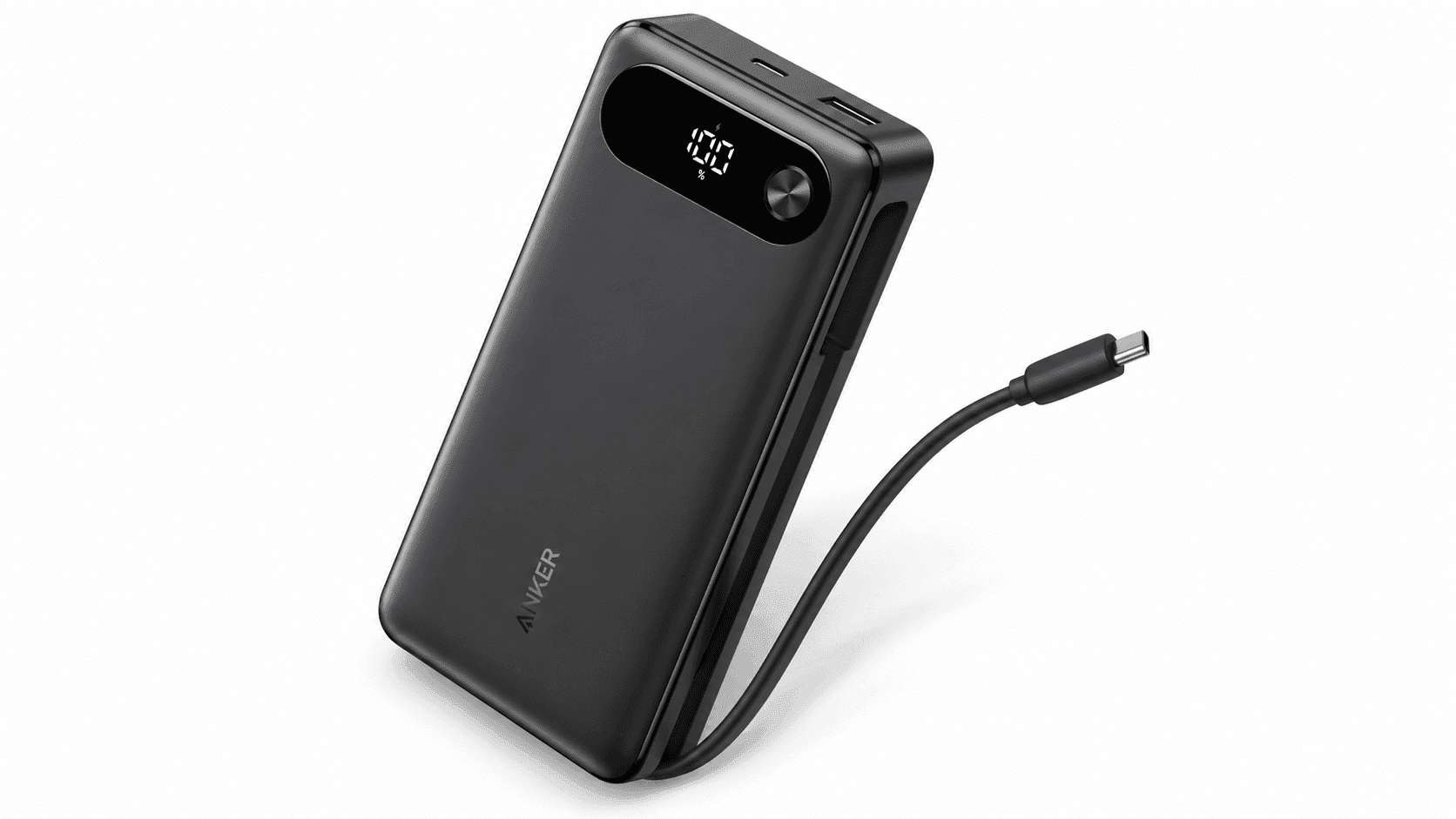
Anker Prime 300W offers 26,250mAh and 300W combined output at a higher price than the Nexode 200W, making its larger power budget the reason to upgrade for multiple demanding devices, while its specified 600g weight is about the same as the UGREEN's 592g.
Baseus Blade 100W trades the Nexode's 200W charging budget and 25,000mAh capacity for a flatter 20,000mAh enclosure with two USB-C and two USB-A ports, making it the better shape for a shallow laptop bag, although Baseus's direct stores currently list it as sold out.
Who Should Buy It
Buy this bank if charging two USB-C laptops away from an outlet is a recurring need. The specified 100W-per-port arrangement gives that buyer a clear reason to choose it over a lower-output battery, especially when both computers need charging during the same work session. Owners of a compatible 16-inch MacBook Pro also have a reason to consider USB-C1's 140W output, provided they choose the charging cable appropriate to their model. For that buyer, the extra weight buys access to a specific charging capability they can use; it makes less sense to carry the same bank simply because its wattage exceeds the alternatives on a shopping page.
Frequent travelers carrying a laptop and several accessories are another sensible audience, particularly when they can reserve space for a substantial battery in their carry-on. Its 90Wh rating meets the FAA's capacity threshold for carriage without airline approval, and the three connectors offer wired charging options between stops. Keep it in carry-on luggage, protect it from damage and short circuits, and follow your airline's rules for storage and use onboard.
Commission may be earned from this link, at no extra cost to you.
Who Should Skip It
Phone-only buyers should skip the Nexode 200W. Its 592g weight is the strongest reason: you are carrying a battery sized around laptop charging to solve a much smaller daily problem. A lower-capacity power bank makes more sense for topping up a smartphone or earbuds when you want something that can stay in a small bag without reorganizing the rest of your belongings around it.
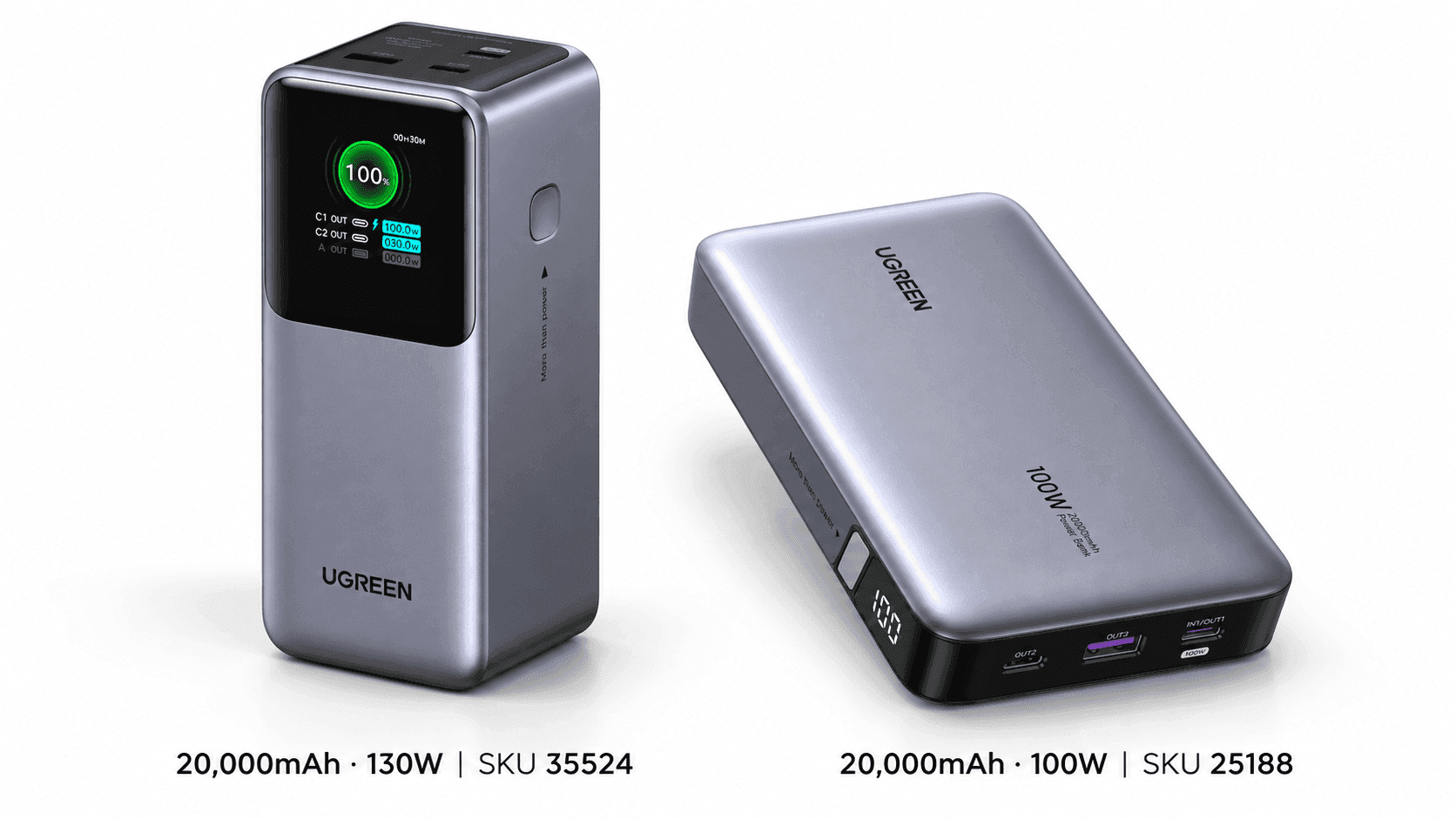
Skip it as well if your laptop cannot charge through USB-C or needs its proprietary adapter to deliver the performance you expect. A 200W total rating does not establish compatibility, and the 140W single-port ceiling does not override a computer's charging requirements. For a single device that accepts no more than 65W or 100W, compare the Nexode 100W, Nexode 130W and Baseus Blade 100W against your actual capacity and port needs.
Sources & References
Specifications and claims in this analysis were cross-referenced against the sources below.
Yes. Its 90Wh rating falls below the FAA's 100Wh threshold for power banks carried without airline approval. Pack it in carry-on luggage, protect it from damage and short circuits, and follow your airline's onboard rules.