UGREEN Nexode Pro 65W Review: Slim Charger, Shared Power
A slim three-port charger for a compatible laptop and smaller devices. Here's how the US model splits its power, what Samsung charging needs, and where it falls short.
A laptop charger, a phone plug, and another adapter for accessories is a lot to pack for one night away. This UGREEN Nexode Pro 65W review looks at replacing all of that with one slim wall charger that has two USB-C ports and one USB-A port. Buy it for a compatible ultraportable laptop and smaller devices. Skip it if you need the full 65W for your laptop while also fast charging another power-hungry device.
In this review, Nexode Pro 65W means the US ultra-slim model CD335, part number 15817, which is the one in our link. UGREEN also sells a Nexode Pro mini charger with a different shape, so make sure the size and port specs you're reading match your version. Among travel chargers, the Anker Prime 67W is a close rival, while a 100W model is the better upgrade if shared power is your main worry.
The biggest limit is simple: 65W is the total across all ports, not what each port gets. Use USB-C1 on its own for the most laptop power, and expect that port to drop when you plug in a phone or accessory. If you commute and charge a few devices without needing top speed on all of them, that's a fair trade. If you need to charge two power-hungry laptops, get something bigger.
Some links in this article are affiliate links, which helps support GadgetPickr at no extra cost to you.
The Quick Take
Get the Nexode Pro 65W for its slim shape and its mix of USB-C and USB-A ports. Its best trick is letting you carry one charger for a compatible laptop, phone, and small accessory. Its biggest weakness is shared power: with three devices plugged in, USB-C1 gets up to 45W and the other two ports split 15W.
Verdict
Buy the Nexode Pro 65W for a slim, three-port travel setup built around one compatible ultraportable and smaller devices. Its flat shape plus two USB-C ports and a USB-A port is the main reason to get it. USB-C1 can deliver up to 65W on its own, and with three devices plugged in, it gets up to 45W while the others share 15W. That's useful flexibility when you don't need top speed on everything.
Skip it if you need two power-hungry devices charging fast at the same time, since shared power is its biggest limit. Our UGREEN Nexode Pro 65W review recommends it for commuters and students who are fine with that trade-off, and points heavier users to a more powerful model. Check the plug and cable requirements for your region before you order. Supported charging standards and the right port matter more than seeing your device's name on a compatibility list.
Against a close rival like the Anker Prime 67W, decide on shape, how each one splits its power, and the current price. Don't expect a big difference from the headline wattage alone.
UGREEN Nexode Pro 65W
Best for a compatible USB-C ultraportable and low-power travel accessories. Use the main USB-C port on its own when your laptop needs the full 65W.
A mid-range three-port travel charger. Check the current price and plug version before you order.
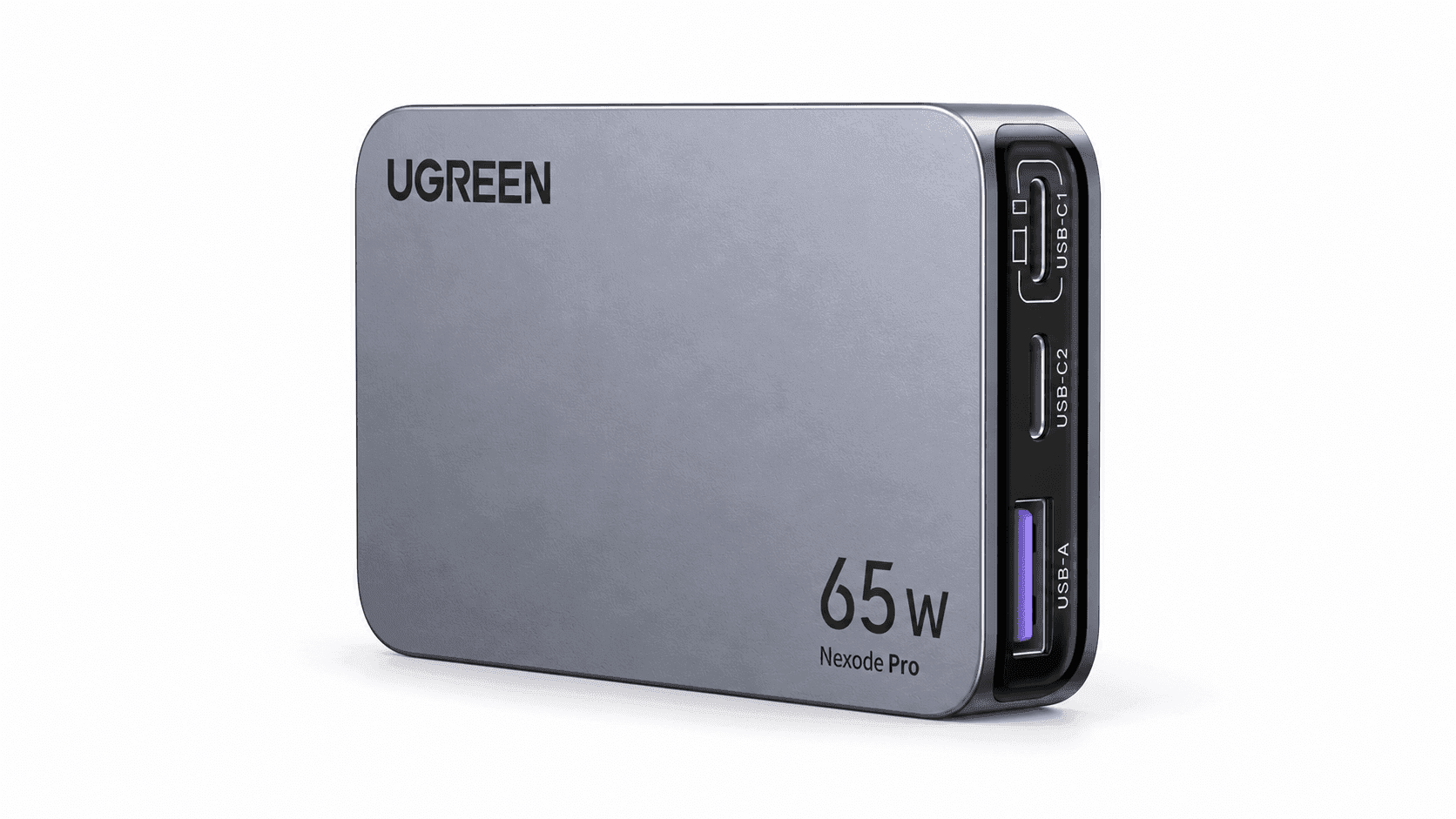
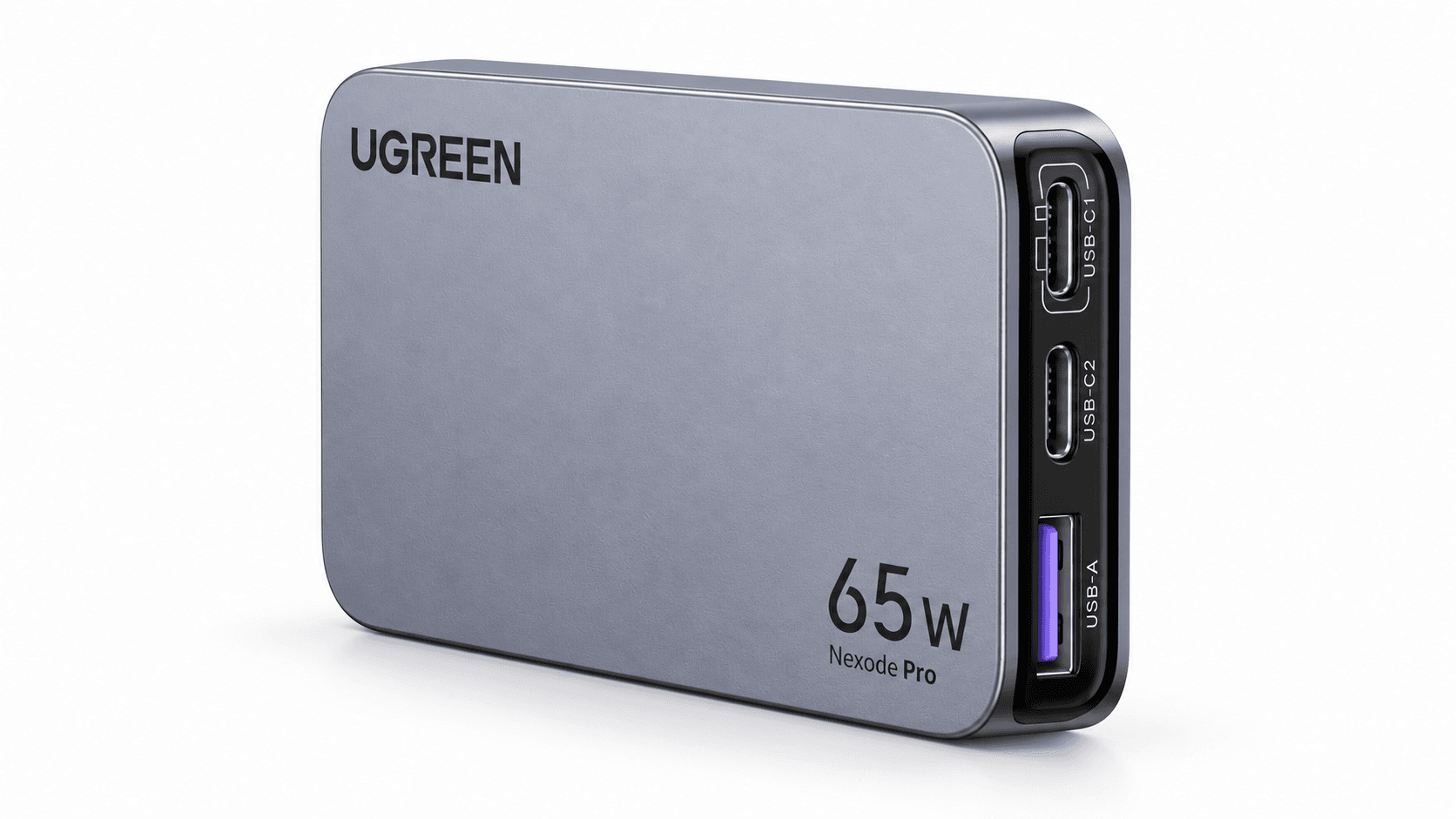
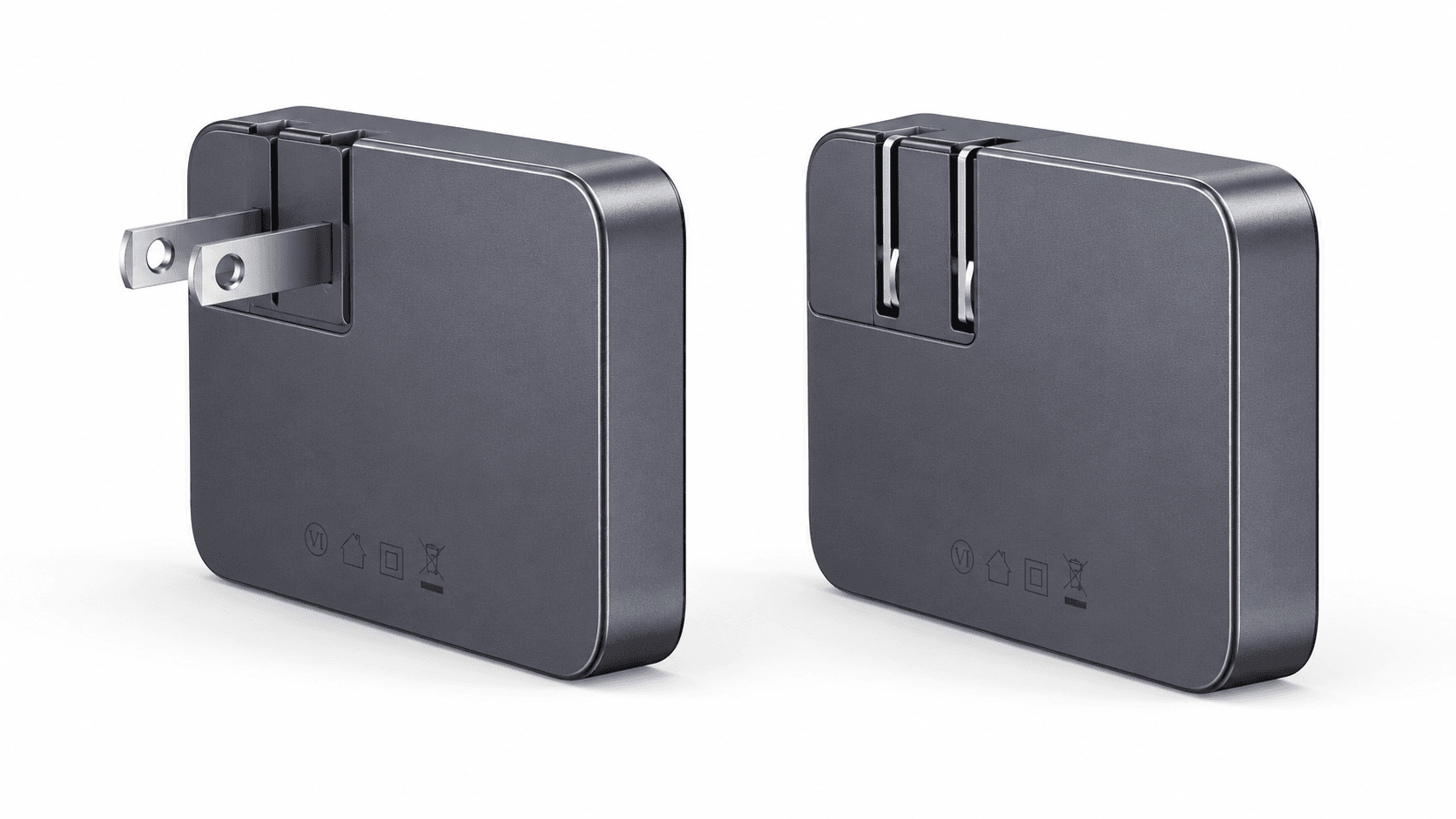
UGREEN uses its GaNInfinity gallium nitride parts and Airpyra stacking design to fit the electronics into a flat case. The US version has folding prongs, so nothing sticks out when you pack it. That shape is a good reason to look at it if a chunkier charger would crowd your travel pouch or block the outlet next to it. It's still a wall charger, though, so you'll need an outlet.
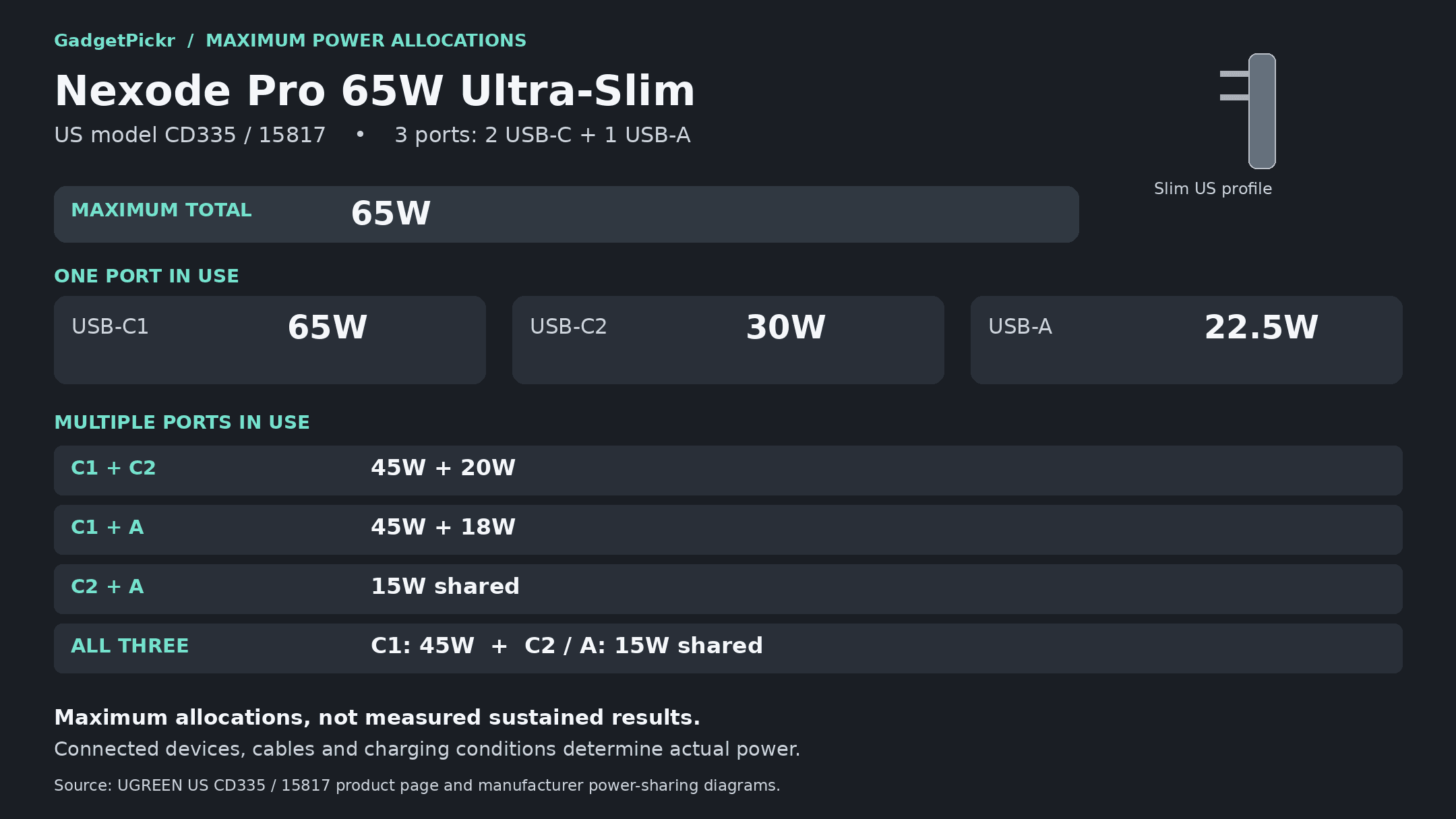
Which port you use matters more than the fact that there are two USB-C ports. USB-C1 delivers up to 65W on its own, including a 20V, 3.25A Power Delivery profile, while USB-C2 tops out at 30W on its own. USB-A reaches up to 22.5W with a compatible device. Plug your laptop into the second USB-C port and it gets less power before you've even added anything else.
With USB-C1 and USB-C2 in use together, you get up to 45W plus 20W. Pair USB-C1 with USB-A instead and it's up to 45W plus 18W. Use USB-C2 and USB-A without the first port and they share 15W. With all three in use, USB-C1 keeps up to 45W while USB-C2 and USB-A share a separate 15W.
For a laptop, phone, and earbuds, that makes the first USB-C port the obvious spot for the computer. The other two can handle smaller jobs, but they don't keep their individual maximums when used together. Your phone also picks its own charging speed, so it won't take every watt printed next to the port. Battery level, your cable, and the device's own limits all play a part.
It accepts 100–240V AC, so with the right plug adapter it works in most countries. A plug adapter only changes the shape of the prongs. It isn't a voltage converter. Keep that in mind when you shop for travel accessories, because the folding US plug won't fit every outlet abroad.
UGREEN Nexode Pro 65W Review: Key Specs and Compatibility
Match your laptop's power needs to the port you'll actually use. The single-port and shared limits below cover different setups, so don't treat them as interchangeable.
Spec
UGREEN Nexode Pro 65W (US, CD335)
Total output
65W; actual maximum depends on which ports are in use
Ports
2x USB-C, 1x USB-A
USB-C1 max
65W (5V/3A, 9V/3A, 12V/3A, 15V/3A, 20V/3.25A)
USB-C2 max
30W when used alone
USB-A max
22.5W when used alone
PPS range
Not confirmed for this US model
AC input
100-240V AC, 50/60Hz; max input current not confirmed
Fast-charging standards
USB PD 3.0, PPS, Quick Charge 4.0+/3.0, SCP; support varies by port
Compatibility comes down to charging standards and power needs, not whether a device runs Windows, macOS, or Android. A USB-C laptop has to support charging through that port, and a phone only uses the modes it supports. For the full 65W laptop profile, use a properly rated e-marked USB-C cable, like a 100W-rated one. There's no cable in the box with the standalone charger.
What Stands Out
The shape is the main reason to pick this 65W charger over others. Its flat body changes how you pack it and how far it sticks out from the wall, and the folding prongs stay tucked away while you travel. GaN parts help keep the charger small, but that doesn't mean every GaN charger runs at the same temperature. What sets this one apart is its layout.
Because it's thin, it sits flatter against the wall than a boxy charger. Where the outlet is still matters if it's behind a desk or bedside table. Leave room for the cable plugs and how they bend, not just the charger itself. A thin charger won't fix a crowded or awkwardly placed outlet.
PPS support matters most if you have a compatible Samsung phone. UGREEN advertises support for Samsung's 45W Super Fast Charging 2.0, which also needs a phone that supports it, the right cable, and enough power left on the port you're using. For 45W mode, use a USB-C cable rated for 5A, since not every USB-C cable can handle it.
The USB-A port is worth having if you still have an accessory cable that uses it. Keeping that cable in use beats replacing it just to go all USB-C. It doesn't add extra power, though. When USB-C2 and USB-A run together, they share a small budget, so they're best for low-power devices.
UGREEN lists ThermalGuard plus protection against overvoltage, overcurrent, overheating, and short circuits. Those are worth weighing alongside the output limits. They don't replace a properly rated cable or the charging controls built into your device.
Strengths
The clearest benefit for a work bag is swapping several chargers for one three-port unit. You can save USB-C1 for a laptop and use the other ports for a phone and earbuds, as long as their shared power is enough. That means fewer outlets to hunt for, and the same setup whether you're at a desk or in a hotel room.
Charging one device is simple: plug the laptop into USB-C1, leave the other ports empty, and you get up to 65W. That works for compatible ultraportables that don't need more than that. It doesn't guarantee the fastest charging mode for every MacBook Air or Windows laptop, though. Apple lists specific higher-wattage chargers for fast charging on supported MacBook Air models, so check your exact computer, not just its name.
For phones, support for both USB Power Delivery and PPS means more than a long list of phone models. You can use one charger for several devices instead of carrying each one's original plug. The phone decides which mode to use, and its charging speed changes as the battery fills. A 65W charger won't force a phone to take 65W.
The wide 100–240V input is another plus for travel. With the right plug adapter, you can use it abroad without packing a separate voltage converter. Keep the USB cables your devices need in the same pouch. One charger is handy, but forgetting the cable still leaves you stuck.
Weaknesses
Shared power is the biggest reason to buy something else. Once both USB-C ports are in use, the laptop port drops from 65W to up to 45W. A laptop that draws more than that under heavy work may charge slowly or keep draining its own battery. If you usually fast charge a laptop and tablet at the same time, get a more powerful charger.
Three ports doesn't mean three devices fast charging at full speed. With all three in use, USB-C2 and USB-A share 15W while USB-C1 gets up to 45W. That works for a laptop plus small accessories, but it's tight if both extra devices need a lot of power. Plan around the ports you'll actually use instead of adding up each port's maximum.
Power allocation also changes whenever you add or remove a device, since the charger divides its 65W differently depending on which ports are in use. If something needs steady power, check how your device handles that before relying on this charger. A charger built for phones and laptops isn't automatically a good uninterrupted supply for every USB device.
Accessories add to the cost and the packing list. The standalone model has no built-in cable, and the fastest charging modes need the right cables. The US plug also needs an adapter in countries with different outlets. If all you need is one phone charger by your bed, a simpler single-port charger saves you from carrying ports you won't use.
Best Alternatives
Pick an alternative based on the limit you want to get around. Anker's Prime 67W has the same two USB-C plus one USB-A layout and up to 67W for one device, so it's a close rival rather than a real upgrade for two power-hungry devices.
UGREEN's Nexode 100W four-port charger gives you more total power and an extra port, but loses the ultra-slim shape. Baseus's GaN2 100W four-port charger is another higher-output option with a different body and plug, so compare the exact regional version and how it splits power instead of assuming it's cheaper.
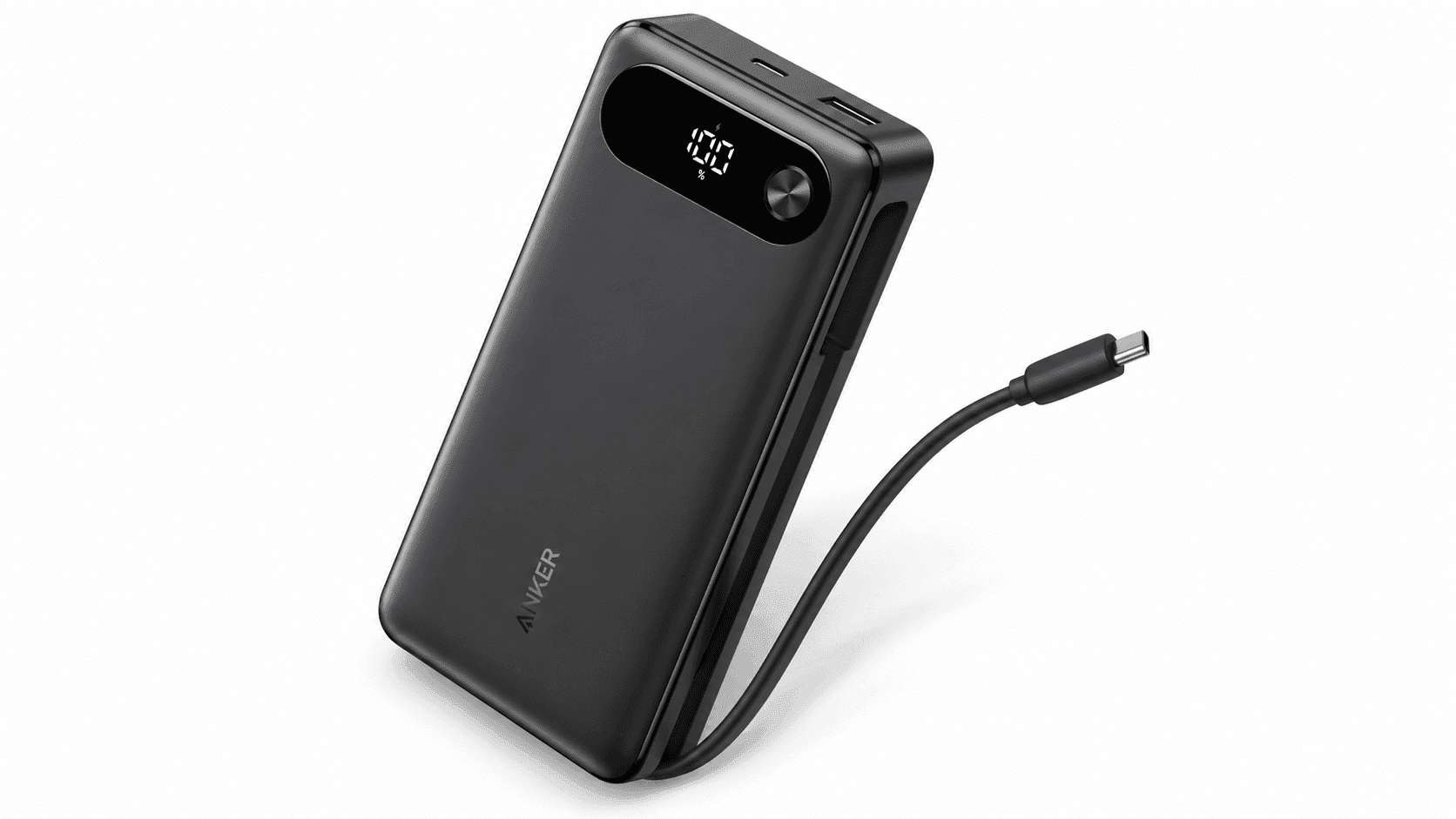
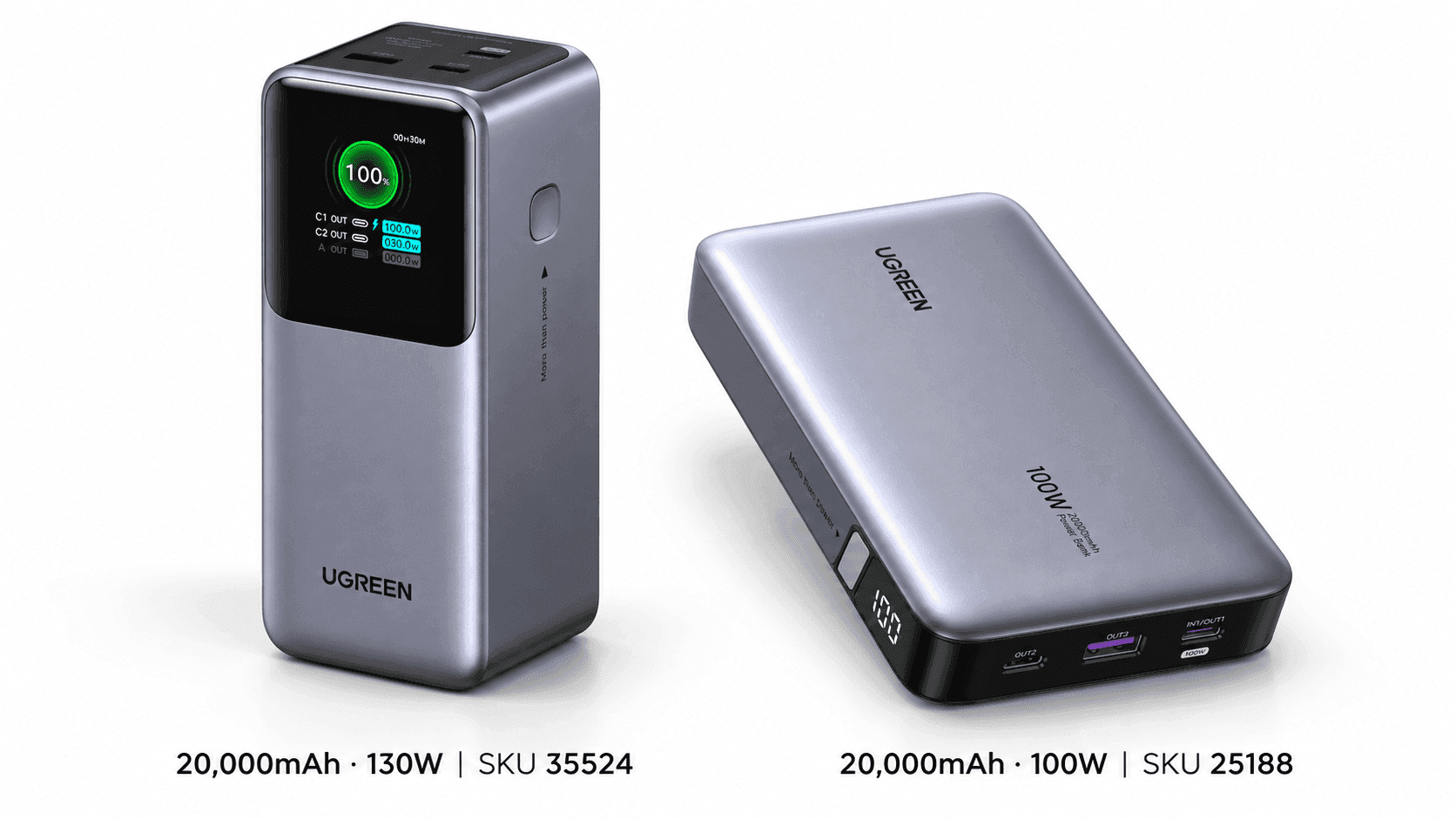
If you need to charge away from an outlet, UGREEN's 145W 25,000mAh power bank stores energy instead of replacing a wall charger, but it adds weight and needs recharging itself. Baseus's 25,000mAh EnerFill FC41 is a similar portable option with built-in USB-C cables.
Who Should Buy It
Buy the Nexode Pro 65W if you want one slim plug for a compatible ultraportable, phone, and small accessory. Its biggest advantage is the shape and port mix, especially if you move between workplaces or take short trips. You get more flexibility than a single-port laptop charger without jumping to a bigger, more powerful one. Just accept that charging several devices means sharing the power.
A student with a laptop, phone, and earbuds is a good example. Use USB-C1 alone when the laptop needs the most power, then add the other devices when a slower laptop charge is OK. That's a practical routine, not a promise of top speed on every port at once. Keep the right cables with the charger so the extra ports stay useful.
If you travel with a compatible Samsung phone, the PPS support is another reason to consider it. Use the right high-current cable, phone, and port setup to get its supported fast-charging mode. For trips abroad, check the outlet type and pack a plug adapter. This review covers the folding US version, not every Nexode Pro charger sold with the same wattage.
Commission may be earned from this link, at no extra cost to you.
Who Should Skip It
Skip it if your laptop needs more than 65W on its own, or more than 45W while something else charges. That's the main reason to move up to a 100W or 140W charger. A slim charger that can't keep up with your normal use causes more hassle than its shape saves. Check your laptop's supported input and how you actually use it, not just its screen size.
Skip it too if you regularly charge a big power bank and a laptop together and want both at full speed. They'll compete for the same limited power here. In that case, a bigger charger matters more than saving space in your bag. And if you only charge one phone, go the other way and get something smaller and simpler.
Sources & References
Specifications and claims in this analysis were cross-referenced against the sources below.
Yes. With all three ports in use, USB-C1 gets up to 45W while USB-C2 and USB-A share 15W. It won't give a laptop 65W while also fast charging two other devices.