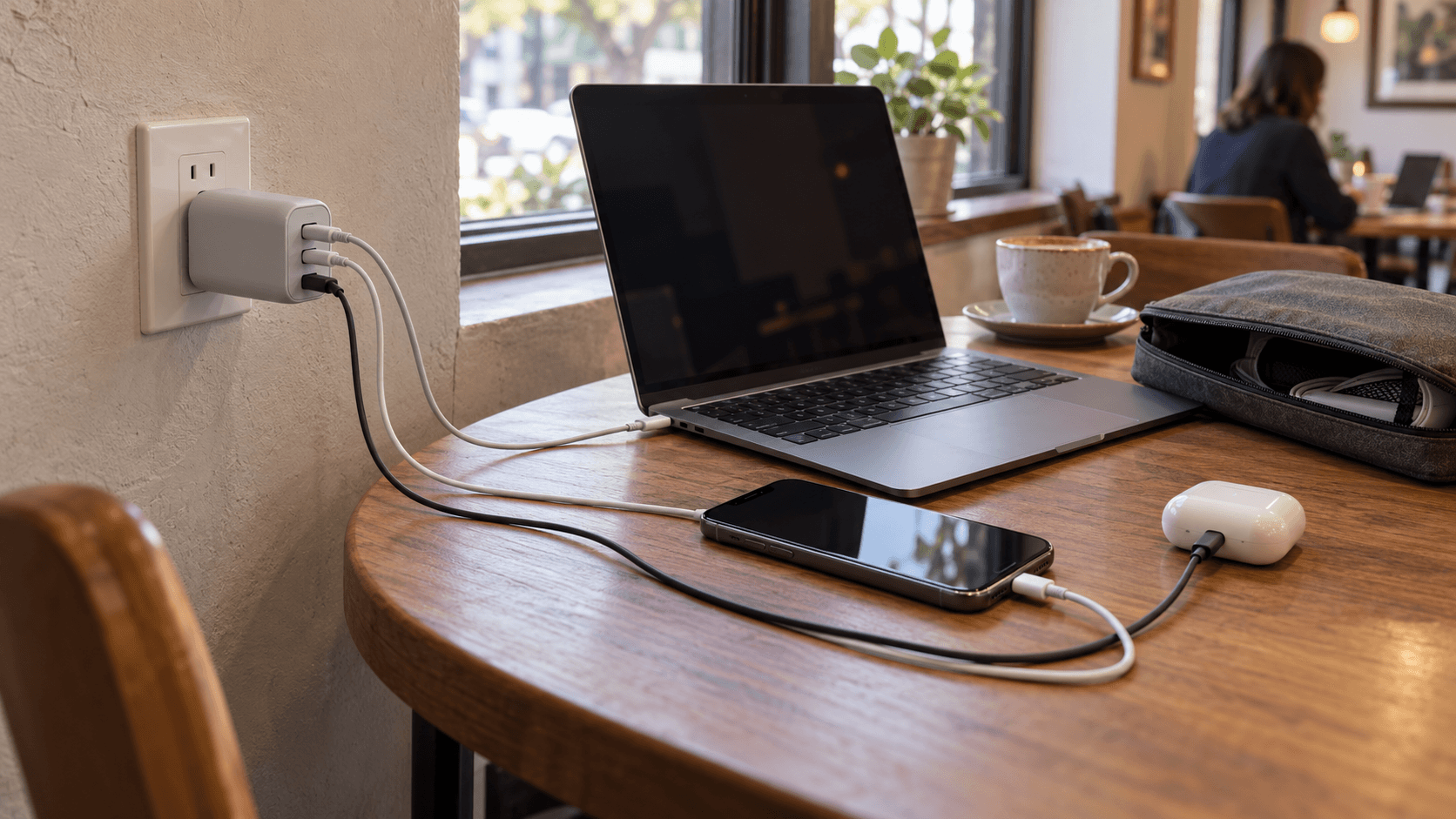
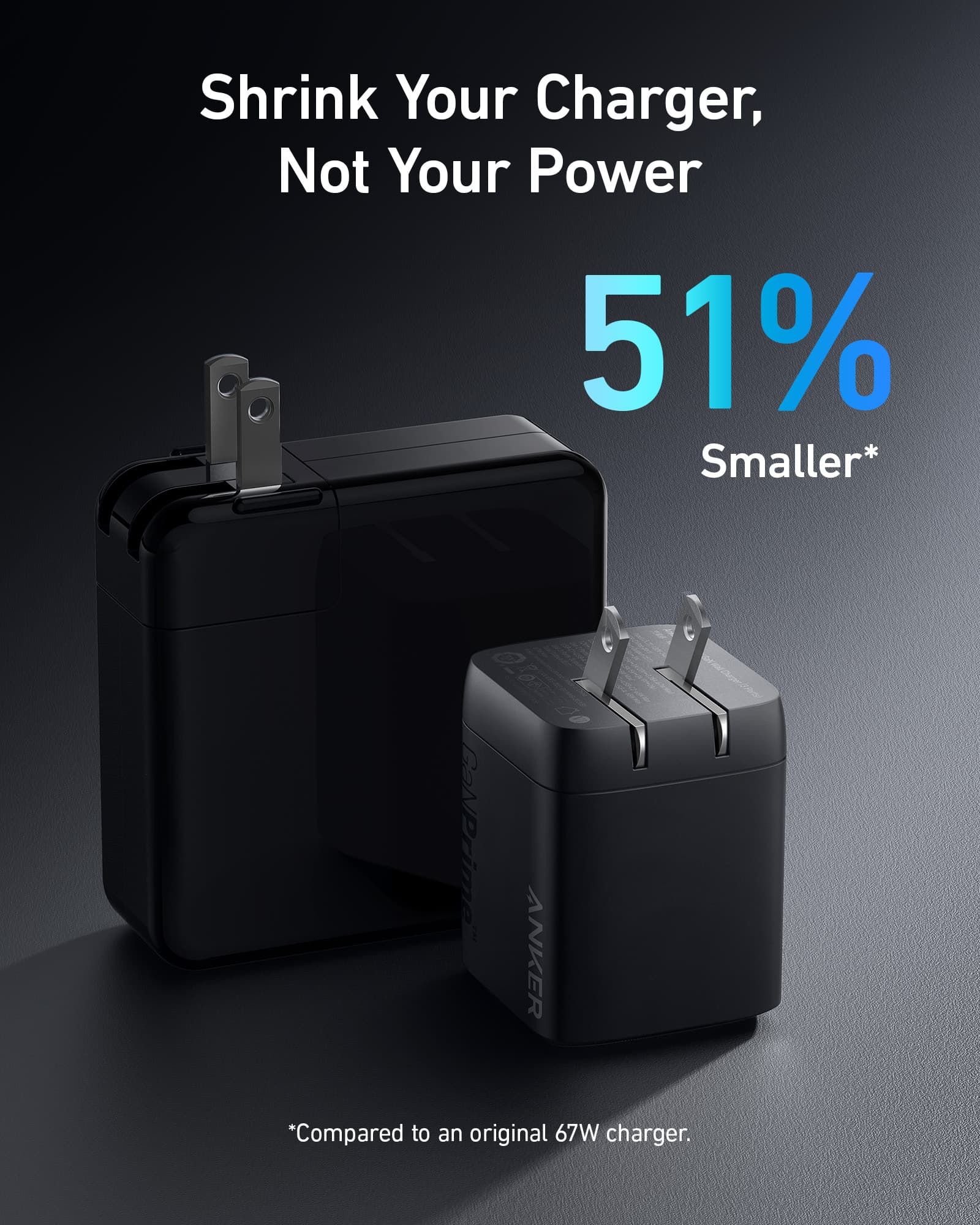
Carrying separate chargers for a laptop, phone, and earbuds gets old quickly, especially when your hotel room offers one conveniently placed socket. This Anker Prime 67W Charger review comes down to a practical question: can one small adapter replace that collection without leaving your laptop short of power?
For a lightweight USB-C laptop and a few smaller devices, the answer is yes—with a clear limit. Either USB-C port can supply up to 67W alone, but connecting more devices means sharing the available output. Buy it to simplify a modest charging setup; skip it if your laptop needs the full output of a higher-wattage adapter while you work.
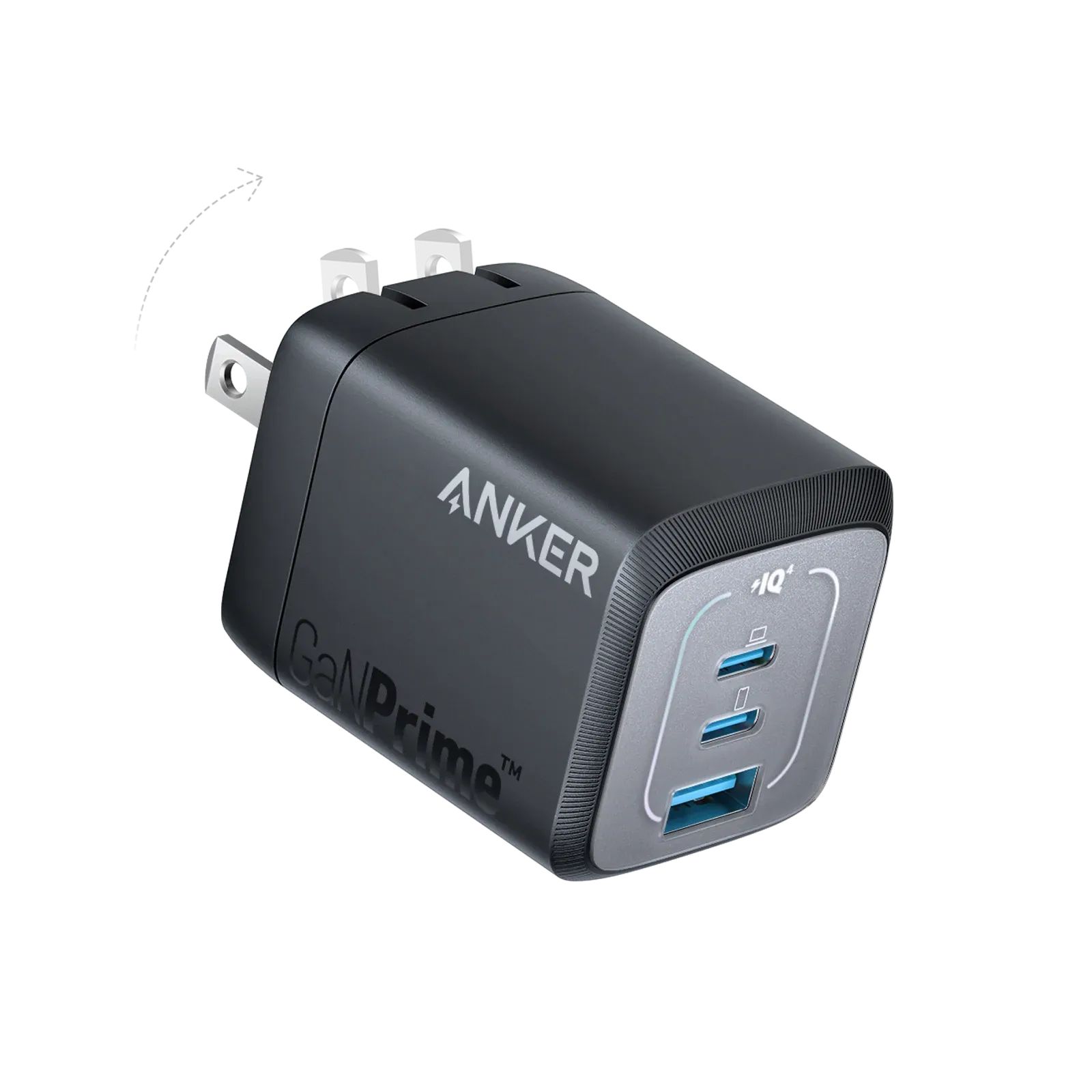
Port count makes the pitch attractive: two USB-C connections, one USB-A connection, and folding prongs in a compact body. Your device mix decides whether that arrangement makes sense. A laptop plus a phone is a different proposition from two demanding laptops, even when both setups need only two cables.
Some links in this article are affiliate links, which helps support GadgetPickr at no extra cost to you.
The Quick Take
Anker Prime 67W Charger is a sensible travel adapter for a lightweight laptop, phone, and small accessories. Its strongest feature is the combination of two USB-C ports and USB-A in one folding wall plug. Its biggest limitation is shared power: 67W is available to one USB-C device, rather than to every connected device at once.
Verdict
Buy Anker Prime 67W Charger for a lightweight USB-C laptop and smaller devices if your goal is fewer adapters in your bag. The combination of two USB-C ports, USB-A, and folding prongs is its strongest argument. It offers a useful mix of connections without asking you to carry a separate wall brick for each item.
Skip it for a laptop that needs a higher-wattage adapter during demanding work. Shared output is the deciding limitation, rather than a minor detail hidden behind the port count: 67W is available to one USB-C device, 65W is shared across two ports, and 64.5W is shared across three. Match the charger to that budget before replacing the adapter that came with your computer.
The buying recommendation in this Anker Prime 67W Charger review is clear: choose it for consolidation around one modest laptop, and choose more output for a demanding workstation. It earns a strong market consensus score of 8.8 out of 10 for balancing sustained performance, port selection, and premium build quality against its realistic multi-port charging caps.
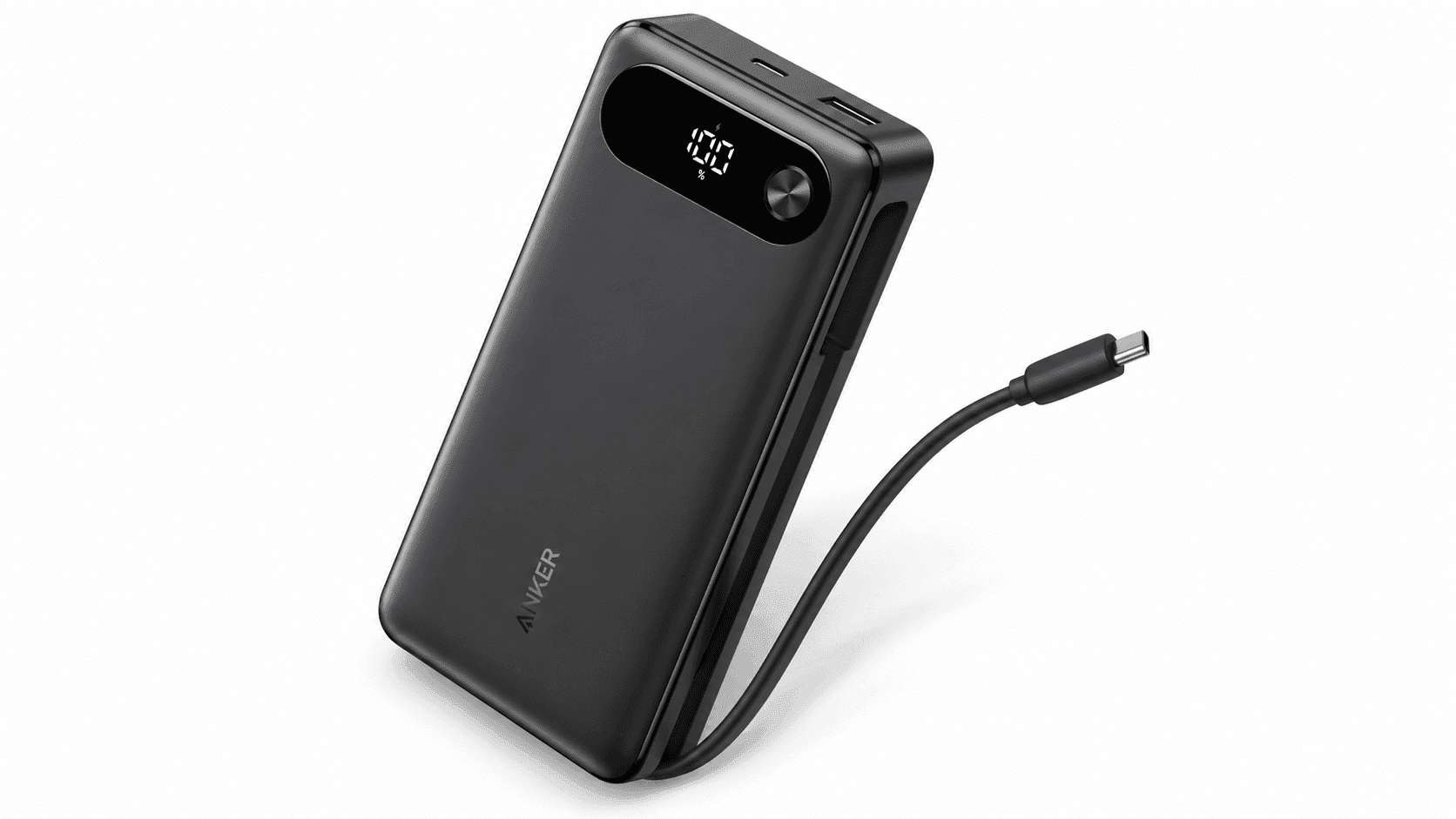
Anker 87W Power Bank: An Off-Grid Alternative
For trips without accessible sockets, this separate 20,000mAh power bank offers a built-in USB-C cable, up to 65W single-device charging, and 87W combined output.
A portable battery alternative for time away from wall power
Model A2669 is a GaN wall charger with two USB-C ports and one USB-A port. It draws power from an AC outlet and distributes that power to connected devices. There is no battery to recharge before a trip, and no stored energy to use after you unplug it.
That distinction matters when choosing travel gear. For a hotel desk, office, or coffee shop with an available outlet, a wall adapter can cover an entire work session without the capacity limits of a power bank. For a flight without in-seat power, carrying this charger alone leaves you dependent on your devices' batteries.
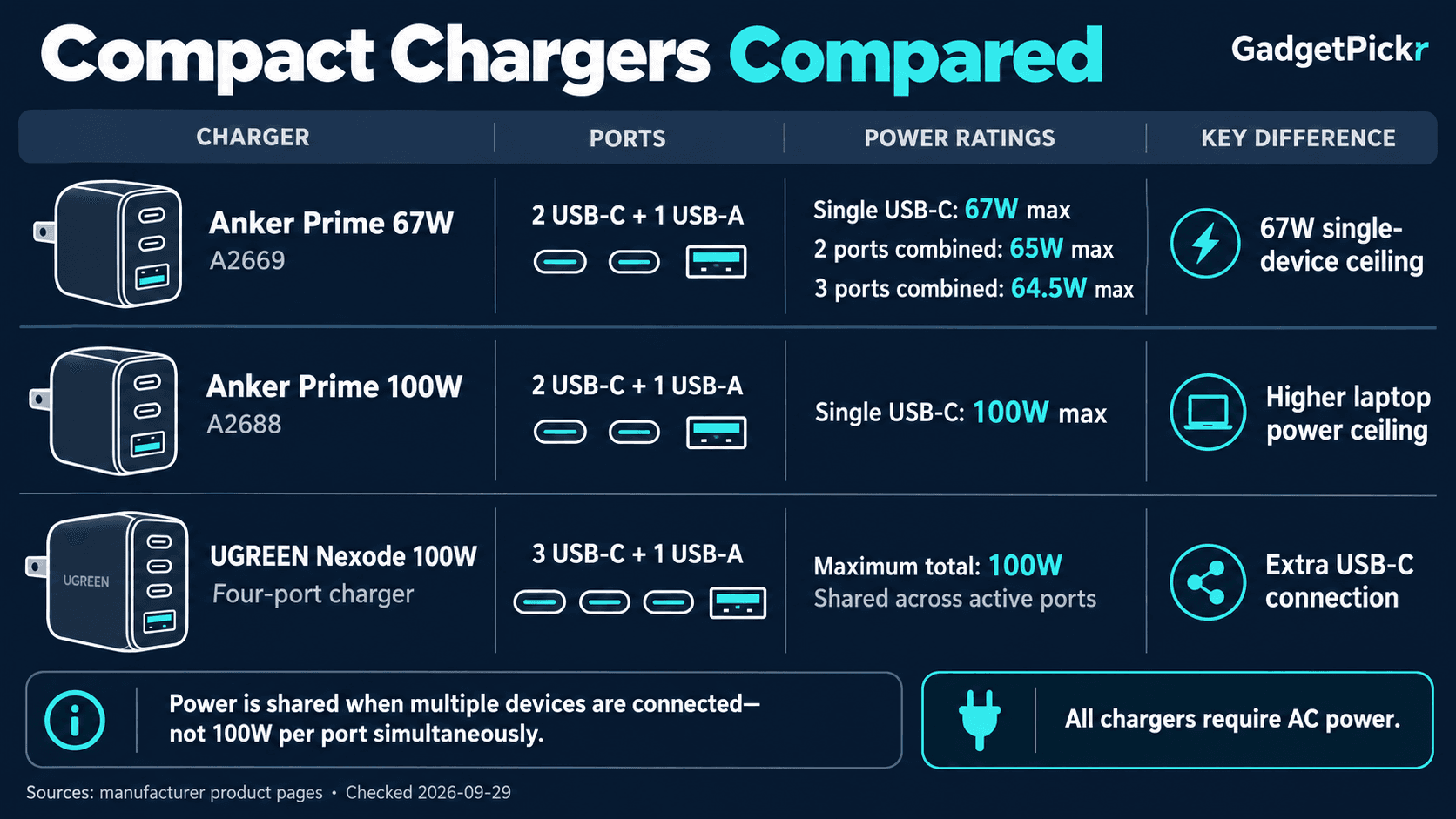
Output changes with the number of ports in use: up to 67W through either USB-C port alone, 65W combined across any two ports, and 64.5W combined across all three. Those are shared ceilings. You cannot give a laptop the full single-port allowance and then add fast charging for a phone on top of it.
Think of it as a charger for one main device and supporting gear. A notebook that accepts USB-C power within its available output is the natural starting point, with a phone or accessory joining when laptop demand allows. If your current adapter barely keeps up with your computer, adding more devices to a smaller shared budget is the wrong direction.
Cables remain part of the packing list. Unlike the power bank in the alternative box, this adapter has no integrated USB-C lead, so replacing several charging bricks does not eliminate the wires connecting your devices. The benefit is fewer adapters competing for sockets and bag space, with familiar connections for the gear you already carry.
Key Specs and Compatibility
Start with the output figures rather than the headline wattage alone. The table separates single-device charging from shared charging, because that difference determines whether the adapter can replace your laptop brick while other devices are connected.
Specification
Value
Model Name
Anker Prime 67W Charger, A2669
Device Category
GaN AC Wall Charger
Port Configuration
Two USB-C Ports, One USB-A Port
Single Port Output
Either USB-C: 67W Maximum; USB-A: 22.5W Maximum
Two-Port Output
65W Maximum Combined, Any Two Ports
Three-Port Output
64.5W Maximum Combined
Charging Protocol
USB Power Delivery (PD), Programmable Power Supply (PPS)
USB-C compatibility covers supported laptops, tablets, smartphones, and handheld gaming hardware, but the connector alone does not guarantee the fastest charging mode. Your device must accept the charger's power profile, and the cable must carry the required current. A higher rating on the adapter cannot override a lower limit in either of those parts.
For the full USB-C output, use an appropriately rated, electronically marked cable; a 100W-rated USB-C cable is a practical choice. Anker sells the cable separately, so account for it when comparing this adapter with a charger you already own. Keeping an unsuitable cable can leave an otherwise sensible upgrade delivering less power than expected.
MacBook owners should also check the connection they plan to use. Anker specifically excludes M2 MacBook MagSafe charging and recommends a USB-C-to-USB-C cable instead. That makes direct USB-C charging the appropriate route for those machines, rather than assuming every cable that fits the original Apple power adapter will provide the same result here.
What Stands Out
GaN technology helps fit laptop-capable charging into a compact wall adapter. The useful result is straightforward: you can carry one body with several output ports rather than a separate brick for each device. That saves space in a tech pouch without asking you to abandon the USB-A accessories that still work perfectly well.
Either USB-C port supports the full 67W ceiling when used alone, so single-device charging does not require hunting for one specially designated high-output connection. Once both USB-C ports are occupied, Anker recommends the upper port for the computer. Keep that distinction in mind when arranging a desk where cables may hide the port labels.
Folding prongs are another useful design choice, especially when the adapter shares a pouch with loose cables and other electronics. They reduce protruding metal during packing, although the body still needs room around the socket when plugged in. Anker attributes improved outlet stability to partially covered pins and a stacked internal design.
USB Power Delivery 3.0, Programmable Power Supply (PPS), and Quick Charge cover a useful range of charging standards. PPS matters for compatible Android phones whose fast-charging modes use adjustable voltage. Choose by your phone's charging requirements rather than assuming the 67W label means every handset can draw that much.
ActiveShield 2.0 adds temperature monitoring to the charging system. Furthermore, the exterior uses flame-retardant materials and ActiveShield 2.0 temperature monitoring, which monitors temperature and adjusts power output to help prevent overheating under sustained load. Leave space around the adapter during use instead of treating its compact size as a reason to bury it under desk clutter.
Strengths
Port selection is the clearest strength. Two USB-C ports can accommodate a laptop and a phone, while USB-A preserves a connection for an older charging cable or accessory cradle. That is a useful arrangement for buyers whose gear spans both connector types, because replacing the wall adapters does not force an immediate replacement of every accessory cable.
Having the same single-port USB-C ceiling on both connections also makes the adapter less fussy when only one device needs power. Charge your notebook alone during a break, then add smaller devices when replenishing everything together matters more than laptop charging speed. The hardware supports both arrangements, provided you respect the change in available output.
Its travel appeal comes from the folding plug and compact body, rather than a claim that every three-port charger is automatically easier to carry. Removing separate adapters from a pouch is useful when you routinely need all those connections. If you carry only a phone, much of this model's port selection and laptop-oriented output would go unused.
USB-A also gives the charger a practical role at home after a trip. You can leave it serving a mixture of current USB-C devices and older accessories instead of treating it as a specialist laptop-only adapter. For a household where charging cables outlast several phones, that mix can be more useful than another exclusively USB-C brick.
Weaknesses
Shared output is the main compromise, and it deserves more attention than the difference between the single-port and combined totals. Even when the overall ceiling changes only slightly, that allowance must serve more devices. A laptop cannot continue receiving the full 67W while a second connection independently takes additional power from the same charger.
For demanding notebooks, the ceiling itself is the problem. A computer that needs 100W or more to support its workload and charge at its intended rate has requirements beyond this adapter's output. Buying a smaller charger does not change those requirements; choose a higher-wattage model if replacing the main laptop adapter is your priority.
Socket clearance is a separate consideration from packing size. A folded plug makes the adapter tidier in a bag, but it does not shrink the body when it is installed beside other plugs. If a wall outlet is worn or loose, the charger’s partially covered pins and stacked design help keep it securely in place, reducing wobble in the outlet.
Another limitation follows from the connector mix: only two devices can connect through USB-C at once without changing your setup. If all your everyday charging cables now use USB-C, the remaining USB-A connection may be less useful. Count the cables you actually pack before assuming three ports means room for every combination of three devices.
Best Alternatives
Anker Prime 100W Charger, model A2688, keeps the two-USB-C-plus-USB-A arrangement and raises single-port USB-C output to 100W, making it the better fit for higher-demand laptops at a higher price than the 67W model on Anker's US product pages.
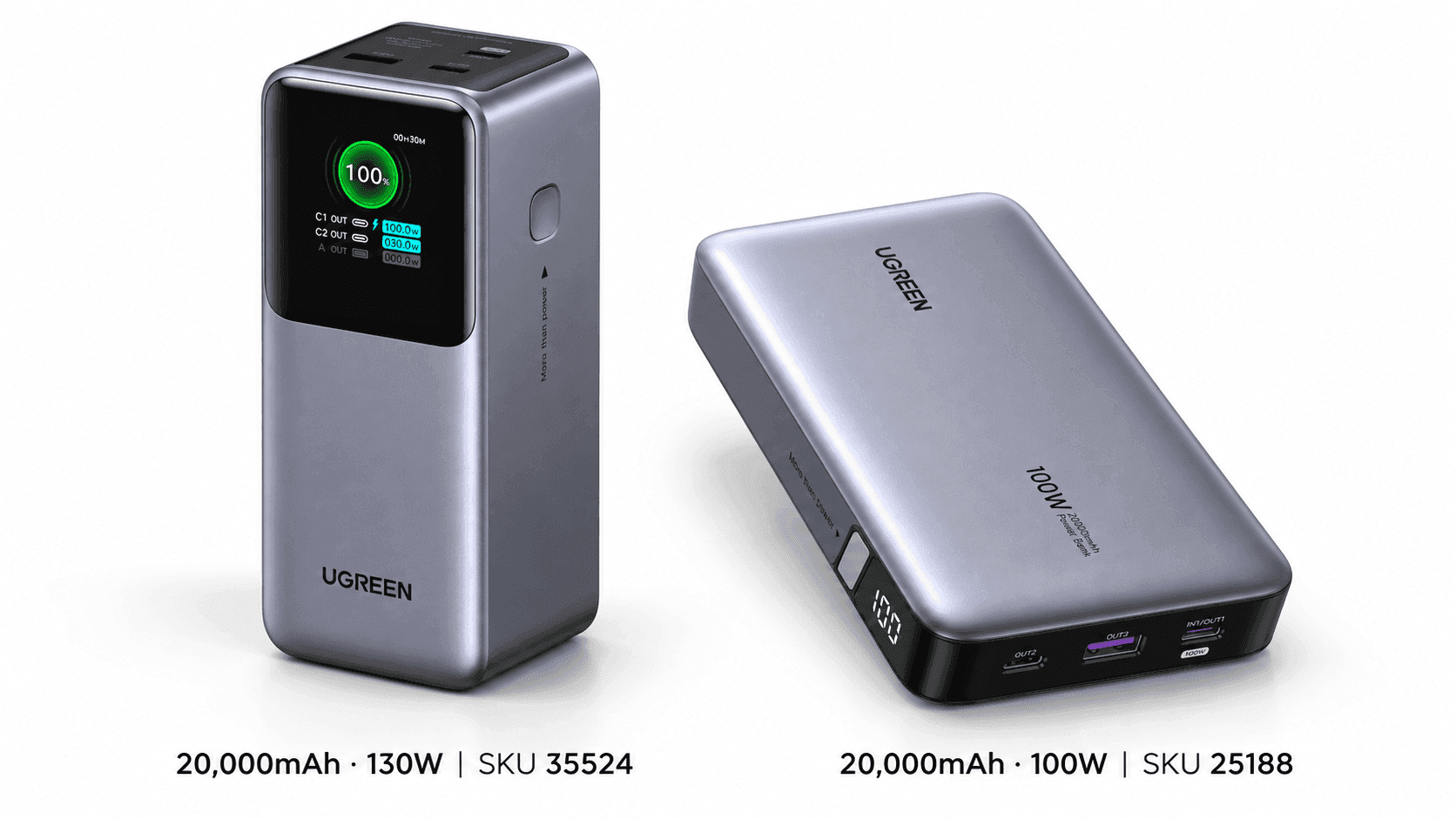
UGREEN Nexode 100W four-port charger adds a third USB-C connection and a higher total output ceiling, trading the Anker's smaller listed dimensions for more room to connect USB-C gear.
Anker 87W Power Bank supplies stored energy and a built-in USB-C cable for trips without sockets, but its 65W single-device ceiling is lower than this wall charger's 67W and its battery must be recharged.
Who Should Buy It
Buy this adapter if your regular travel kit combines a lightweight USB-C laptop with a phone and a small accessory that still uses USB-A. The strongest reason is consolidation: its port mix can replace several wall bricks while leaving you with familiar cable connections. That is a concrete benefit when luggage space and conveniently placed outlets are both limited.
Commuters who charge a notebook alone during part of the day and replenish several devices later are particularly well matched to the design. You can use the full single-port allowance when the computer is the priority, then share output when the phone and accessories also need attention. That routine suits the charger better than expecting maximum laptop charging throughout every multi-device session.
It also makes sense as a second adapter for a supported laptop that spends most of its working day near an outlet. Leaving the original charger at your main desk and carrying this one can simplify the daily packing routine. Make the decision around the laptop's accepted charging input and your connected accessories, rather than screen size or marketing category.
Commission may be earned from this link, at no extra cost to you.
Who Should Skip It
Skip it if you need a replacement for a high-wattage workstation or gaming-laptop adapter. Its strongest reason to pass is the 67W single-device ceiling: that cannot provide the full input demanded by a laptop requiring 100W to 140W. Sharing power with a phone leaves still less available for the computer, which makes the mismatch more pronounced.
People who need to charge several demanding USB-C devices together should also choose a charger with more suitable ports and a larger shared budget. Two laptops and a tablet are an ambitious assignment for this particular port arrangement. A larger desk charger is the more sensible purchase when simultaneous output matters more than keeping the adapter compact.
For camping, field work, or flights without usable AC power, choose stored energy first. A power bank addresses the missing outlet; this charger addresses what you can connect once you find one. Pairing them can make sense for travel, but buying the wall adapter alone does not cover a long stretch away from mains electricity.
Sources & References
Specifications and claims in this analysis were cross-referenced against the sources below.
Either USB-C port provides up to 67W when used alone. Any two ports share up to 65W, and all three share up to 64.5W; those totals are not available independently to each connected device.