Anker Laptop Power Bank 25000mAh Review: Built-In Cables
The A1695 combines two built-in USB-C cables with laptop charging, but its 100W individual limit, power-sharing rules and 595g weight matter more than the headline.
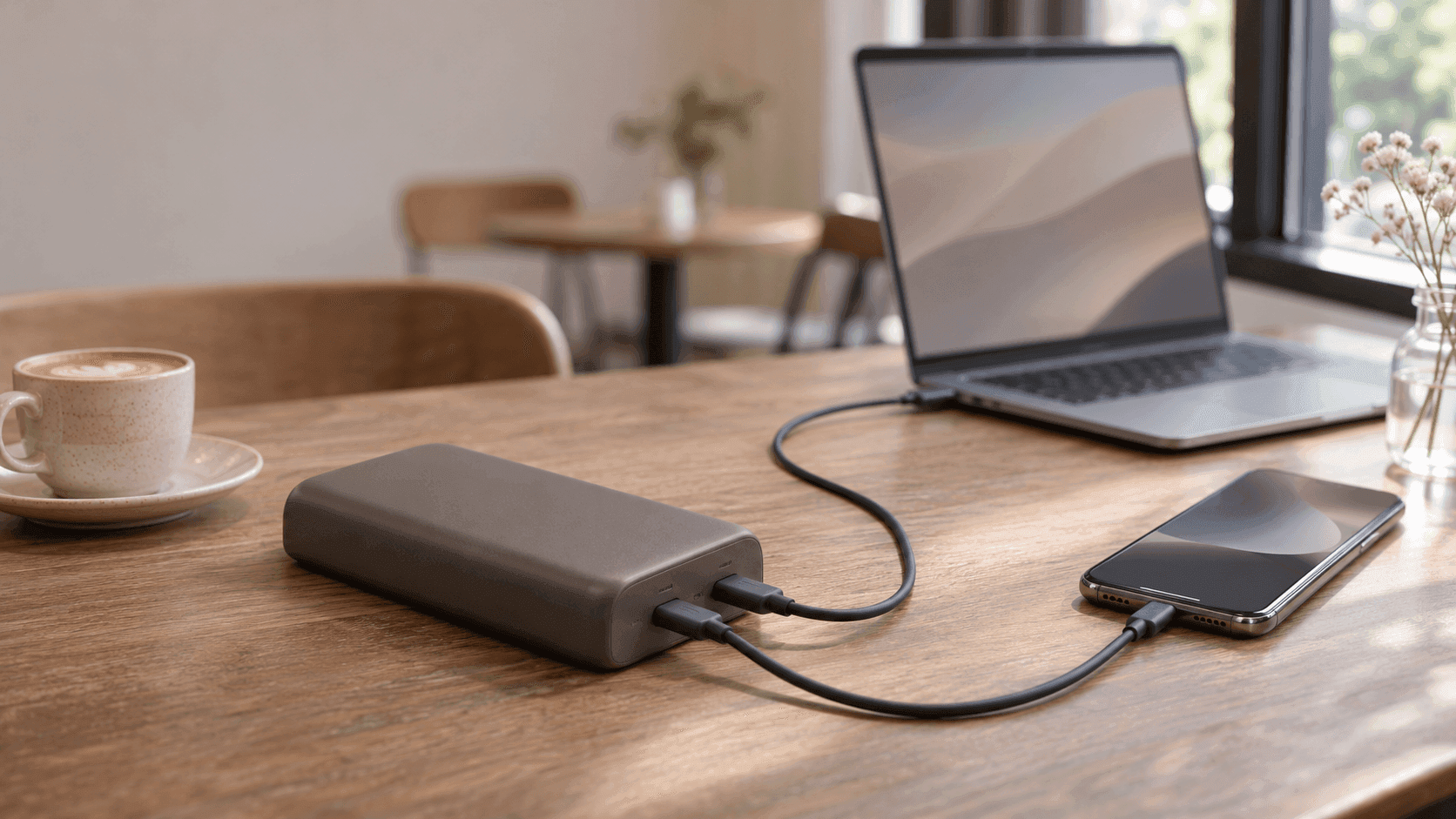
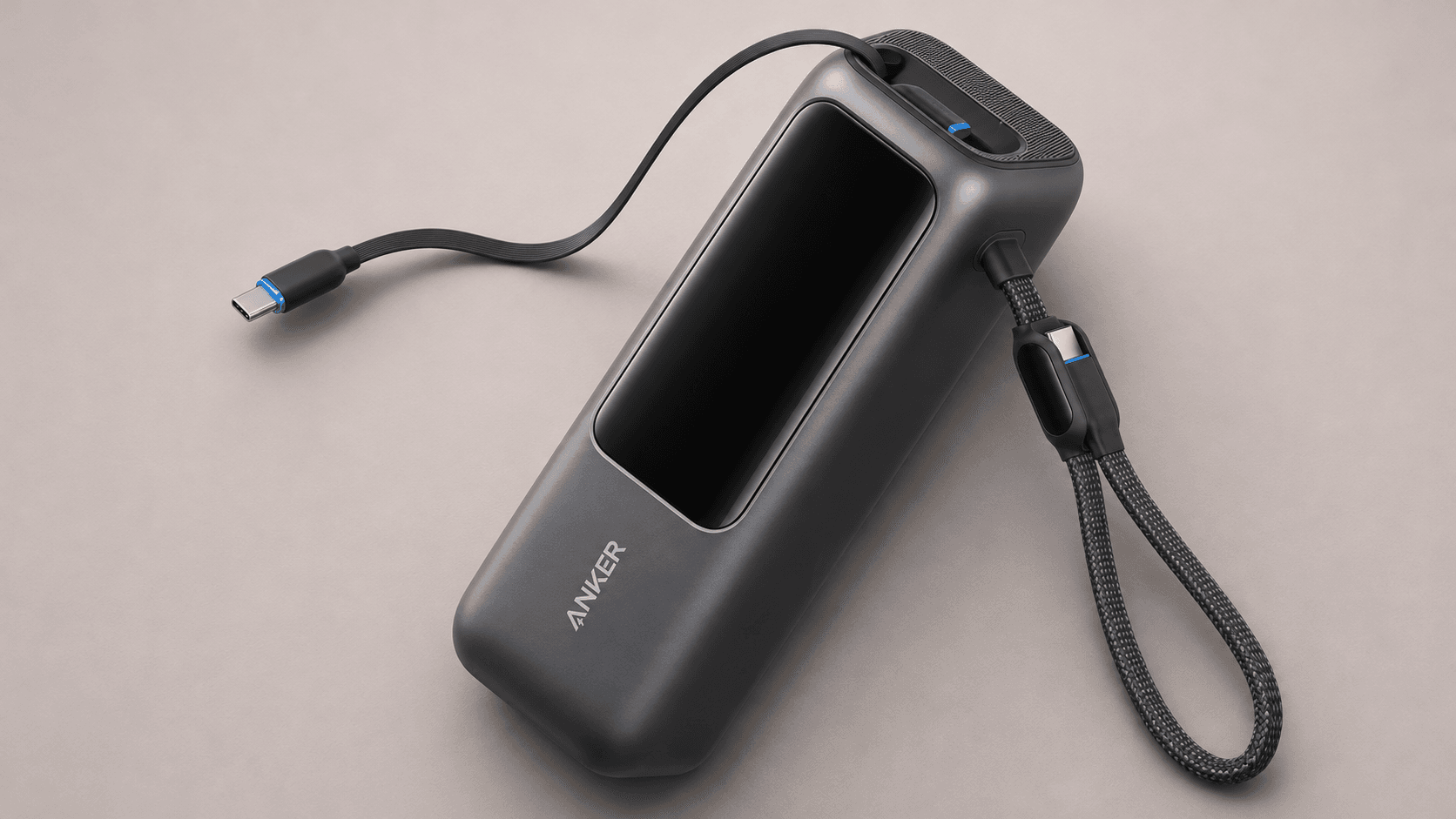
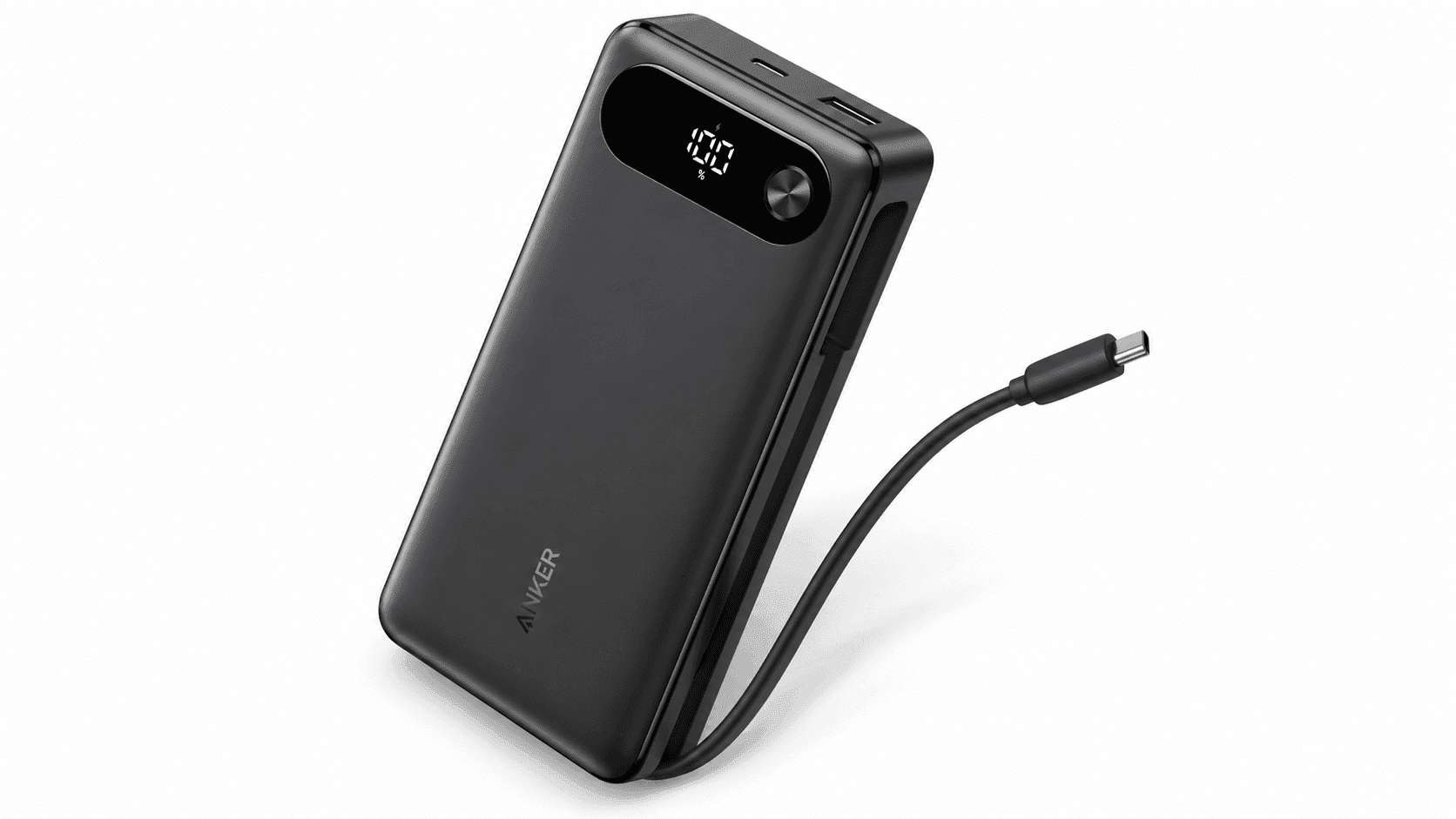
Two built-in USB-C cables are the main appeal of the Anker Laptop Power Bank 25000mAh. Model A1695 combines a 25,000mAh battery with up to 100W from any one USB-C connection, making it a practical fit for a laptop-and-phone work bag.
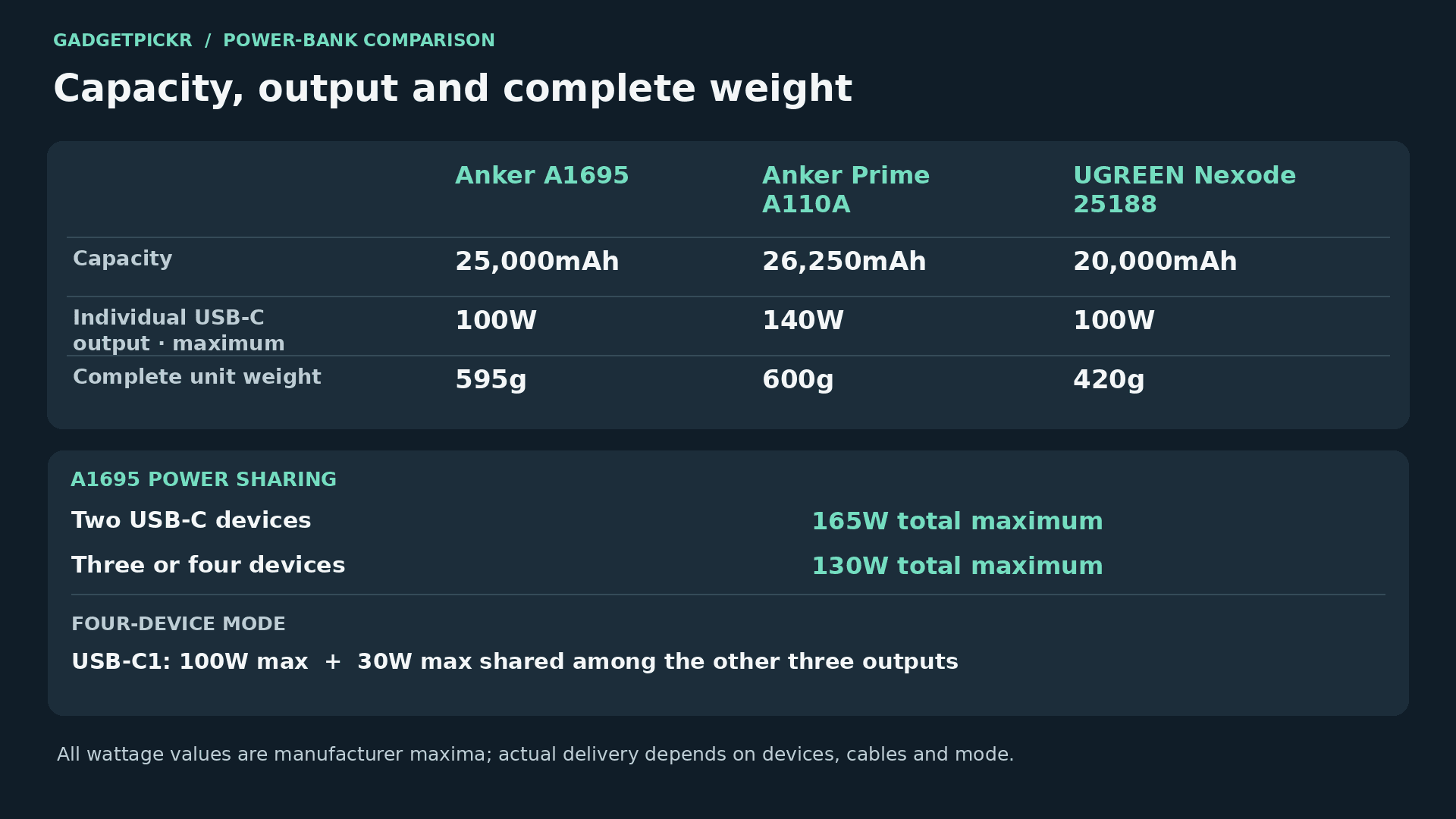
The 165W headline needs context. That maximum applies to two USB-C devices; connecting three or four devices lowers the total ceiling to 130W. It can charge several devices together, but it cannot supply 100W to each of them simultaneously.
The complete unit weighs 595g and stores 90Wh. Anker estimates that 63–70Wh reaches connected devices after conversion losses. This is a substantial laptop reserve to carry in a bag, rather than a compact pack for occasional phone top-ups.
Some links in this article are affiliate links, which helps support GadgetPickr at no extra cost to you.
The Quick Take
Choose the A1695 when you regularly charge a USB-C laptop and want two cables already attached. Look elsewhere if your charging goal requires more than 100W from one connection. The 165W combined rating does not raise that individual limit, and phone-only users have less reason to carry its 595g weight.
Verdict
Choose the Anker Laptop Power Bank 25000mAh for its two built-in USB-C cables. They are the strongest reason to put it in a laptop bag, supported by a 25,000mAh reserve and up to 100W from an individual USB-C connection.
Choose something else if your laptop charging goal requires more than 100W from one source. Two USB-C devices can share up to 165W, while three or four devices top out at 130W total. Those connection-dependent limits matter more than the headline alone.
The complete unit weighs 595g, needs a suitable charger for fast refilling and delivers less energy than its stored 90Wh rating. It fits a laptop owner who will use the attached cables often. For phone-only carry, favor a smaller pack; for flying, check the carrier's rules before planning to use it aboard.
Anker Laptop Power Bank 25000mAh
Best for USB-C laptop owners who want integrated cables and multi-device backup power.
Priced below the Anker Prime 26K 300W
Anker Laptop Power Bank 25000mAh: Product Overview
Capacity and charging speed describe different things. The 25,000mAh rating corresponds to 90Wh of stored energy; watts describe the rate at which the bank supplies power. Anker's 63–70Wh delivered-energy estimate accounts for conversion losses and varies with the device, cable and charging protocol.
Use that estimate to plan around your specific equipment rather than assuming a fixed number of recharges. Compare the laptop, phone or tablet battery's watt-hour capacity with the available reserve. A laptop running while connected also consumes power that would otherwise increase its battery charge.
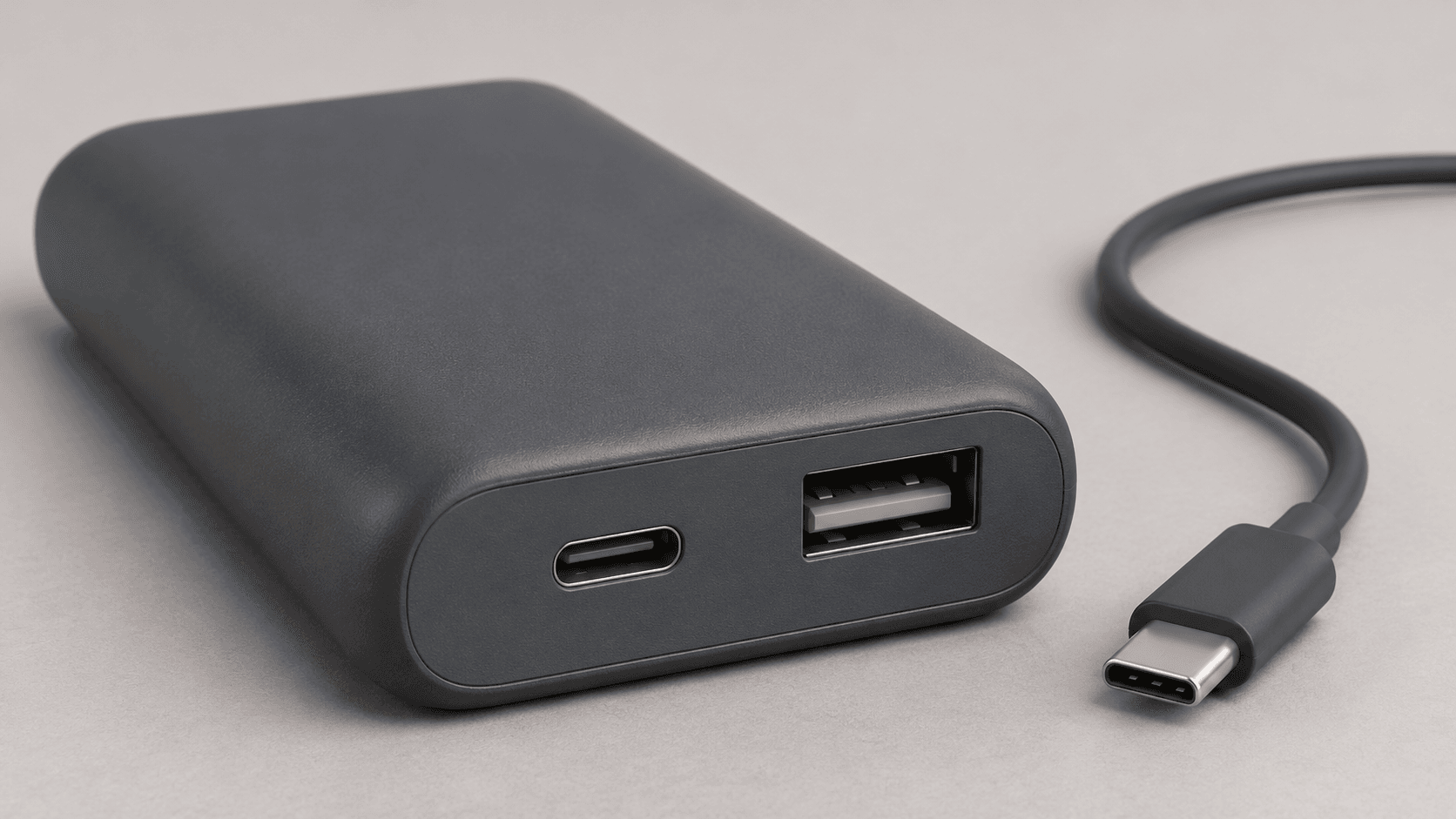
There are three USB-C connections: two attached cables and one socket. A USB-A socket brings the device count to four. One built-in cable retracts into the body and extends up to 70cm; the other forms a shorter attached loop. Only the two sockets accept leads of your own.
The bank includes temperature monitoring and a display showing information such as battery level and charging input or output. The display is useful for checking whether the laptop is drawing power or the bank is refilling. Those features do not establish the enclosure's resistance to travel damage.
Two USB-C connections can share up to 165W, with no individual connection exceeding 100W. Three-device operation has a 130W total ceiling. With four devices attached, USB-C1 receives up to 100W while the remaining connections share 30W.
USB-C recharging accepts up to 100W. Anker advertises 30% in 20 minutes and approximately two hours for a full refill with a compatible 100W or higher charger under its stated conditions. Input power varies through the charging cycle, so the maximum rating does not describe a constant draw.
For carry planning, use the confirmed 595g complete-product weight. The internal battery weight is not established by the supplied manufacturer information. Attached cables simplify packing, but they do not make this a small pocket charger.
Key Specs and Compatibility
Check both the bank's individual output limit and the allocation for your intended device combination. Your laptop must also accept charging through USB-C; the original adapter's rating alone does not establish what its USB-C port supports.
Specification
Value
Nominal Battery Capacity
25,000mAh / 90Wh
Usable Delivered Energy
63–70Wh, manufacturer estimate
Maximum Total Output
165W with two USB-C connections
Single-Port USB-C Max Output
100W
Port Selection
3 USB-C connections, including 2 built-in cables; 1 USB-A socket
Integrated Cabling
2 USB-C cables; retractable cable extends up to 70cm
Simultaneous Charging Devices
4; up to 130W total with three or four devices
Max Fast Recharging Input
100W USB-C
Rapid Charge Capability
30% in 20 minutes, manufacturer claim with compatible charger
Full Recharge Duration
Approximately 2 hours with a compatible 100W or higher charger
Airline Carry-on Limit
90Wh pack; carry-on only, subject to airline rules
Core Battery Weight
Unverified; use the 595g complete-product weight for carry planning
Complete Product Weight
595 g
The USB-C connections support USB Power Delivery. USB-A provides another output for compatible older cables and accessories. Check the exact laptop's charging specifications, particularly for workstations and gaming systems: a USB-C connector does not necessarily accept power.
What Stands Out
The integrated cables distinguish this model from a conventional battery brick. You can connect two USB-C devices without unpacking separate leads, and extend the retractable cable up to 70cm when you need more reach. It then stows in the body instead of leaving another loose cable in the bag.
Pay attention to USB-C1 when charging four devices. It retains an allocation of up to 100W, with 30W shared among the other connections. Assign the laptop to that connection and use the remaining budget for lower-demand equipment.
Fast refilling is useful when a workday includes short stops near an outlet. A suitable 100W charger gives the bank access to its maximum input capability. Anker states that peak 100W input occurs only above 25% battery level, reinforcing why the refill estimates need their charging conditions attached.
The 90Wh rating falls within the FAA's usual 100Wh carry-on size allowance. Keep the bank in cabin baggage, removing it if your main carry-on is gate-checked. Confirm the airline's quantity, storage and onboard-use restrictions separately.
IATA's 2026 guidance limits personal power banks to two, prohibits recharging a power bank aboard the aircraft and recommends against using one to charge other devices on board. Implementation and airline conditions vary. Plan around ground charging rather than assuming carriage permission also permits in-flight use.
Strengths
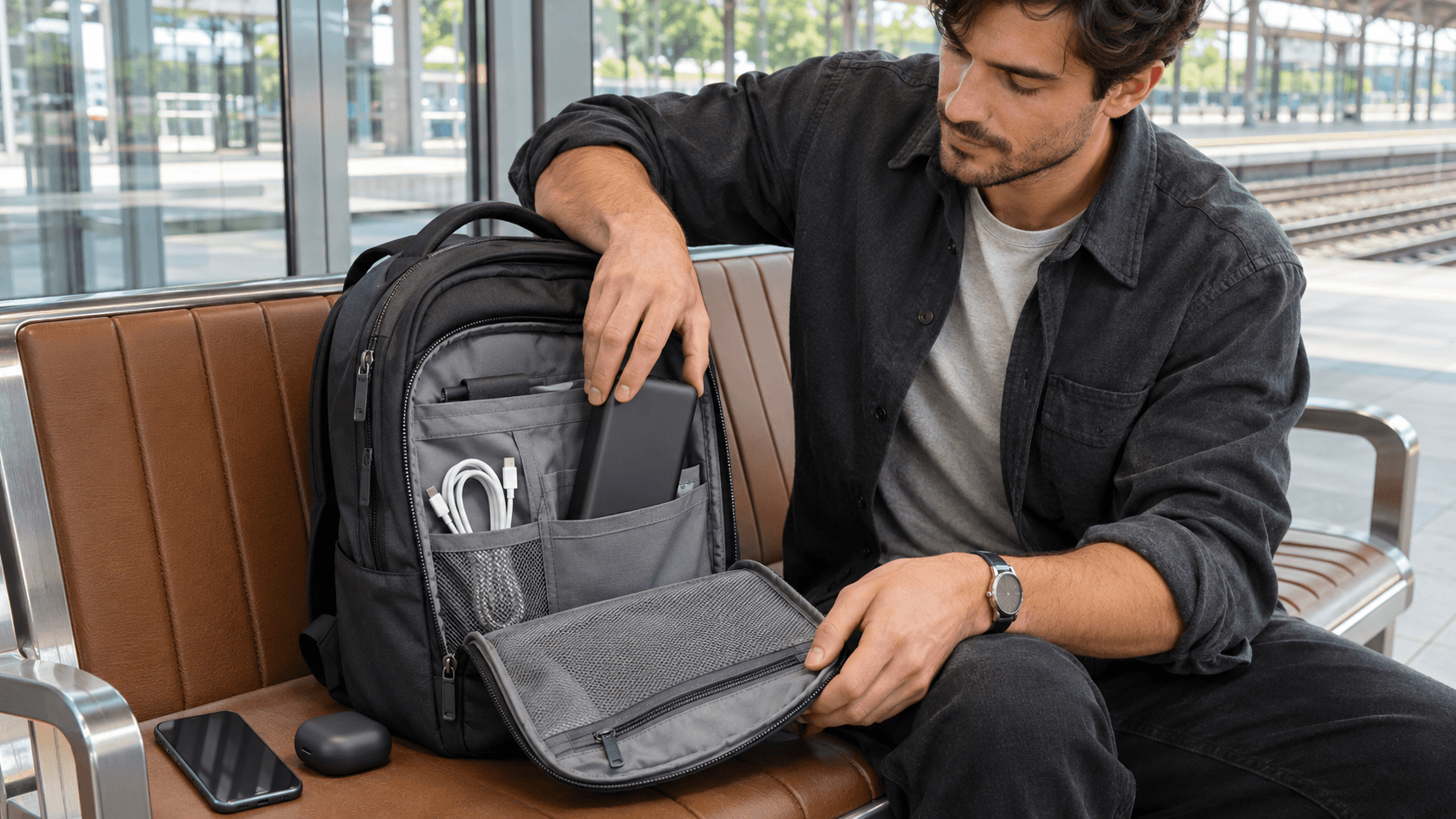
The attached leads suit a work bag that moves between meeting rooms, trains and temporary desks. A laptop and phone can connect directly, leaving the USB-C and USB-A sockets available for other equipment. The practical benefit is having fewer separate cables to remember.
The capacity also serves a different purpose from a small emergency phone pack. Anker's estimated 63–70Wh delivered reserve gives you a basis for planning time away from an outlet. How long it lasts depends on the devices, their starting charge and what they are doing while connected.
A laptop, tablet and phone can charge together within the three-device 130W ceiling. Check the allocation for the connections you intend to use and prioritize the most demanding device. Simultaneous charging is useful, but the combined rating does not guarantee every device its preferred charging rate.
USB-A remains useful for accessories whose existing cables use that connector. You can keep those leads without adding an adapter simply to connect them to this bank. Speed still depends on the accessory and cable.
The display gives you more information than charge-level lights alone. Input and output readings help explain what is happening when the bank is refilling or sharing power. That is particularly useful when a laptop is not charging as quickly as expected.
Weaknesses
At 595g complete, the A1695 is better suited to a backpack or briefcase than a coat pocket. Its capacity and cable hardware are difficult to justify if a phone top-up is the only regular job.
Integrated cables also reduce interchangeability. A worn separate lead is easy to swap; a retracting cable belongs to the bank's assembly. The standalone USB-C socket still accepts your own cable, but buyers who prefer replaceable leads may favor a simpler design.
The power-sharing limits need careful reading. Connecting three or four devices lowers the total maximum from 165W to 130W, and the secondary shared allocation may constrain phone or tablet charging. Check your actual combination rather than choosing by the largest advertised wattage.
Fast output does not increase available energy. The estimated 63–70Wh delivered is below the stored 90Wh rating, and an active laptop immediately uses some incoming power. Demanding software therefore leaves less available to refill its battery.
The advertised refill times also require a suitable wall charger. A charger's 100W total rating may not mean 100W remains available from one socket while other devices are connected. Check its allocation before assuming the charger already in your bag will provide the bank's fastest refill.
Best Alternatives
The Anker 737 offers 24,000mAh capacity and up to 140W USB-C output for compatible laptops, raising the individual charging limit above the A1695's 100W while giving up its two built-in cables.
The Anker Prime 26,250mAh 300W raises total output to 300W and individual USB-C output to 140W at a higher price, with a published 600g weight close to the A1695's 595g.
The Baseus EnerFill FC41 25,000mAh 145W is a lower-priced option with two integrated USB-C cables, trading the Anker's 165W two-device ceiling for 145W combined output.
The Baseus Blade 20,000mAh 100W provides a flatter laptop-bag format with less capacity and separate cables in place of the A1695's attached leads.
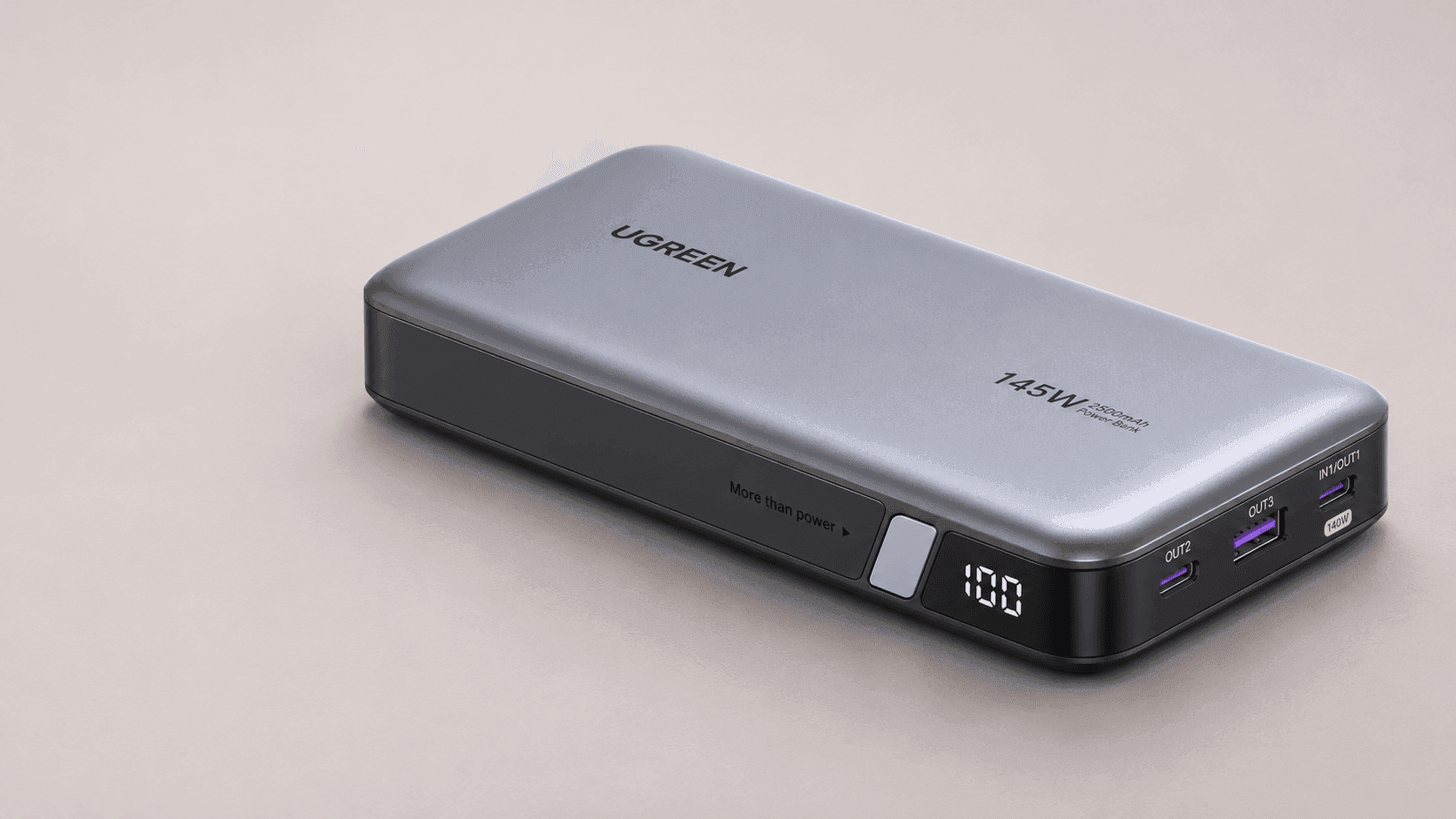
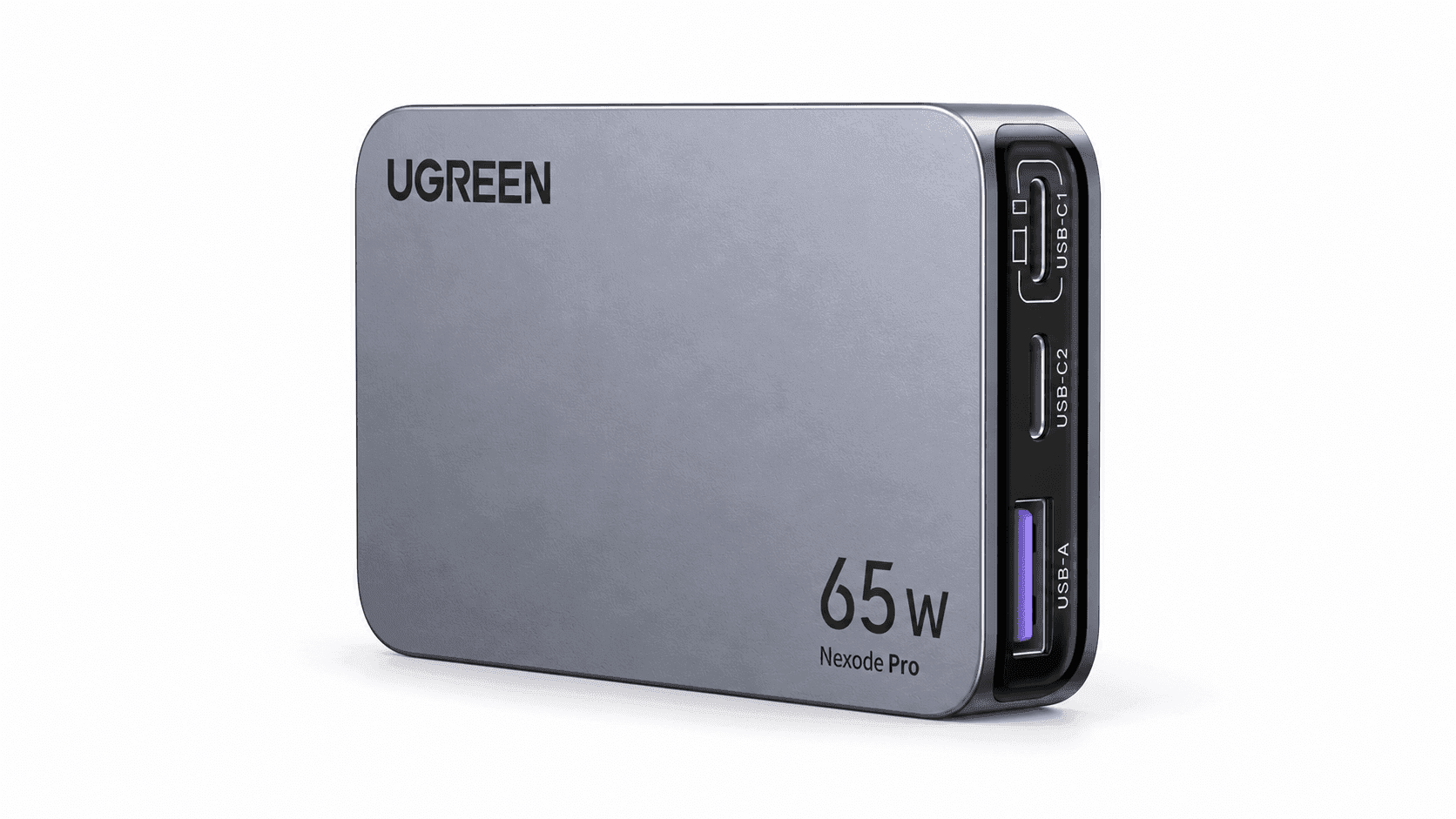
The UGREEN Nexode 100W 20,000mAh, model 25188, reduces complete weight to 420g and retains 100W primary USB-C output, while offering a smaller 72Wh reserve. That capacity difference does not translate into a fixed number of smartphone recharges.
Who Should Buy It
Buy the A1695 if a USB-C laptop and phone are regular parts of your kit and attached cables would simplify packing. Its strongest argument is having laptop-capable output and two useful leads in one unit.
It makes the most sense when you know the laptop's charging requirements. Check that the machine accepts the available USB-C Power Delivery profiles and that 100W or less meets your goal. Different MacBook, ThinkPad and Dell XPS configurations should not be assumed to charge identically.
Travelers should value it for backup power and convenient ground use, with flight rules checked separately. Keep the watt-hour label readable and consult the carrier's instructions before departure. A 90Wh rating does not remove cabin-storage or onboard-use restrictions.
Who Should Skip It
Skip it when you need more than 100W from one USB-C connection. The combined 165W rating cannot reproduce a 140W single-device supply at that rate. Choose higher individual output for that requirement.
Phone-only commuters should compare smaller packs. Carrying 595g makes less sense when the laptop output and larger reserve go unused. If you already carry suitable leads, compare conventional banks before paying for integrated cable storage.
Sources & References
Specifications and claims in this analysis were cross-referenced against the sources below.
Its 90Wh rating falls within the FAA's usual 100Wh carry-on size allowance. Keep it in cabin baggage and check the airline's quantity, storage and onboard-use rules. Permission to carry it does not automatically permit charging during the flight.