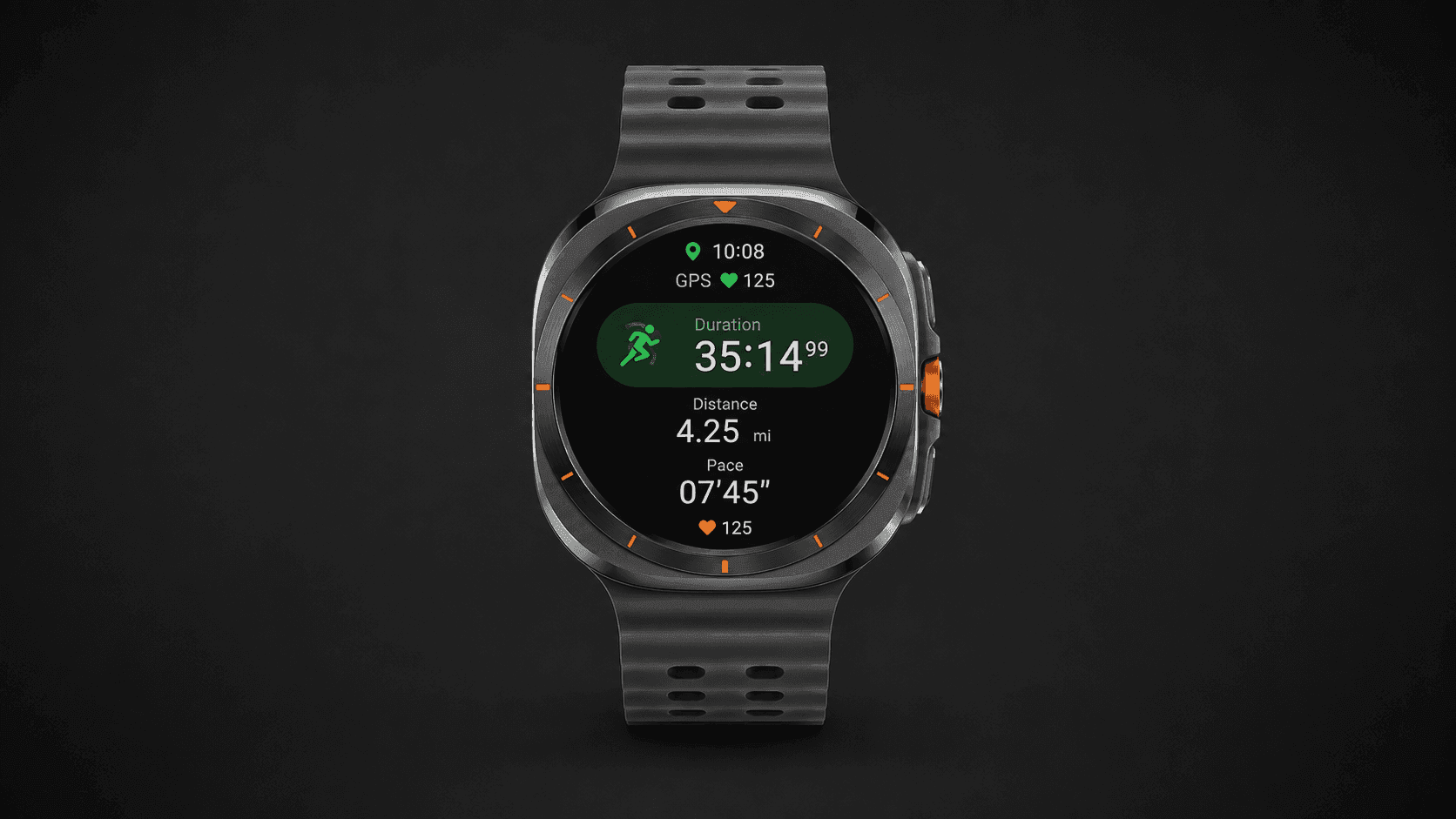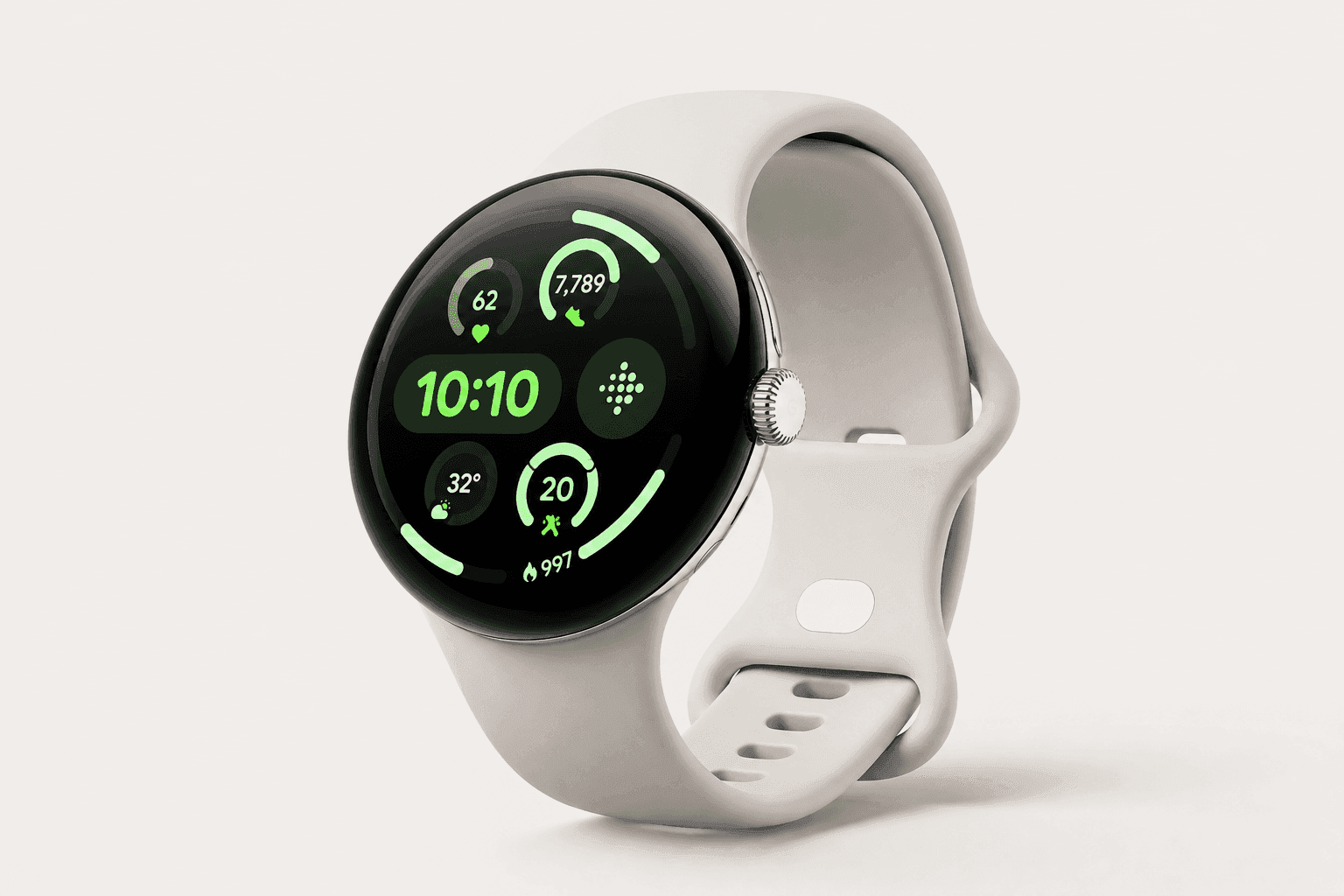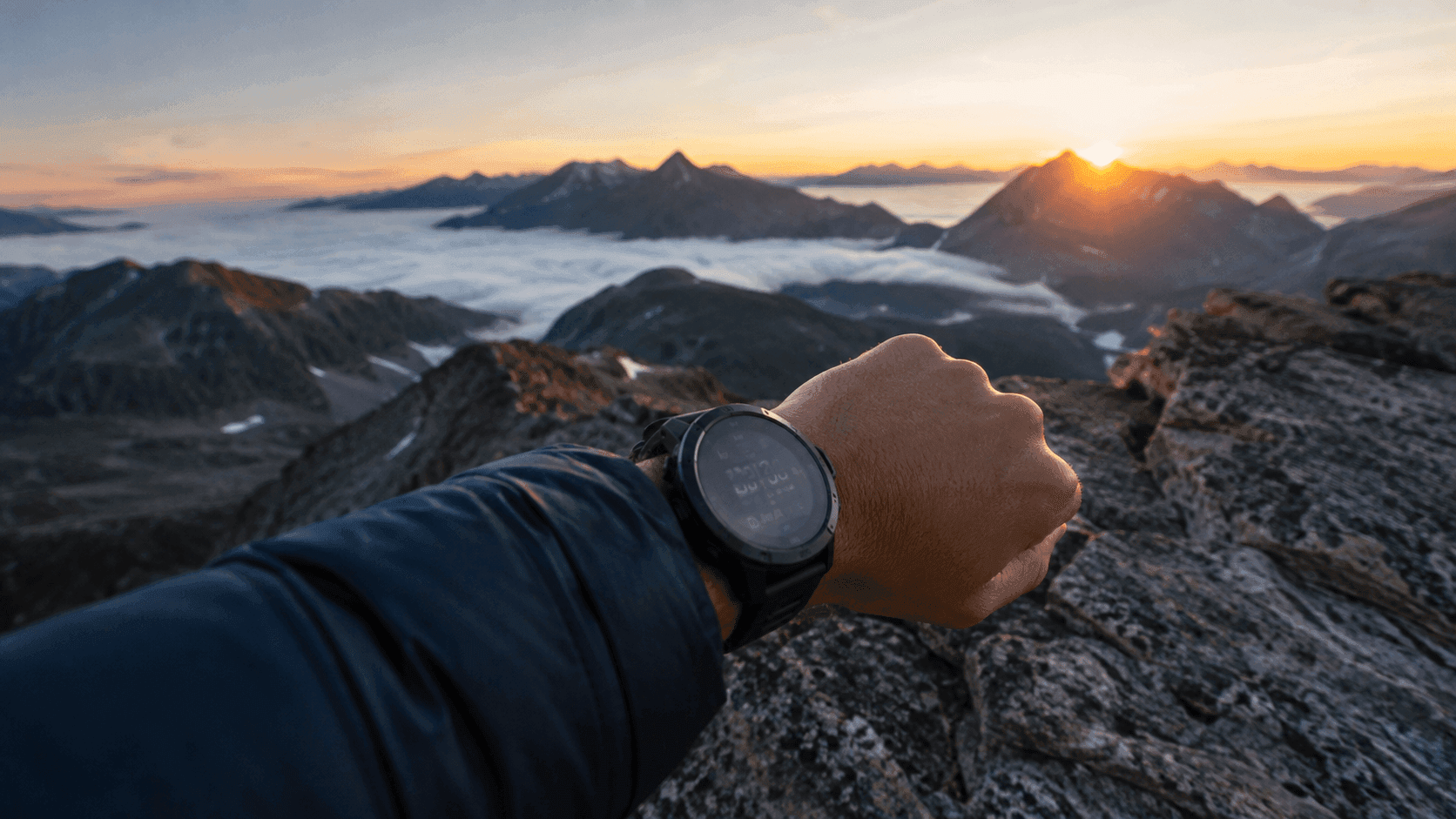
Your watch dies on day two of a four-day traverse. Now you're navigating by paper map and stubbornness. Picking the best smartwatch for outdoor adventures really comes down to which trade-off you can live with, because nothing on the market wins at battery, brightness, and armor simultaneously. This is a spec-based analysis using published manufacturer specifications and market comparisons. No hands-on testing was conducted.
Mainstream smartwatches collapse on long trips for two unglamorous reasons: the display wants a charger every night, and the glass in front of it does not get along with granite. Heavy-duty multisport GPS units fix both problems. They pay for it with dimmer memory-in-pixel screens, thinner app libraries, and menus that feel a decade behind your phone.
Dual-frequency multi-GNSS reception is the biggest accuracy upgrade you can buy for canyon walls and thick canopy, and it drains the battery faster than single-band GPS. Sapphire crystal shrugs off scratches. Titanium bezels shield the sensor stack without piling on weight during a long ascent.
So the useful questions are narrow ones. How many continuous GPS hours do you need between charges, does the watch hold topographic maps onboard instead of leaning on your phone, and is the altimeter barometric? Get those three wrong and you find out on the trail, not on the spec sheet.
The Quick Take
For multi-day backcountry navigation and strong durability, choose a dedicated outdoor GPS wearable featuring dual-frequency positioning, offline topographic maps, and a titanium case with a sapphire lens, such as the Garmin Fenix 8 Solar Sapphire.
How to choose the best smartwatch for outdoor adventures
Start with runtime, because runtime is what ends trips. If you'll be out more than two nights with no wall power, rule out anything that can't sustain multi-week standby with GPS sampling dialed down, and treat solar charging as a genuine tiebreaker rather than marketing garnish. Devices like the Garmin Fenix 8 Solar Sapphire offer up to 28 days of longevity, which is the class of number that makes a power bank unnecessary pack weight. Day hikes and alpine trail runs flip the rule: take the bright AMOLED panel on the Garmin Venu 3 or Apple Watch Ultra 2, since map legibility in noon sun matters more than a battery figure you'll never approach.
Next, sort out satellites and maps. If your routes involve slot canyons, old-growth forest, or tight urban corridors, insist on multi-band dual-frequency GNSS, which locks onto several constellations at once and keeps your track from wandering fifty feet sideways. If your routes are open ridgeline or road, single-band is fine and you keep the battery. And if you ever travel beyond cell coverage, the watch needs onboard topographic maps and route creation, not a phone app, so elevation profiling and backtrack routing work with your phone dead in the pack.
Durability and sensors close it out. Rock scrambling, whitewater, or diving? Demand sapphire crystal, a titanium case, and a water rating that actually matches the sport. Then check the sensor list for three specific items: a barometric altimeter for real elevation tracking, a 3-axis compass for orientation when you're standing still, and a Pulse Ox sensor for high-altitude ascents. Voice control, an integrated LED flashlight, and dive-rated sealing are worth paying for only in technical environments where fumbling for a headlamp costs you.
Recommended product categories
Three categories exist, and the one you belong in is decided by your longest trip of the year, not your average week. Full-featured multisport navigation watches sit at the top for technical backcountry work. Sapphire glass, titanium, ultra-long battery, multi-band GPS, voice integration, and specialized tools like dive functionality up to 40 meters on models such as the Garmin Fenix 8 Solar Sapphire. Buy this tier if you're an alpine climber, expedition leader, or ultra-distance athlete who cannot afford a dropped track.
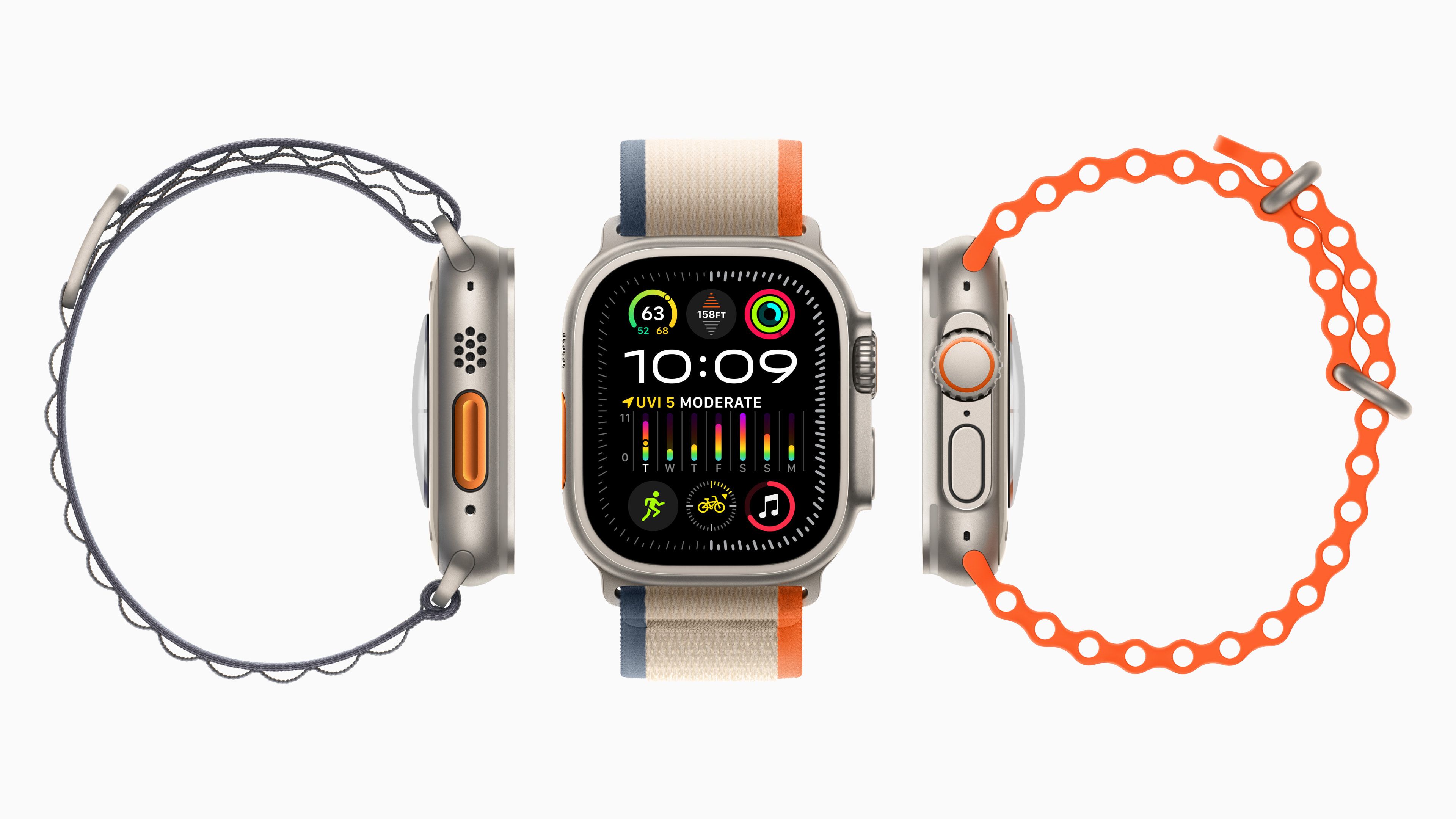
Want one watch for the summit and the office? High-end lifestyle sport watches split the difference. The Apple Watch Ultra 2 sits squarely here, with a high-brightness display, cellular communication, precision GPS, and a durable 49mm titanium enclosure. Trail runners, weekend hikers, and ocean sports people get real activity metrics without giving up voice messaging and the apps they already use daily.
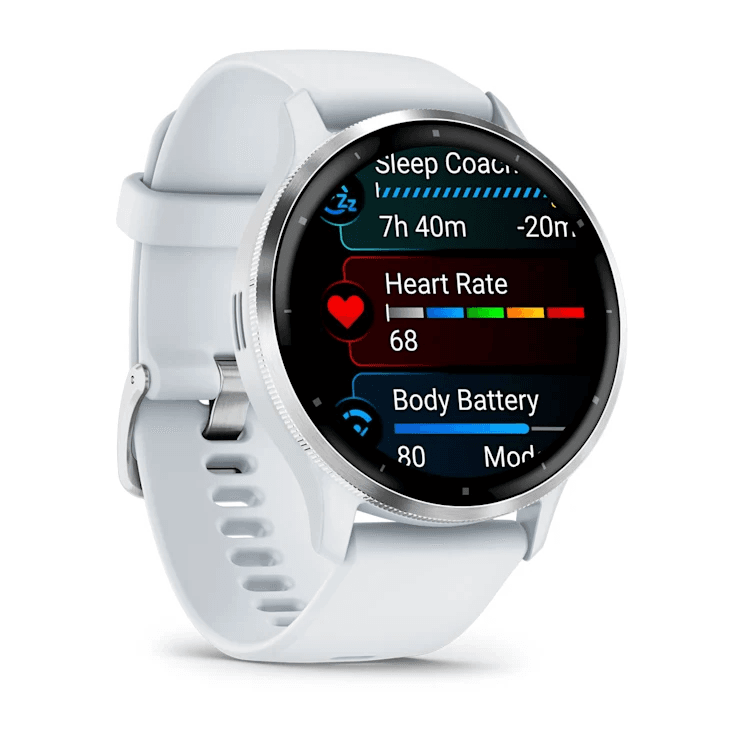
The third tier is fitness-first. Devices like the Garmin Venu 3 pair crisp AMOLED displays with advanced heart rate sensors, Body Battery, and sleep coaching, and they track a day hike perfectly well. They lack the structural armor and multi-week endurance of expedition units. For cyclists, day-hikers, and anyone whose main goal is daily health data with outdoor recreation on the side, that's a fair trade.
Common mistakes
The most common error is buying a screen and ignoring what it costs you. A vibrant OLED panel, like the one on the Apple Watch Ultra 2, looks brilliant and asks for a charger constantly compared with a memory-in-pixel display and solar harvesting, such as the Garmin Fenix 8 Solar Sapphire 47mm which achieves up to 28 days of battery life. Rule of thumb: if you're sleeping outside two nights or more without a charging plan, don't take the OLED watch.
The second trap is trusting single-frequency GPS in remote terrain. Single-band setups struggle under dense forest canopies and deep canyon walls, whereas multi-band GNSS keeps tracking consistent and waypoints precise. Buyers also confuse water resistance with water capability. A 50-meter rating covers rain and a swim; high-impact water sports or technical diving need hardware built for it. The Fenix 8 Solar Sapphire, for example, features certified 100m water resistance and dedicated diving capabilities down to 40 meters. Last one: ignore headline battery numbers entirely unless they were measured with active GPS tracking, continuous Pulse Ox, and onboard mapping running, because those three together gut real-world runtime.
Buying checklist
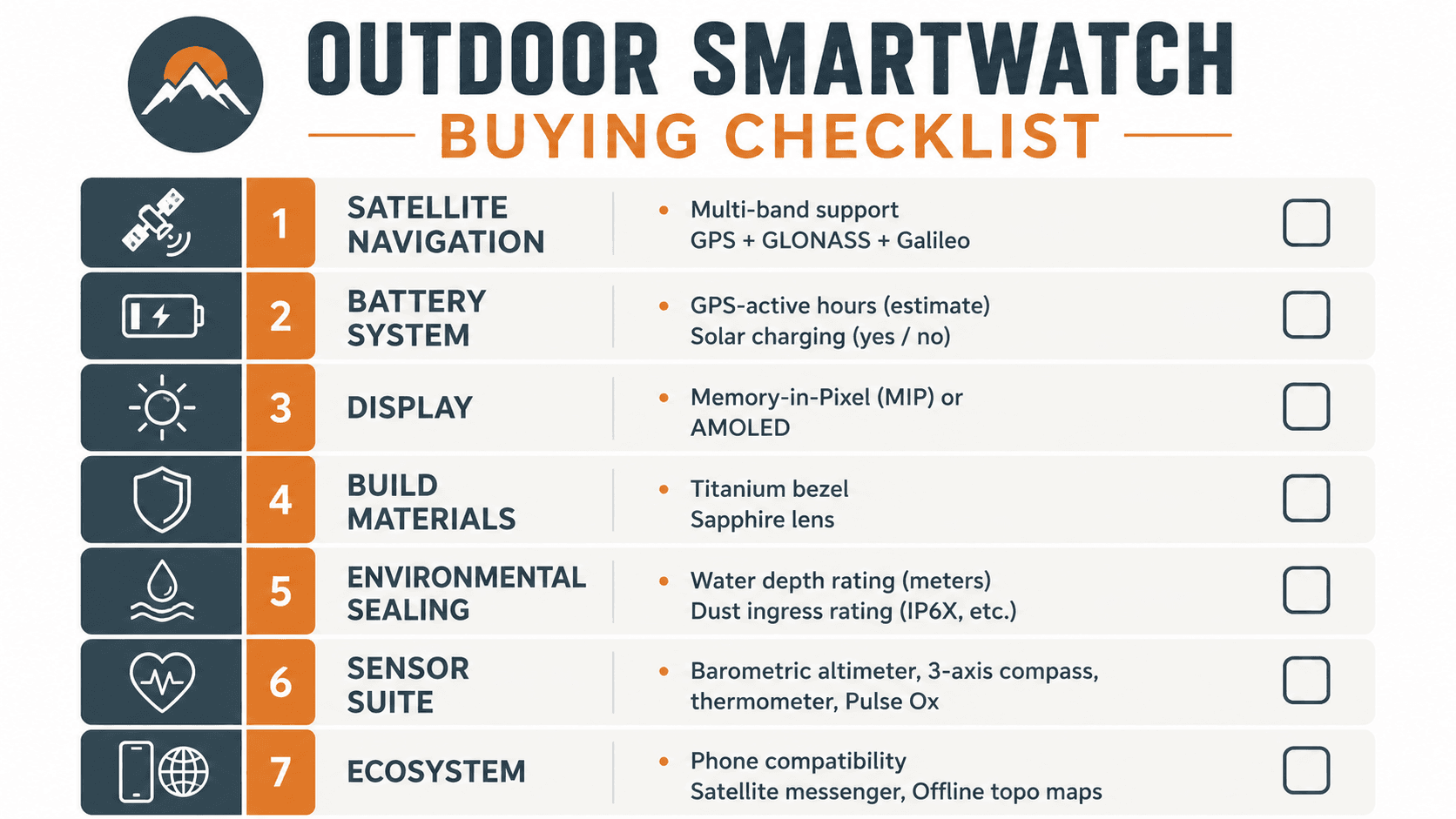
Run this list against the actual product page before you click buy. Every item here is something a manufacturer publishes in its spec table.
1. Satellite Navigation: find the words "multi-band" or "dual-frequency" and confirm GPS, GLONASS, and Galileo support are listed together. 2. Battery System: locate the GPS-active hours figure, not the smartwatch-mode number, and decide whether solar charging like the Garmin Fenix 8 Solar Sapphire's fits your longest trip. 3. Display Visibility: confirm whether the panel is memory-in-pixel or AMOLED, then match it to how many nights you sleep away from an outlet. 4. Build Materials: check the bezel material for titanium, the lens for sapphire crystal, and the case for reinforced polymer. 5. Environmental Sealing: read the water depth rating in meters and look for a stated ingress rating against dust and sand. 6. Onboard Sensor Suite: the spec sheet must name a barometric altimeter, 3-axis compass, thermometer, and Pulse Ox sensor. 7. Smart Ecosystem Features: verify phone platform compatibility, satellite messenger pairing, and offline topographic map support by name.
Score a candidate on all seven and the choice usually makes itself. Nail the battery and mapping rows in particular, and the best smartwatch for outdoor adventures stops being a shopping question and starts being an obvious one.
Recommended Products
Both picks below are strong examples of the rules above, sitting in different tiers. One is the connected all-rounder; the other is the health-focused option for shorter days outside.
Apple Watch Ultra 2
The pick for hikers and trail runners who want one watch for the trailhead and the rest of the week.
Pros
- High-brightness display stays legible for map reading in direct sun
- Cellular communication and precision GPS in a 49mm titanium enclosure
- Full smartwatch features like voice messaging alongside serious activity metrics
Cons
- OLED power draw means charging far more often than solar multisport watches
- Exact variant, included band size, and warranty terms can vary by retailer
Garmin Venu 3
The health-first option for day hikes, rides, and recovery tracking rather than multi-day expeditions.
Pros
- Crisp AMOLED display with strong outdoor legibility
- Advanced heart rate sensors plus Body Battery and sleep coaching
- Comfortable enough for all-day and overnight wear
Cons
- Lacks the structural armor and multi-week endurance of expedition units
- Price and availability can change by seller and region
Sources & References
Specifications and claims in this analysis were cross-referenced against the sources below.
- Garmin Venu 3 review: Battery and fitness at the forefrontreviewed.com
- Apple Watch Ultra 2 review: the smartwatch world's best screen evertechradar.com
- Garmin Fēnix 8 Solar Review | GearJunkie Testedgearjunkie.com
- Apple Watch Ultra 2 long-term review: Your move, Samsungandroidcentral.com
- Garmin Fenix 8 Solar Sapphire 47mm Review: 9.2/10 Expert ...smarthomeexplorer.com
- Garmin Venu 3 review: A tightrope walk between casual ...androidcentral.com
- Apple Watch Ultra 2 review: It's the ultimate Apple Watch | Tom's Guidetomsguide.com
- Garmin Venu 3 Review: A Stylish, Battery-Rich Fitness Watchpcmag.com
Frequently Asked Questions
Count GPS-active hours, not standby days. Two nights out or more without a charger means you want a solar multisport watch; anything shorter and an AMOLED model charged nightly is fine.