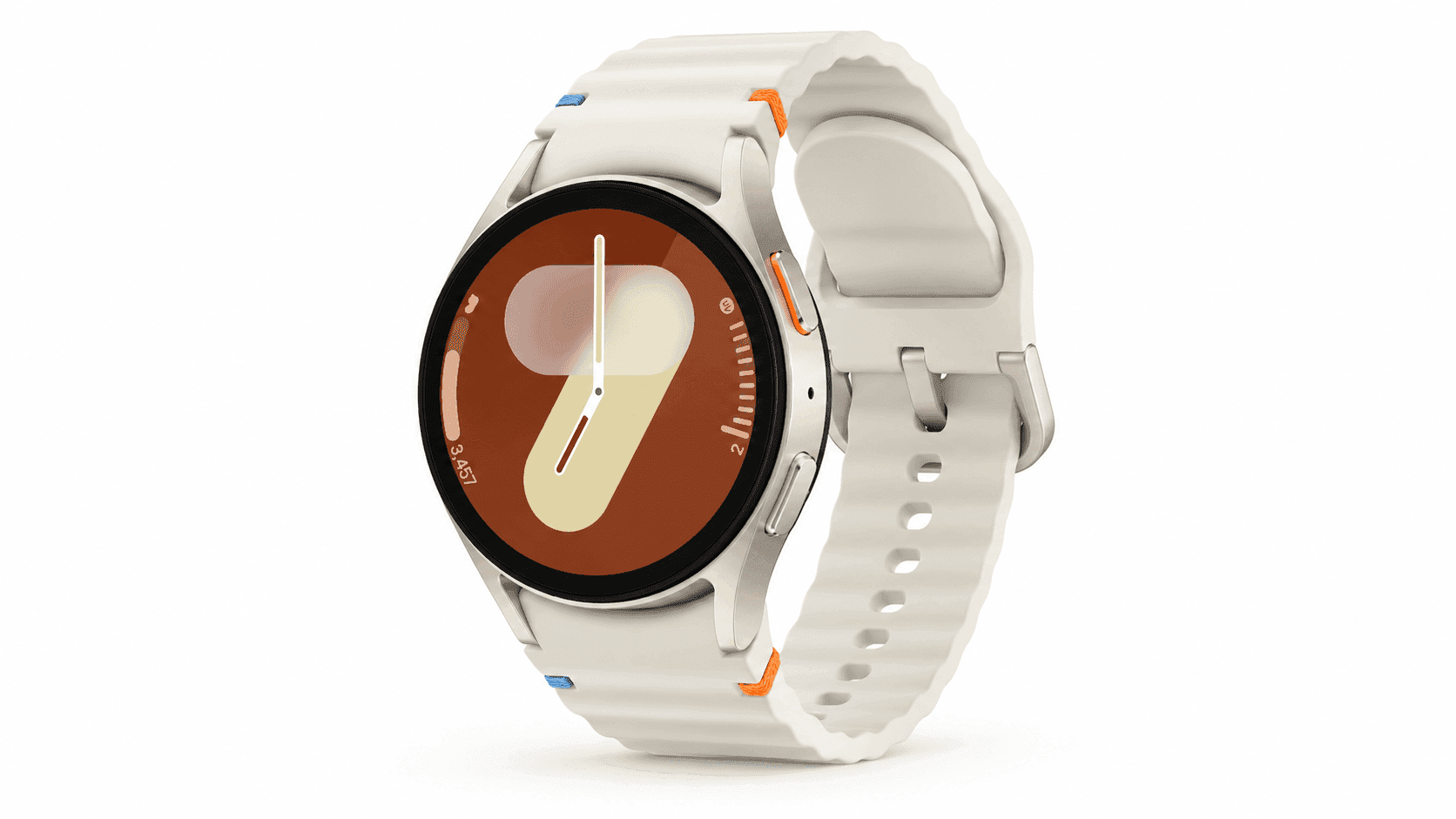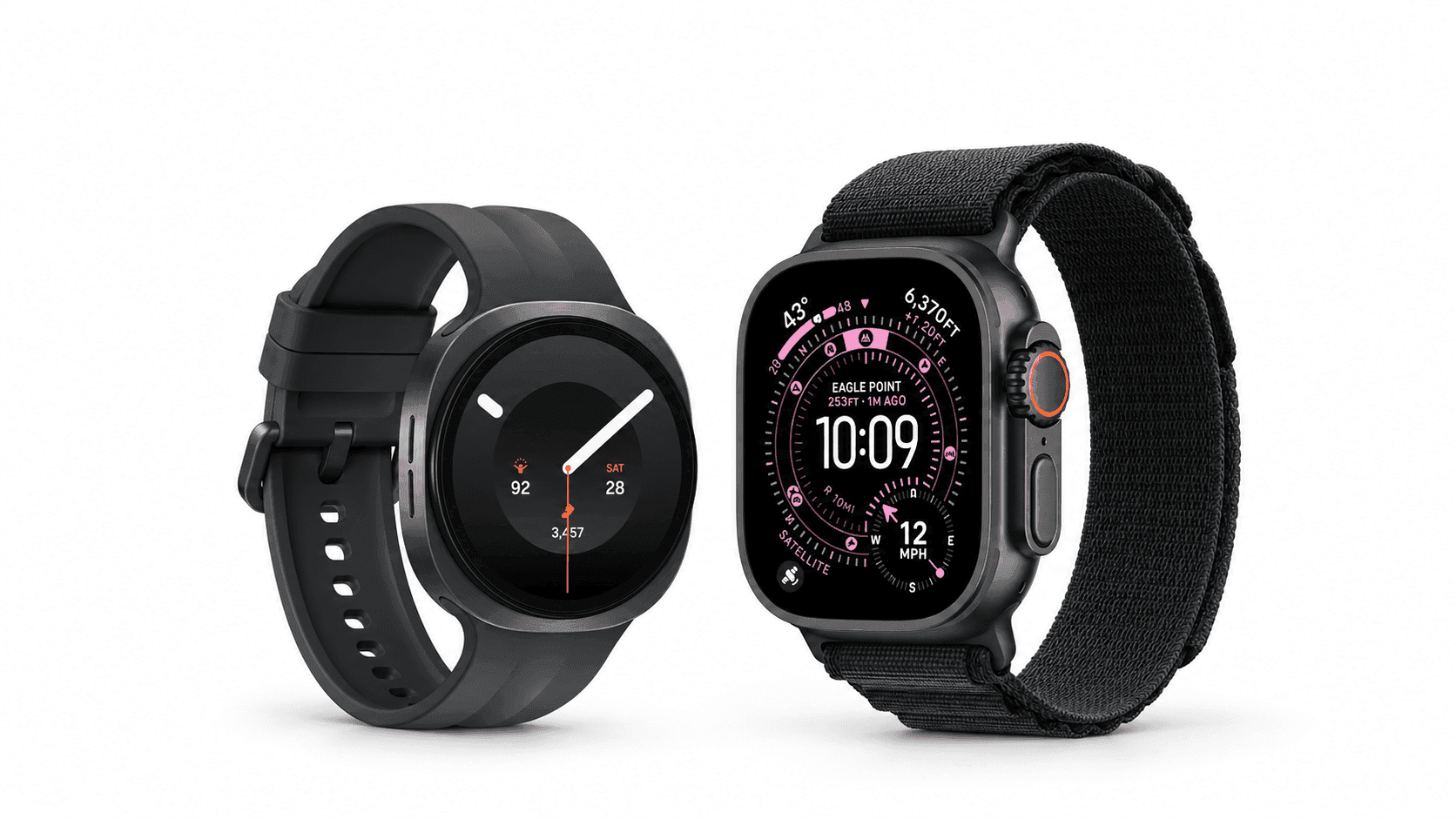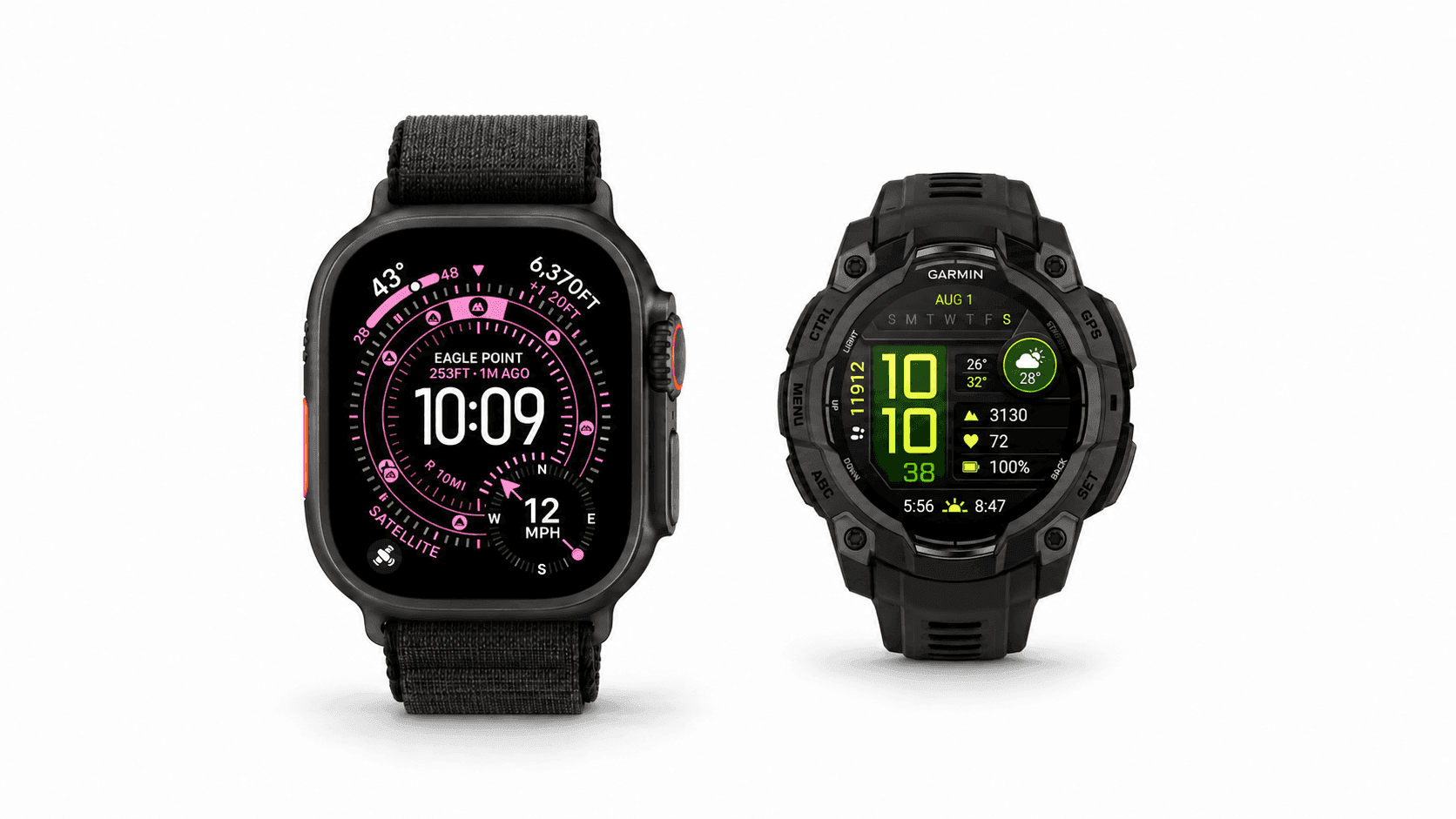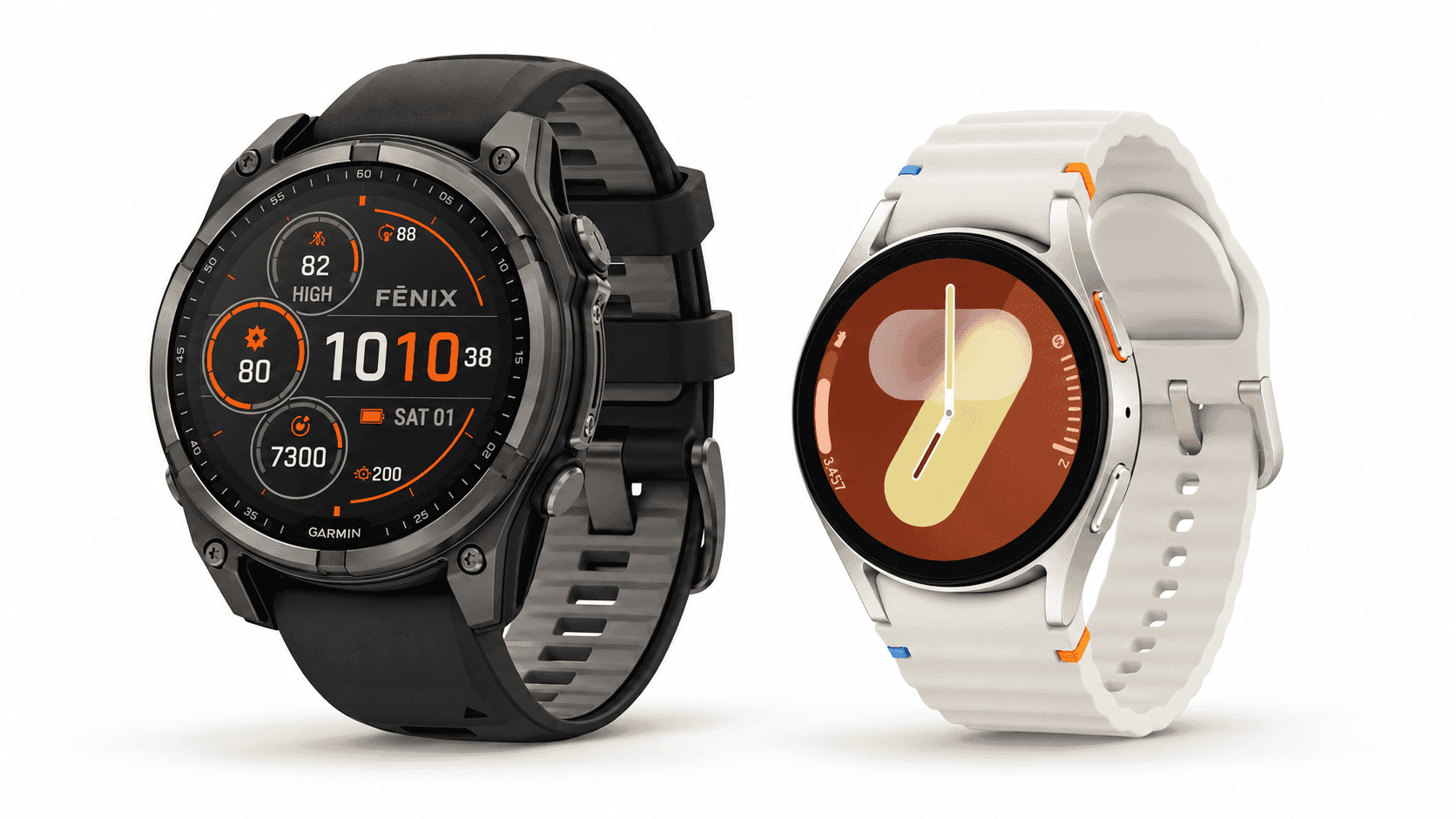
Trail maps or replying from your wrist? That's really what Fenix 8 vs Galaxy Watch 7 40mm comes down to. Garmin puts navigation and long battery life first, while Samsung fits Wear OS apps into a much smaller case. By Fenix 8 we mean the 47mm Solar Sapphire model here, not the AMOLED or Pro versions. Its battery figures and display only apply to that version.
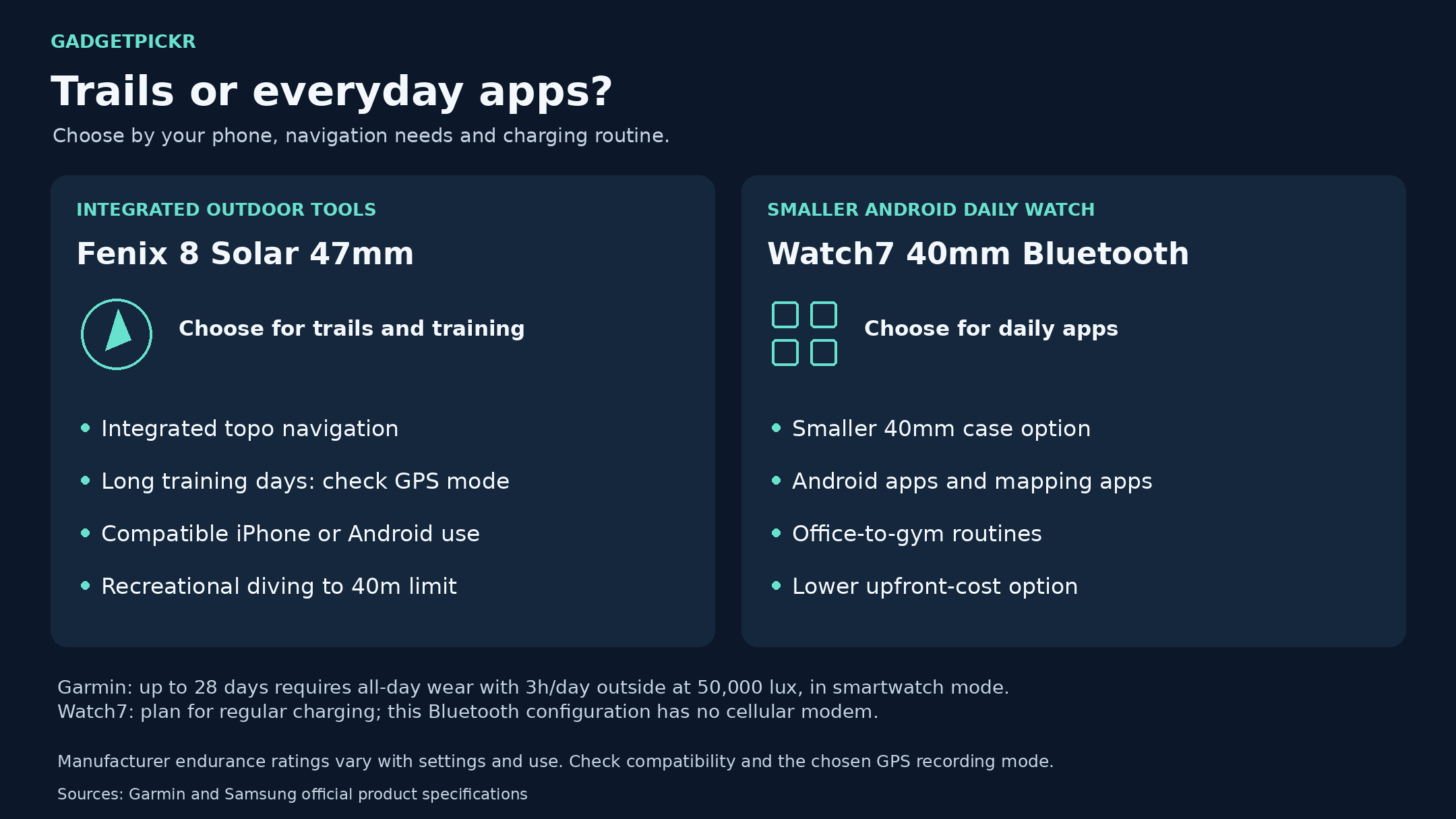
Pick the Garmin for backcountry routes, long training days, and recreational diving within its rated limits. Pick the Samsung for the office, the gym, payments, and replying to notifications with a compatible Android phone. Both have GPS, health tracking, a microphone, and a speaker, but they're very different when it comes to maps, size, and how often you'll charge. And a smartwatch-mode battery rating tells you very little about how long the watch lasts while navigating.
The Quick Take
Get the Fenix 8 Solar 47mm for built-in topo maps, outdoor training tools, and a 40-meter dive rating. Get the Watch7 40mm for a smaller case and Wear OS apps at a lower price. Garmin's headline 28-day rating needs sunlight and applies to smartwatch mode, so don't expect weeks of continuous multi-band GPS tracking.
Garmin Fenix 8
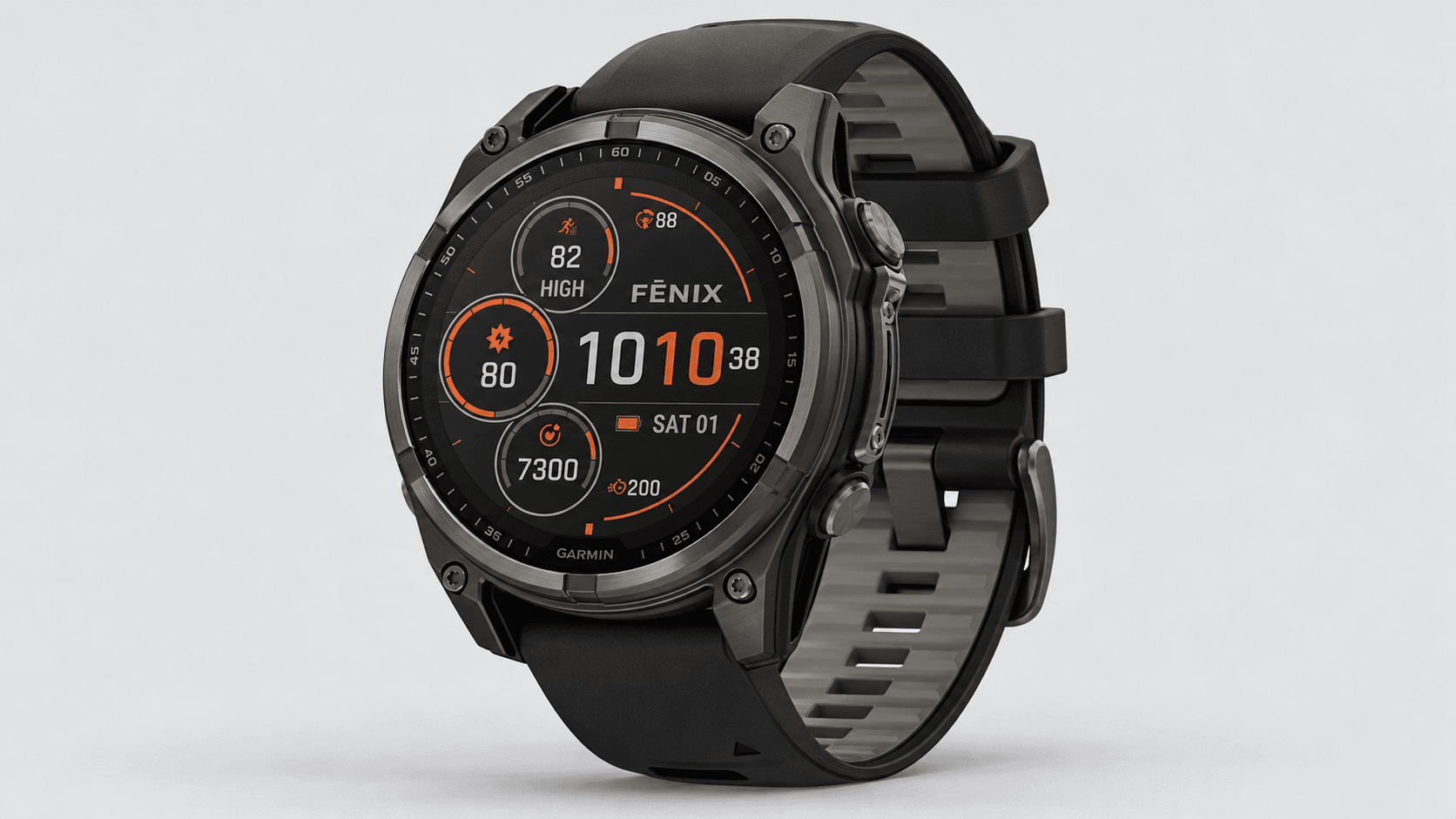
We're comparing the 47mm Solar Sapphire version with a MIP display. Get it for navigation and outdoor features, not for a slim profile.
Check Price on AmazonSamsung Galaxy Watch 7 40mm
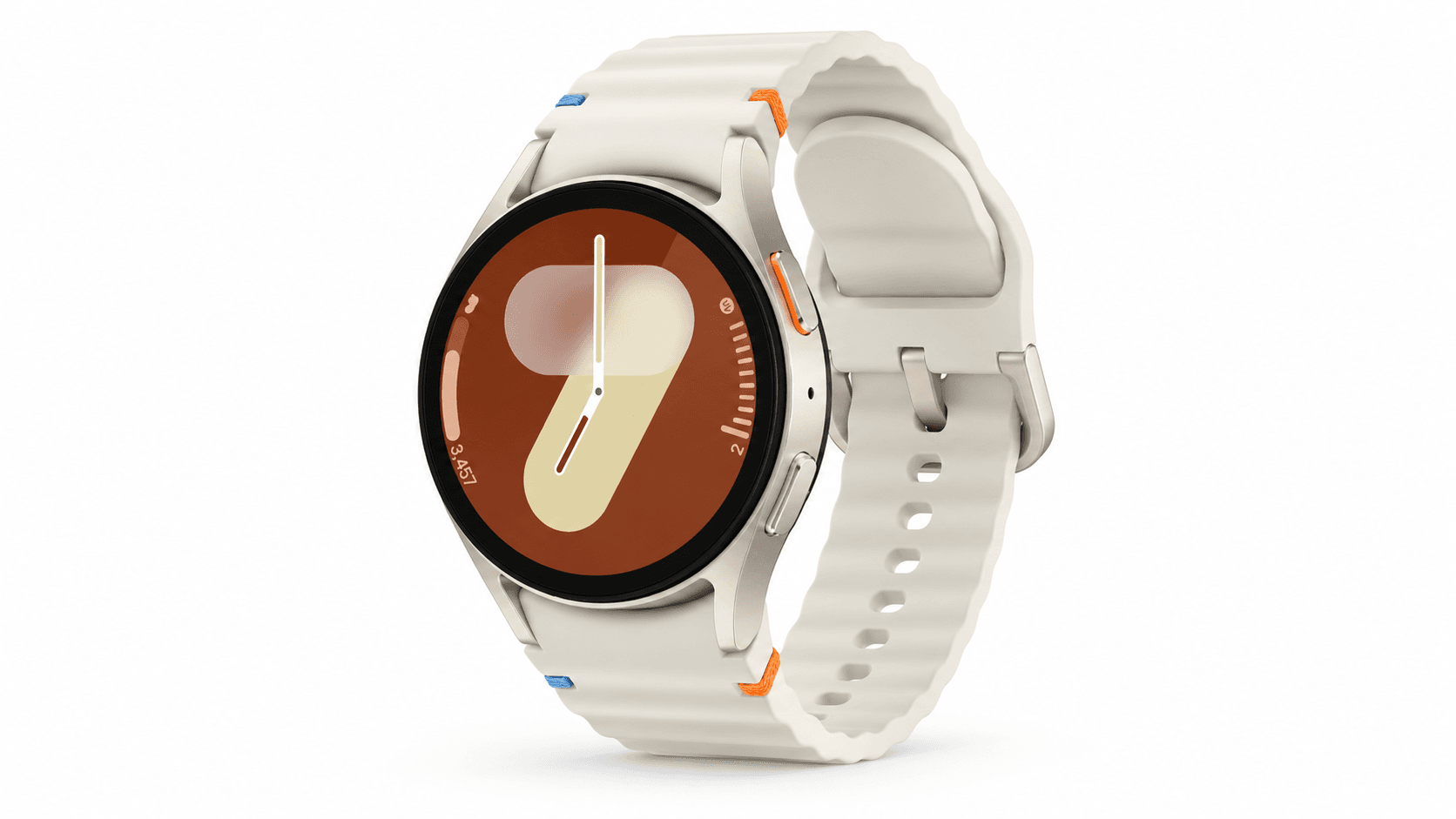
This is the Bluetooth model, so it can't connect to a cellular network on its own. Get it for everyday Android apps and notifications in a smaller case.
Check Price on AmazonFenix 8 vs Galaxy Watch 7 40mm: Specs Comparison
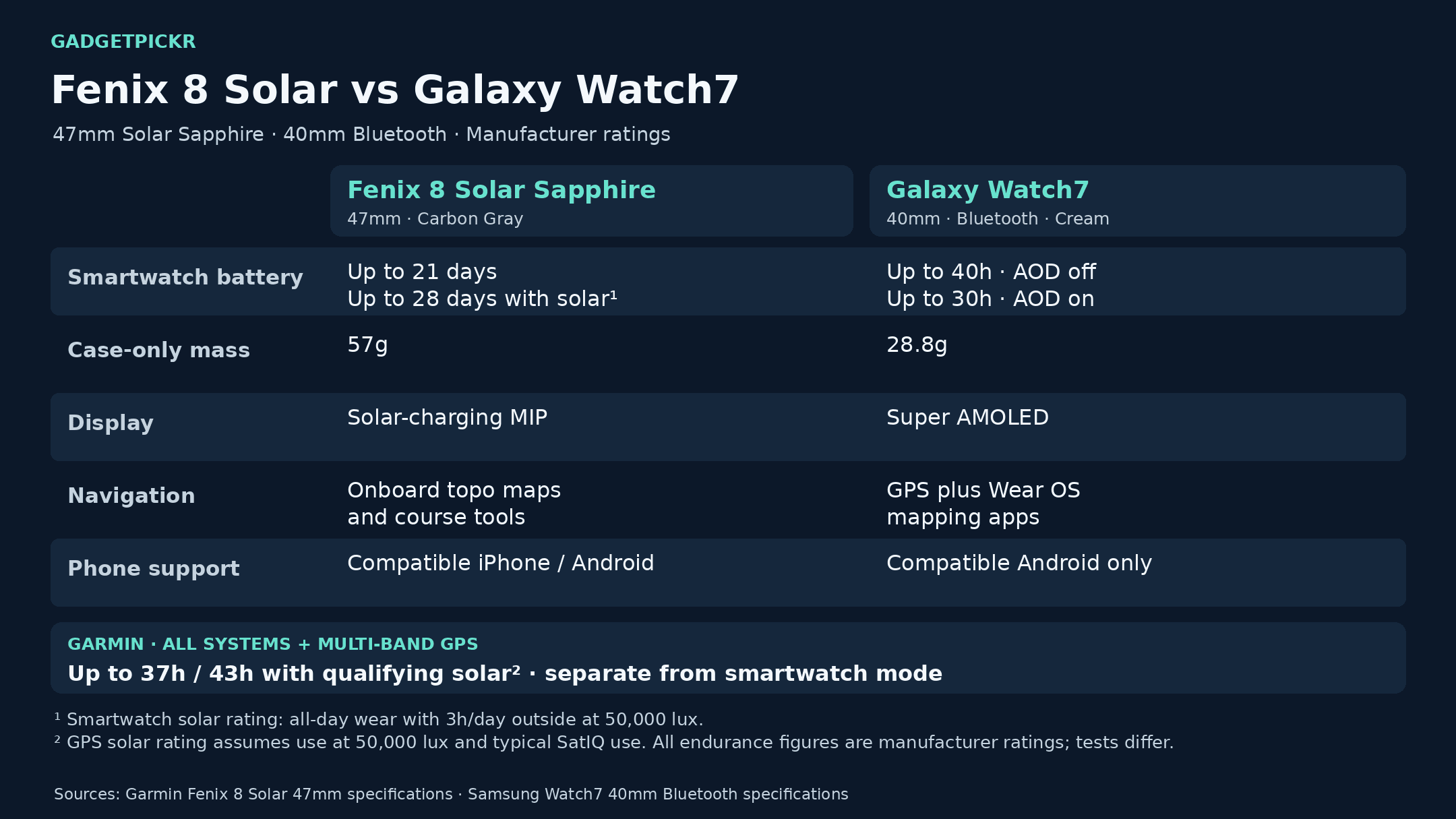
Compare these exact versions instead of grabbing the biggest battery number from each product line. The weights below don't include the band, and Samsung's two battery ratings depend on whether the always-on display is on.
| Spec | Garmin Fenix 8 Solar Sapphire 47mm | Samsung Galaxy Watch 7 40mm Bluetooth |
|---|---|---|
| Best for | Backcountry hiking, long training days, and recreational diving; higher budget | Office-to-gym routines, smaller wrists, and Android messaging; lower budget |
| Rated battery life | Up to 21 days; 28 days with qualifying solar exposure, smartwatch mode | Up to 40 hours AOD off; 30 hours AOD on |
| Water and dive rating | 10 ATM; separate dive rating to 40m | 5 ATM; shallow-water swimming |
| Software | Garmin platform with Connect IQ apps | Wear OS Powered by Samsung |
| Case size | 47 × 47 × 15.2 mm | 40.4 × 40.4 × 9.7 mm |
| Weight (without band) | 57g | 28.8g |
| Display | 1.3-inch solar-charging MIP; Power Sapphire lens | 1.3-inch Super AMOLED |
| GPS and maps | Multi-band GPS / SatIQ; onboard topographic maps | Dual-frequency GPS; Wear OS mapping apps |
| Processor / RAM | Not listed | Exynos W1000 / 2GB RAM |
| Storage | 32GB | 32GB |
| Sensors | Heart rate, Pulse Ox, barometric altimeter, depth sensor | BioActive sensing: ECG, BIA, optical HR; infrared temperature |
| Speaker and mic | Built-in speaker and microphone | Built-in speaker and microphone |
| Flashlight | Dedicated LED flashlight | Screen illumination only |
Design & Build Quality
Start with how much weight you'll actually have on your wrist. Garmin lists 80g with the band and 57g for the case alone. Samsung's 28.8g is also case-only. So if you have smaller wrists, the Samsung is the better place to start. Check the band fit as well as the case size before you assume either one will suit you.
Samsung's aluminum case keeps it to 40.4 × 40.4 × 9.7 mm. The Sport Band is HNBR rubber, and the S/M size fits wrists from 130 to 190 mm. That's the wrist range, not the strap length. The 5 ATM rating covers swimming, but it's not a dive watch.
Garmin's 47mm case has a titanium bezel, a Power Sapphire lens, a metal sensor guard, and leakproof inductive buttons. Garmin says it's tested for heat, shock, and water resistance, and the separate 40-meter dive rating covers scuba and freediving. There's also a dedicated LED flashlight, so you don't have to turn the screen into a torch.
Performance & Key Features
The screens set these watches apart before you even open an app. Samsung uses a 1.3-inch Super AMOLED panel. The Solar Fenix uses a transflective MIP display that stays visible in sunlight, with a solar-charging lens on top. Go with the Samsung if you want a bright, colorful screen for apps. Go with the Solar Garmin if you'd rather have an always-visible outdoor display and the battery life that comes with it.
On the Samsung, the Exynos W1000, 2GB of RAM, and 32GB of storage run Wear OS with downloadable apps, messaging, music, and payments. BioActive covers optical heart rate, an electrical heart sensor, and body-composition estimates, plus an infrared temperature sensor. Energy Score works through Samsung Health on compatible Samsung and other Android phones. ECG and sleep-apnea detection need a compatible Galaxy phone and have to be available in your region.
Samsung rates the 300mAh battery for up to 40 hours with the always-on display off and 30 hours with it on. Your display setting, workouts, and other features all change how long it actually lasts. Either way, you'll be charging it regularly.
Garmin's big advantage is built-in topo maps, course navigation, and training tools in one watch. Contour lines and trail details help when you're deciding which fork to take, and training readiness and recovery estimates are useful if you're following a structured plan. Offline voice commands and voice notes work without your phone. You still need a paired phone for normal calls.
Read the battery modes carefully. For the 47mm Solar, Garmin rates smartwatch use at up to 21 days, or 28 days if you wear it all day and get three hours outside in 50,000-lux sunlight daily. With all satellite systems and multi-band on, it's rated for up to 37 hours, or 43 hours with enough sun and Garmin's SatIQ assumptions. That's a big gap from smartwatch mode, so the headline figure doesn't mean weeks of detailed GPS recording.
Pros & Cons: Garmin Fenix 8

Pros: built-in maps, dedicated outdoor sensors, dive features, and the LED flashlight give the Garmin real advantages beyond longer battery life. You get multi-band GPS and preloaded, routable topo maps on the watch itself, with no phone needed for navigation. It also works with iPhones and Android phones, so switching phones doesn't mean replacing your watch.
Cons: the 47mm case is bigger and heavier than the Samsung, and it costs a lot more. You're also choosing Garmin's Connect IQ apps over the Wear OS app store. Solar charging tops up the battery in the right light, but you'll still need a charger on some trips. Only buy all this outdoor hardware if you'll use it.
Pros & Cons: Samsung Galaxy Watch 7 40mm
Pros: a smaller case, a lower price, and Google Play make the Samsung the more practical everyday watch. You can send quick messages, pay with supported wallets, and download apps without wearing something Garmin-sized. Dual-frequency GPS also lets you record an outdoor workout without your phone, though staying reachable is another matter.
Cons: you'll charge it far more often than the Garmin in smartwatch mode, and it won't pair with an iPhone. Some health features only work with certain phones and in certain regions. Google Maps does support offline maps on Wear OS, so you're not stuck needing a connection to navigate, but that's not the same as Garmin's built-in topo maps and course planning. And the Bluetooth model can't make calls without your phone.
Real Buyer Scenarios
If your day is a commute, desk work, the gym, and messages in the evening, get the Watch7 40mm. Wear OS gives you apps and notifications you can reply to in a small case, and the lower price makes more sense if you'd never use trail maps or dive tracking. Galaxy phone owners get the most Samsung features. Find a reliable time to charge it if you want sleep tracking overnight.
If you're backpacking and checking your route a lot, or training for long runs, get the Fenix 8 Solar. Its built-in maps and training features are what you're paying extra for. Plan your charging around the GPS mode you'll use, because a weekend hike with occasional recording is very different from continuous multi-band tracking. Sunlight can stretch the battery, but shaded trails won't match Garmin's test conditions.
For recreational diving, it's the Garmin. It has a dive rating and dive activities built in, while the Samsung's water resistance is meant for swimming. If you have an iPhone, the Garmin wins too, since the Samsung won't pair with it. Your phone might decide this before the screen ever comes into it.
Alternatives Worth Considering
Garmin's Instinct 3 AMOLED 45mm is a cheaper outdoor option, rated for up to 18 days in smartwatch mode. It swaps Fenix-style topo maps for simpler navigation, so check current prices to see how much you'd save. Get it if a flashlight and outdoor tracking matter more to you than seeing detailed maps on your wrist.
For road running, the Forerunner 165 gives you structured workouts and pace tools in a lighter, running-focused watch. It doesn't have Garmin's Training Readiness, so don't expect the full Fenix training suite. For a tougher Wear OS watch, the Samsung Galaxy Watch Ultra has a bigger case and battery, with the same phone-compatibility limits. And if you just want sleep and activity tracking without a screen, the Galaxy Ring drops wrist apps and navigation for a ring you wear on your finger.
Final Verdict
Get the Fenix 8 Solar Sapphire 47mm for backcountry navigation, long training days, or recreational diving. The built-in topo maps and outdoor hardware are the best reasons to spend more, and the longer smartwatch-mode battery backs that up. Just keep the 21-day and 28-day solar ratings separate from GPS runtime. It's an outdoor tool with smart features, and its size shows it.
Get the Watch7 40mm for everyday Android messaging, apps, gym tracking, and a smaller case at a lower price. In Fenix 8 vs Galaxy Watch 7 40mm, Samsung wins for office-to-gym days, and Garmin wins for outdoor navigation and diving. Galaxy phone owners get the most from the Samsung, but other Android users still get Energy Score and core tracking. If you use an iPhone, get the Garmin.
Sources & References
Specifications and claims in this analysis were cross-referenced against the sources below.
- Buy Galaxy Watch7 WiFi/Bluetooth 40mm Smartwatch Greensamsung.com
- Buy Galaxy Watch7 WiFi/Bluetooth 40mm Smartwatch Cream ...samsung.com
- Galaxy Watch7samsung.com
- Explore Galaxy Watch7 Smartwatch | Wearablessamsung.com
- Buy Galaxy Watch7 WiFi/Bluetooth 44mm Smartwatch Greensamsung.com
- Galaxy Watch7 40 mm Vert Bluetoothsamsung.com
- Samsung Galaxy Watch7 - Full phone specificationsgsmarena.com
- Garmin fenix 8 Solar Sapphire | REI Co-oprei.com
Frequently Asked Questions
No. The 28-day rating is for smartwatch mode with enough sunlight. With all satellite systems and multi-band on, it's rated for up to 37 hours, or 43 hours under Garmin's solar and SatIQ conditions.