Galaxy Watch9 vs Apple Watch Ultra starts with your phone, then comes down to your wrist. Get the Watch9 if you use Android and want a watch for sleep, activity, and everyday notifications. Get the Ultra if you use an iPhone and need what it's built for: a titanium case, dive support, and outdoor controls.
The links below are for the 40mm Bluetooth Galaxy Watch9 and the 49mm Apple Watch Ultra 3. Samsung also sells a 44mm Watch9 and LTE versions, but those are separate models. And since the linked Apple watch is the Ultra 3, don't mix up its processor, connectivity, or battery specs with the original Ultra or Ultra 2.
The Quick Take
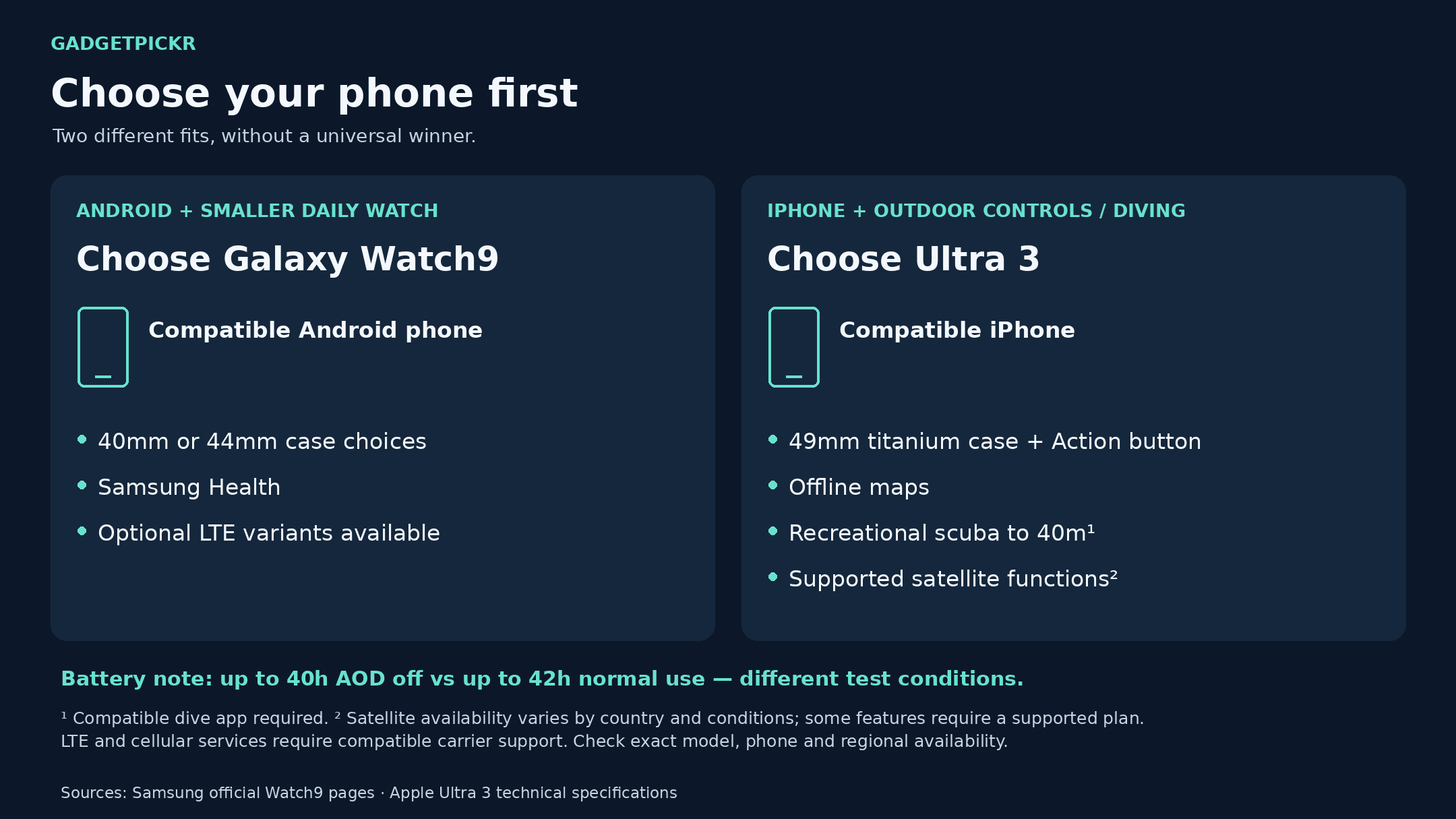
If you use Android and want a smaller everyday watch, the Watch9 is the clear pick. If you use an iPhone and need recreational scuba support, offline maps, or satellite messaging, go with the Ultra 3. Battery life is closer than you might expect from their sizes: Samsung lists up to 40 hours with the always-on display off, while Apple rates the Ultra 3 at up to 42 hours of normal use under its own test conditions.
Galaxy Watch9
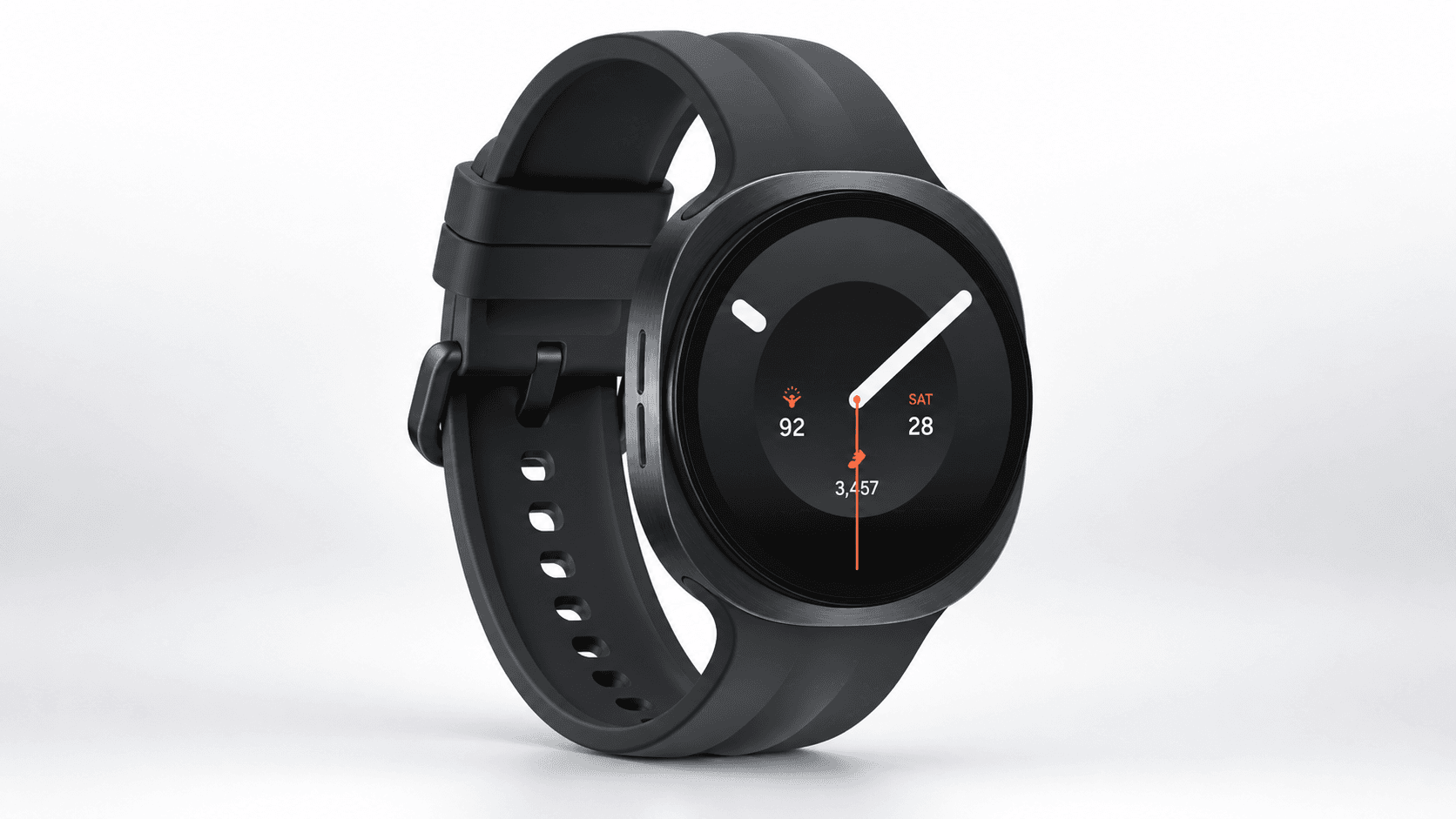
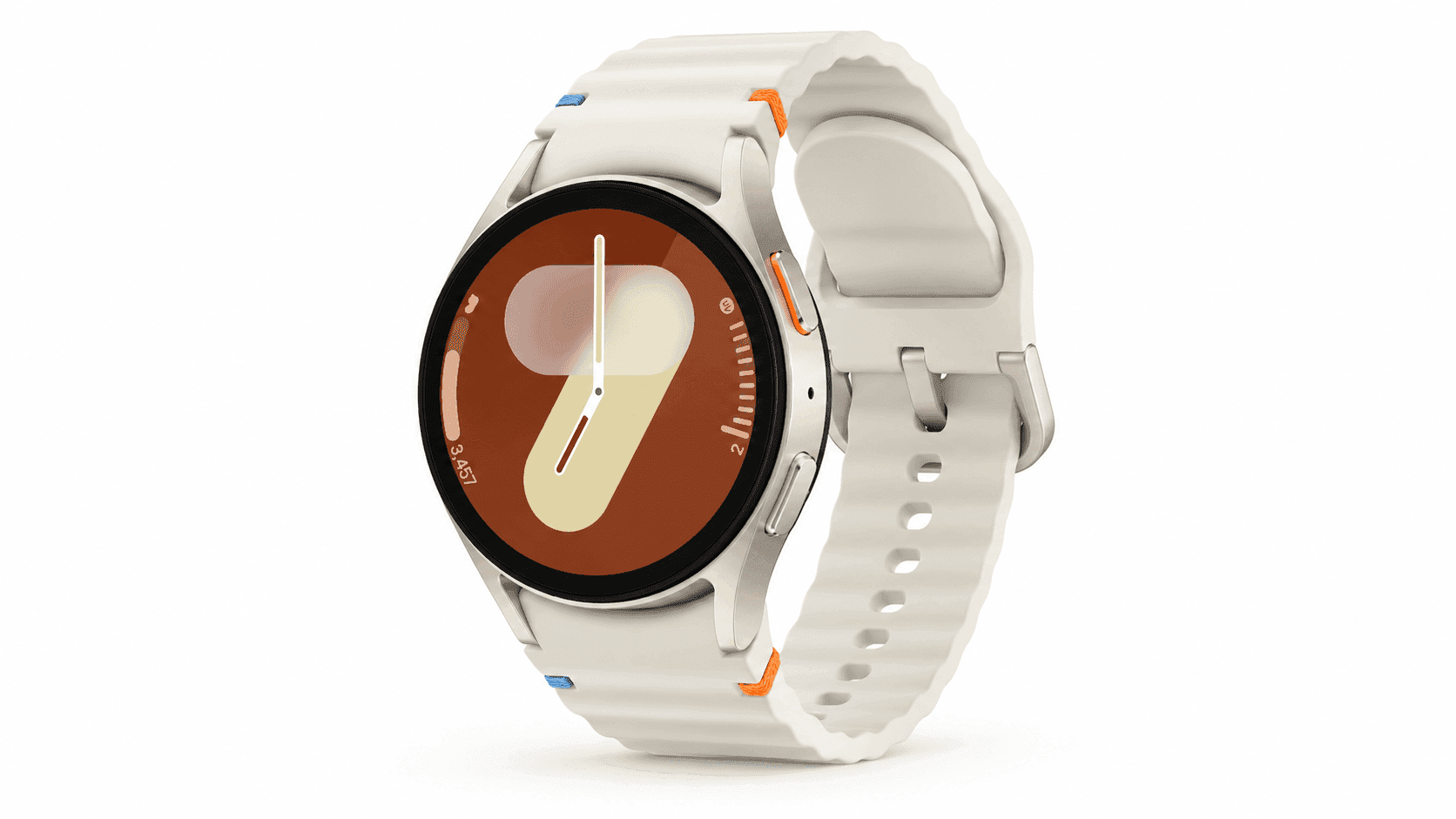
Pick the Watch9 for Android notifications, Samsung Health, and a choice of smaller sizes. The linked Graphite model is the 40mm Bluetooth version, so it doesn't have its own LTE connection.
Check Price on AmazonApple Watch Ultra
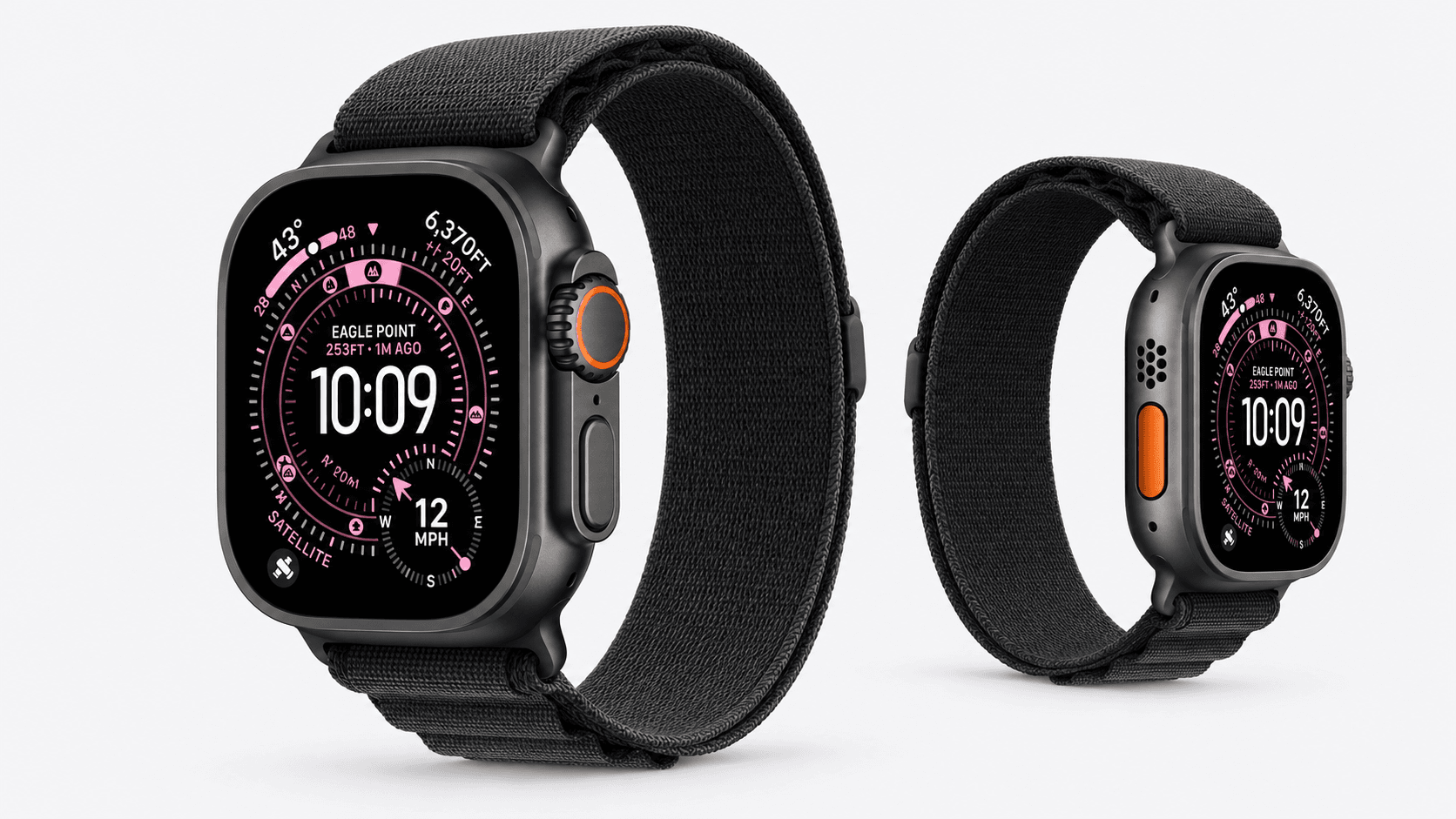
Pick the Ultra 3 for outdoor use with an iPhone, a 49mm titanium case, and an Action button. Cellular needs a compatible plan, and satellite features depend on where you are and the conditions.
Check Price on AmazonGalaxy Watch9 vs Apple Watch Ultra: Specs Comparison
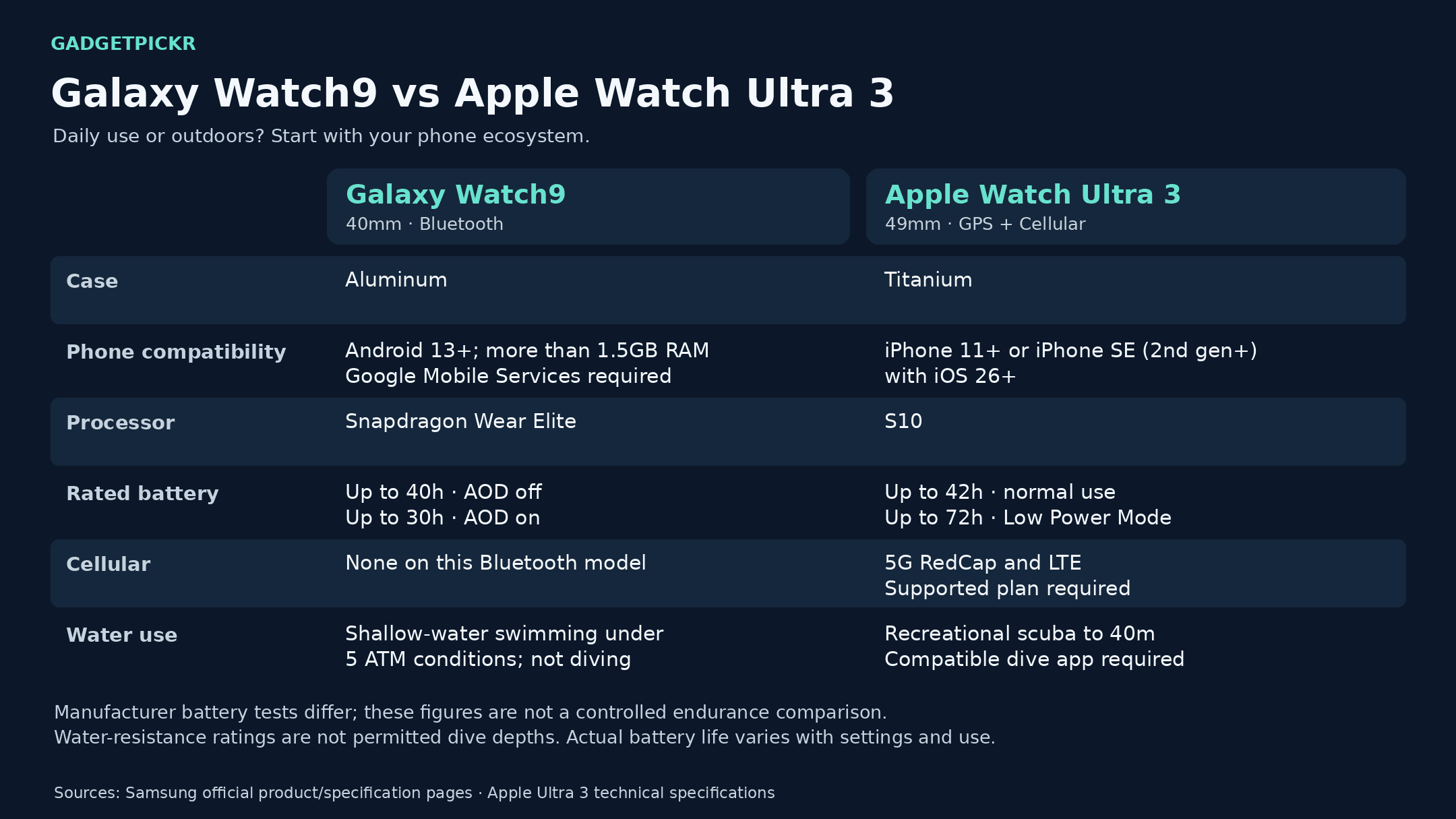
Size, phone compatibility, and water-sports support are the real dividing lines. Battery capacity alone doesn't tell you how long a watch lasts, and Apple's Low Power Mode figure isn't the same as either brand's normal-use rating.
| Spec | Samsung Galaxy Watch9 | Apple Watch Ultra |
|---|---|---|
| Best for | Android users who want a smaller everyday watch for sleep, wellness trends, and notifications | iPhone users who need dive support, outdoor controls, and satellite messaging |
| Case size | Linked model: 40mm; 44mm also available | Ultra 3: 49mm |
| Materials | Aluminum with sapphire crystal | Titanium with sapphire crystal |
| Water resistance | 5 ATM; swimming within Samsung's conditions | 100m rating; recreational scuba to 40m with a compatible app |
| Battery capacity | 390mAh (40mm) / 445mAh (44mm) | Not listed by Apple |
| Rated battery life | Up to 40 hours AOD off; 30 hours AOD on | Up to 42 hours normal use; 72 hours in Low Power Mode |
| Cellular | Linked model: Bluetooth only; LTE versions sold separately | 5G RedCap and LTE; compatible plan required |
| GPS | L1/L5 dual-frequency | L1/L5 dual-frequency |
| Display size | 1.3-inch (40mm); about 1.47-inch (44mm) | Not listed as a diagonal (Apple gives pixels and active area) |
| Processor | Snapdragon Wear Elite | Apple S10 |
| Phone required | Compatible Android 13+ phone; some advanced features have extra requirements | Compatible iPhone with iOS 26 or later |
| Overnight vitals | Vitals needs at least seven nights of sleep data | Vitals and overnight health tracking |
Design & Build Quality
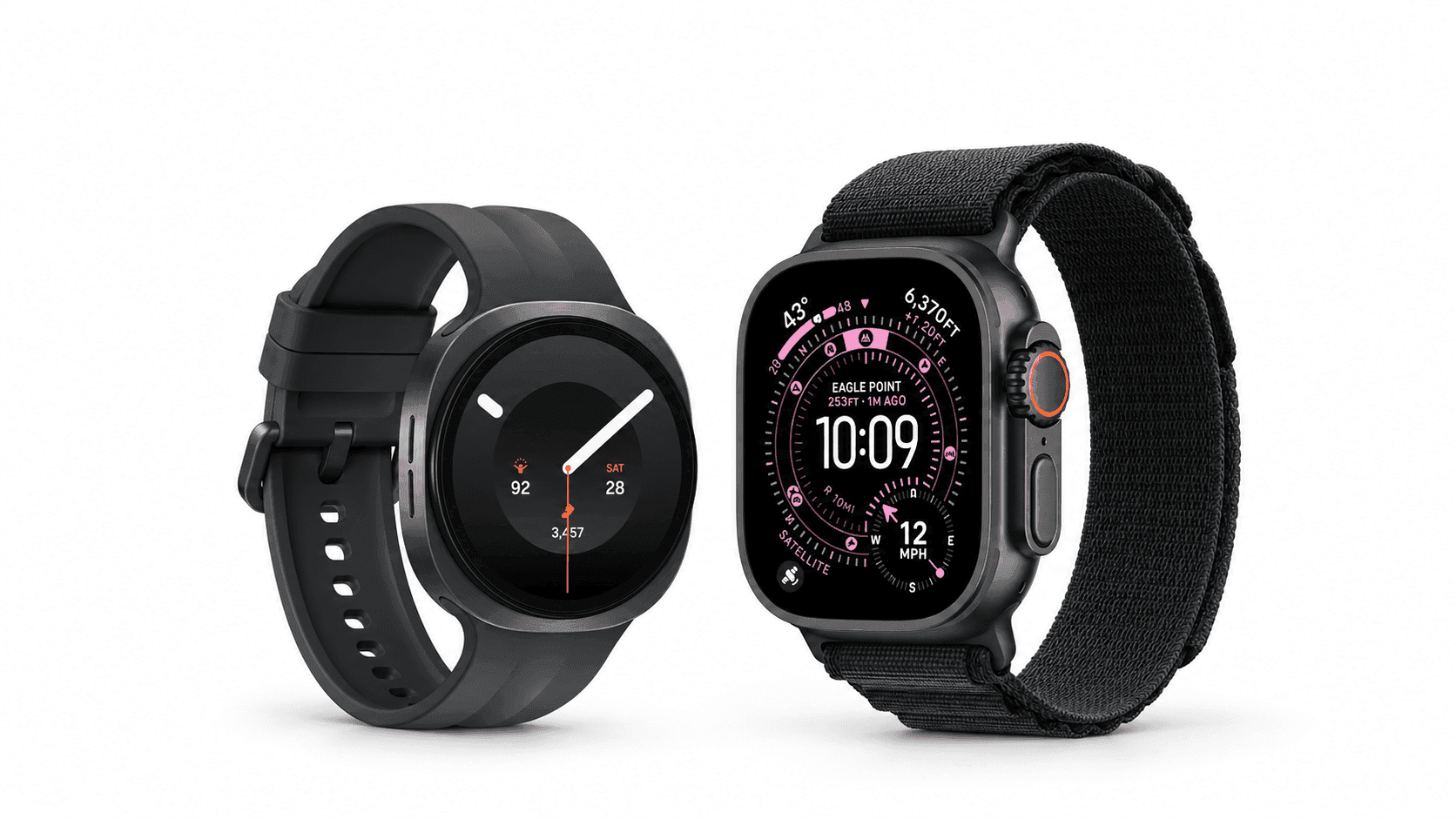
The Watch9 starts smaller. Its 40mm and 44mm aluminum cases suit anyone who wants a round watch instead of a big outdoor tool. Sapphire crystal covers the screen, and choosing the right case size matters as much as the looks. For wearing at work and to bed, the smaller sizes are the main reason to put it at the top of an Android shortlist.
The Ultra 3 uses its extra size for a different set of controls. A 49mm titanium case surrounds the flat sapphire screen, with a raised edge to protect it, a Digital Crown, a side button, and a customizable Action button. You can set the Action button to things like starting a workout or marking a waypoint. Those physical controls are a better reason to choose the Ultra than assuming a bigger case makes a better smartwatch.
Water use is where they really split. Samsung's 5 ATM rating covers swimming within its stated conditions, while Apple supports recreational scuba diving to 40m with a compatible third-party dive app. The Ultra's 100m rating doesn't mean you can dive to 100m. Its extra dive hardware makes it the winner for diving specifically, not for every water activity.
Performance & Key Features
For everyday Android use, the Watch9 pairs Wear OS apps with Samsung Health and the Snapdragon Wear Elite chip. Vitals builds a personal baseline from at least seven nights of sleep data, while Energy Score, Running Coach, and Daily Cardio Load organize your activity and recovery data. Heart Health Score is separate from blood-pressure monitoring, which has its own calibration requirements. Advanced health features also depend on your phone, eligibility, and region.
It has dual-frequency GPS for outdoor runs. For everyday tasks, Samsung also offers raise-to-talk voice assistance with compatible services and settings. The linked Bluetooth model relies on your phone or an available network for online features. If you need it to work without your phone, get an LTE Watch9 instead.
On Apple's side, the Ultra 3 uses the S10 chip and a wide-angle OLED display. It supports multisport tracking, offline topographic maps, and dive-computer apps, along with waypoints, Backtrack, a siren, a depth sensor, and satellite messaging where supported.
Battery life deserves a closer look than "everyday watch versus expedition watch" suggests. Samsung rates the Watch9 at up to 40 hours with always-on display off, or 30 hours with it on, while Apple rates the Ultra 3 at up to 42 hours of normal use. Apple's 72-hour figure needs Low Power Mode, and none of these ratings promise the same hours of continuous GPS tracking. For a long event, plan around your tracking mode, cellular use, and when you'll be able to charge.
Pros & Cons: Galaxy Watch9

For Android users, the Watch9's appeal is simple: smaller sizes and a wide range of everyday health and notification features. Samsung focuses on daily recovery insights through Energy Score, Running Coach, and body-composition trends. Pick it if that matches your routine. If you have an iPhone, look elsewhere, since this watch won't pair with iOS.
Pros: Sleep tracking, sleep-apnea notifications, Vitals, Energy Score, body-composition estimates, and running tools give Samsung Health lots of ways to track your daily trends. Dual-frequency GPS and a round AMOLED screen also cover workouts and everyday smartwatch tasks. Cons: Some advanced health features need a compatible Galaxy phone and regional support, and the linked Bluetooth model doesn't have LTE. Its 5 ATM rating also doesn't make it an option for scuba diving like the Apple watch.
Pros & Cons: Apple Watch Ultra
Pros: The Ultra 3 combines a titanium case, sapphire crystal, the Action button, dive support, and offline navigation. It supports 5G and LTE with a compatible plan, and satellite features add off-grid messaging options where supported. It's the stronger outdoor watch for iPhone users who'll actually use those features. Its normal-use battery rating is also a bit longer than the Watch9's top figure, though the two were tested differently.
Cons: You have to be okay with a 49mm case and a higher price, and it won't work with Android. Cellular service and some third-party apps can cost extra on top of the watch. Apple also covers sleep and health tracking, so it's not just a sports watch. It doesn't give you a numerical blood-pressure reading, though; its hypertension notifications are a different feature.
Real Buyer Scenarios
If your day revolves around an Android phone, work notifications, the gym, and sleep tracking, get the Watch9. Its smaller sizes and Samsung Health tools fit that routine much better than switching phones just to get an Ultra. Check the phone and region requirements for the health features you actually want, since basic Android pairing doesn't unlock everything on every phone.
If you're an iPhone user who hikes, swims, and wants satellite messaging or a dive app, get the Ultra 3. Its Action button and outdoor features give it a clear purpose beyond the titanium case. Download offline maps before you head out of coverage. Satellite messaging and the emergency siren give you extra options, but they can't guarantee you'll be able to reach help everywhere.
If you mainly want to charge less often, compare the battery ratings carefully before you choose. The Ultra 3's normal-use rating is close to Samsung's AOD-off figure, and its longer Low Power Mode rating means turning off some features. A bigger watch isn't automatically the winner for your workout schedule. For events that run well beyond either watch's tracking time, a dedicated sports watch is worth a look.
Alternatives Worth Considering
If you use an iPhone and want a slimmer watch without the Ultra's dive features, the Apple Watch Series 10 is an older option to consider. It has health tracking, notifications, and a thinner case, but shorter battery life and 50m water resistance. Check the actual price, since older models aren't always cheaper. It's better suited to everyday use than to scuba diving.
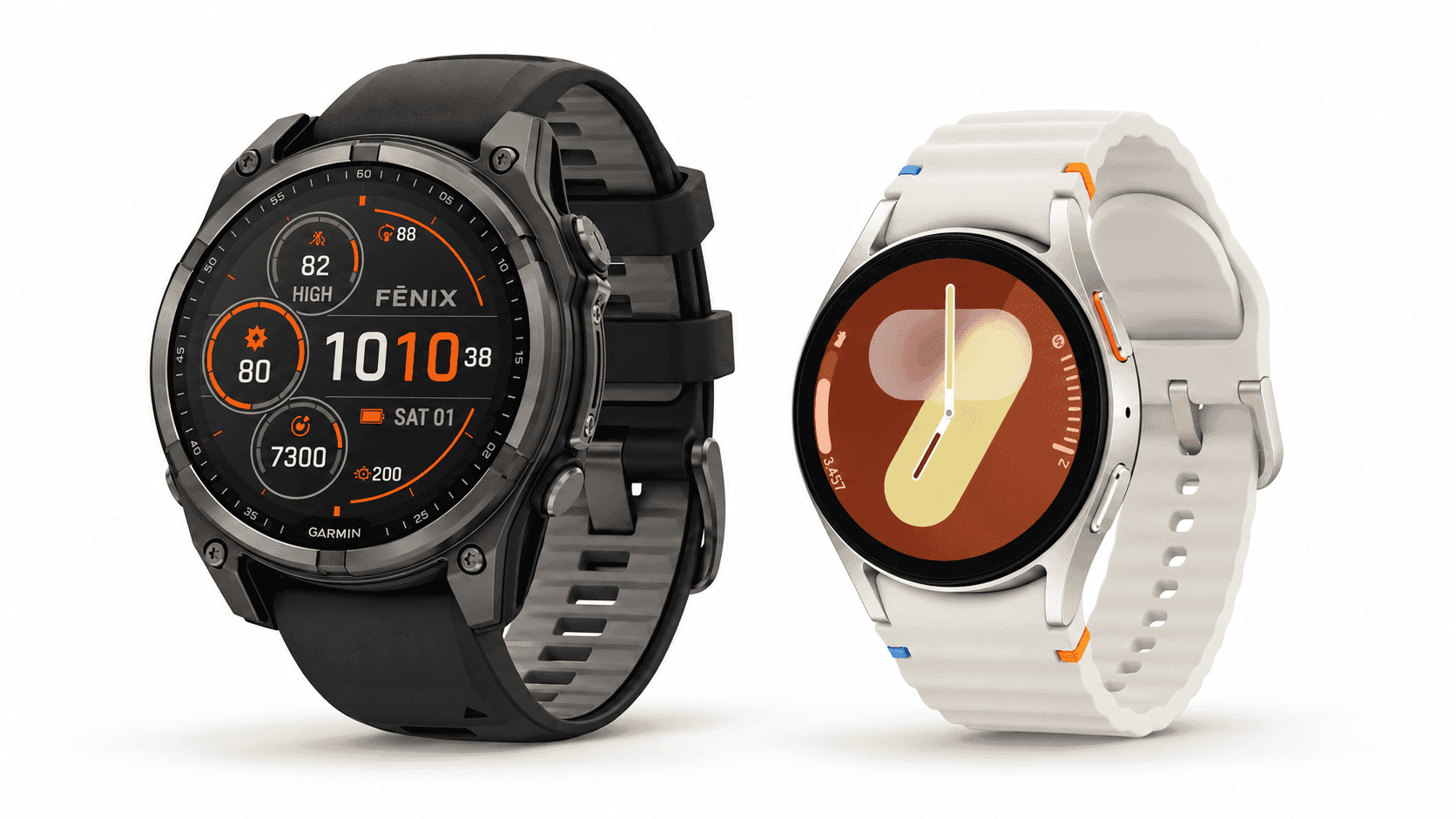
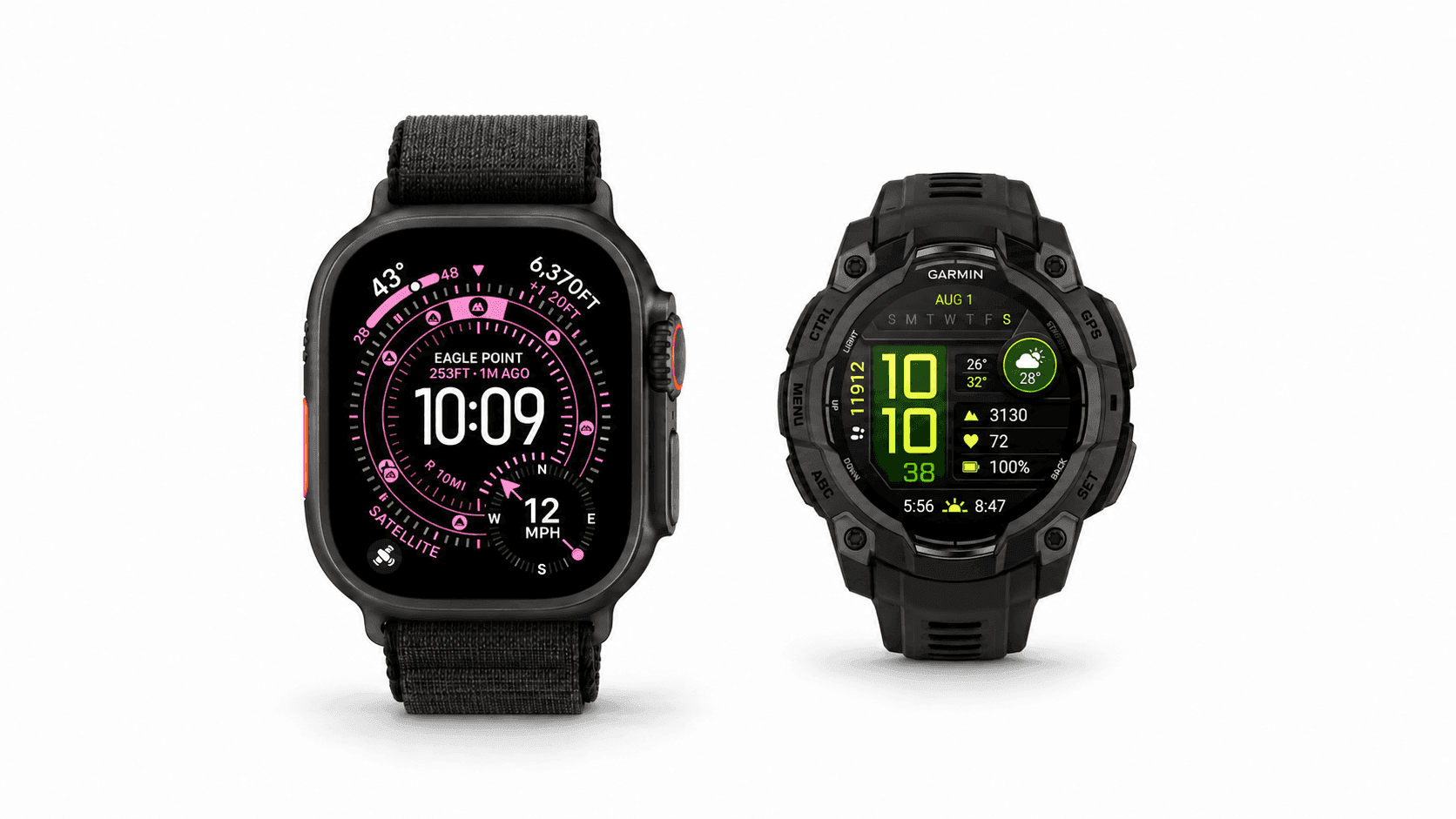
If you use Android and want something more rugged, look at the Samsung Galaxy Watch Ultra (2025). For a running-focused option, Garmin's Forerunner 165 lasts up to 11 days in smartwatch mode, but it doesn't have built-in maps. Garmin's Fenix 8 does have maps, with battery life that depends on the size, screen type, and mode. Both Garmin watches work with iPhone and Android, so compare their navigation features carefully rather than treating them as the same.
Final Verdict
In the Galaxy Watch9 vs Apple Watch Ultra matchup, get the Watch9 if you want a smaller everyday Android watch with sleep, activity, and recovery tracking. The linked 40mm Bluetooth model is the practical choice for notifications and workouts when your phone is nearby. If you need cellular on the watch itself, get one of the LTE versions instead.
Get the Ultra 3 if you use an iPhone and will actually use its titanium case, Action button, dive support, maps, or satellite features. Those features are what justify its 49mm size, not a big battery-life advantage. For everyday Android use, Samsung wins. For iPhone users heading outdoors, Apple wins.
Sources & References
Specifications and claims in this analysis were cross-referenced against the sources below.
- Discover the Galaxy Watch9 Smartwatch Featuressamsung.com
- Galaxy Watch9samsung.com
- Apple Watch Ultra 3 - Technical Specificationsapple.com
- Buy the Graphite Samsung Galaxy Watch9 44mm ...samsung.com
- Samsung Galaxy Watch9 - Full phone specificationsgsmarena.com
- Introducing Apple Watch Ultra 3apple.com
- Apple Watch Ultra 3apple.com
- Apple Watch Ultra 3 - Tech Specssupport.apple.com
Frequently Asked Questions
No. The Watch9 needs a compatible Android 13+ phone and won't pair with an iPhone. The Ultra 3 needs a compatible iPhone running iOS 26 or later and won't pair with Android. Some Watch9 health features also need a Galaxy phone.