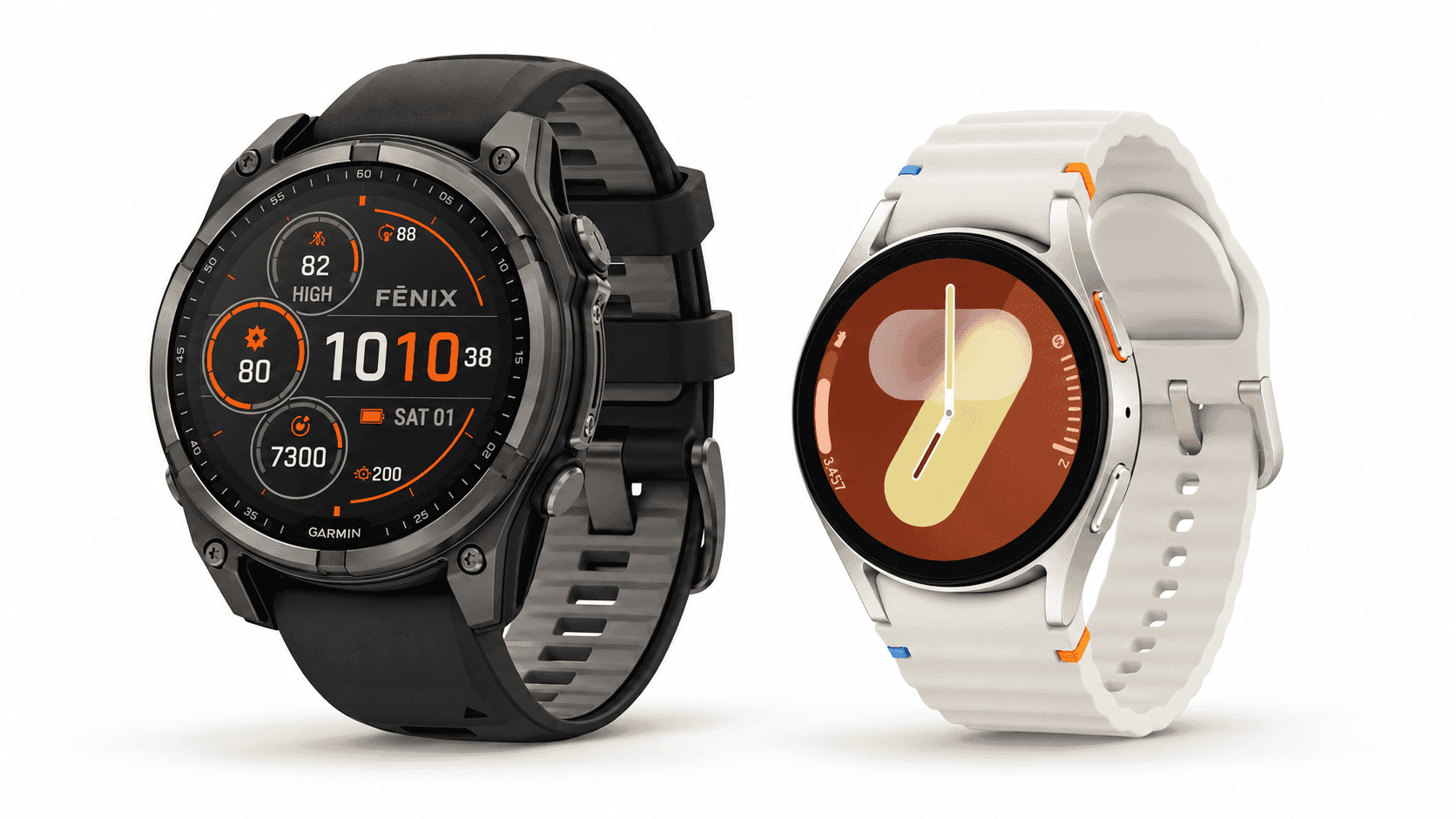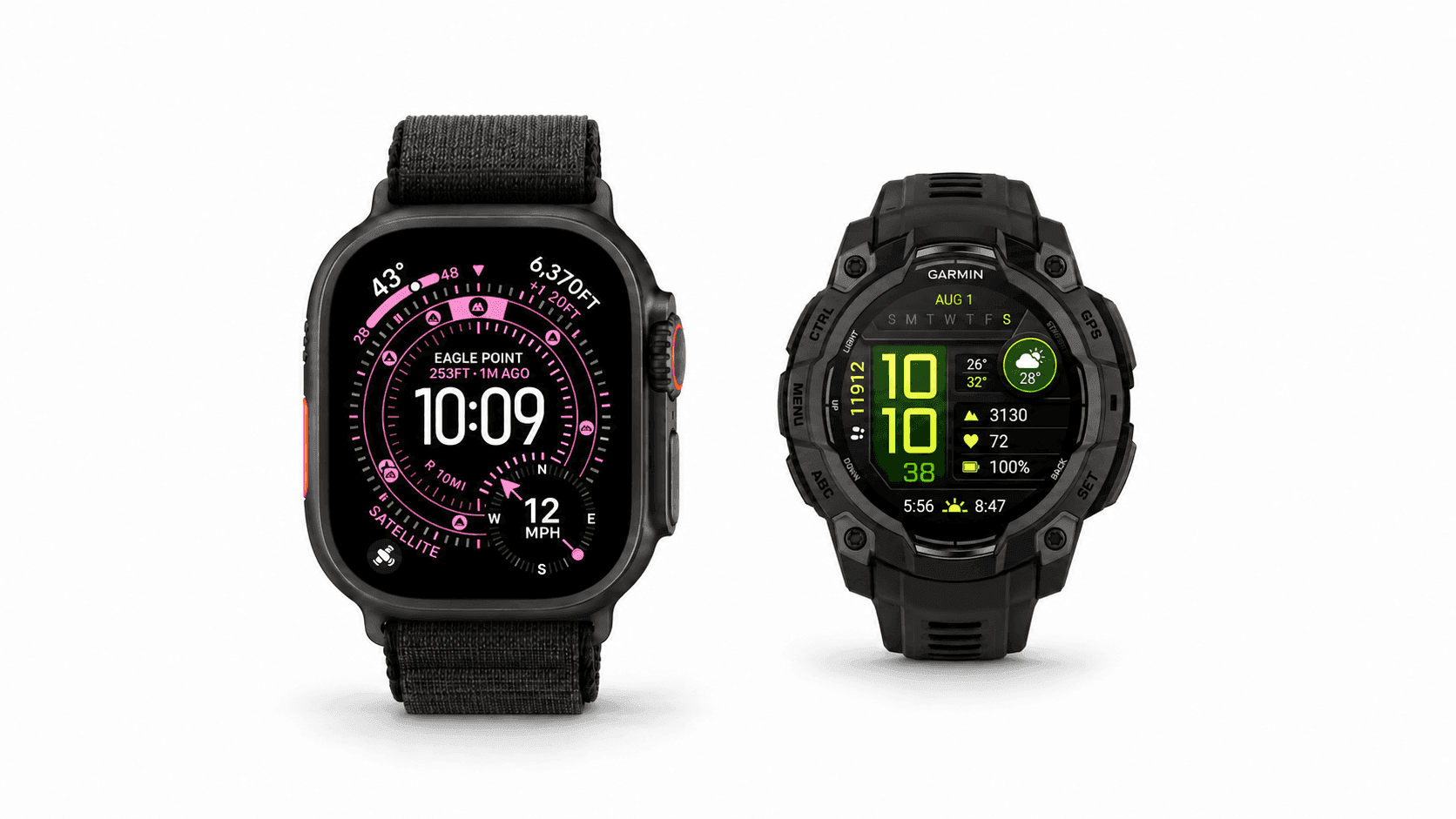
Apple Watch Ultra vs Garmin Instinct comes down to one trade-off: do you want a watch that does more on its own, or one you rarely have to charge? If you're an iPhone user who wants calls, apps, and detailed maps alongside your workouts, the Apple is the stronger package. If battery life comes first on your hikes and runs, the Garmin wins.
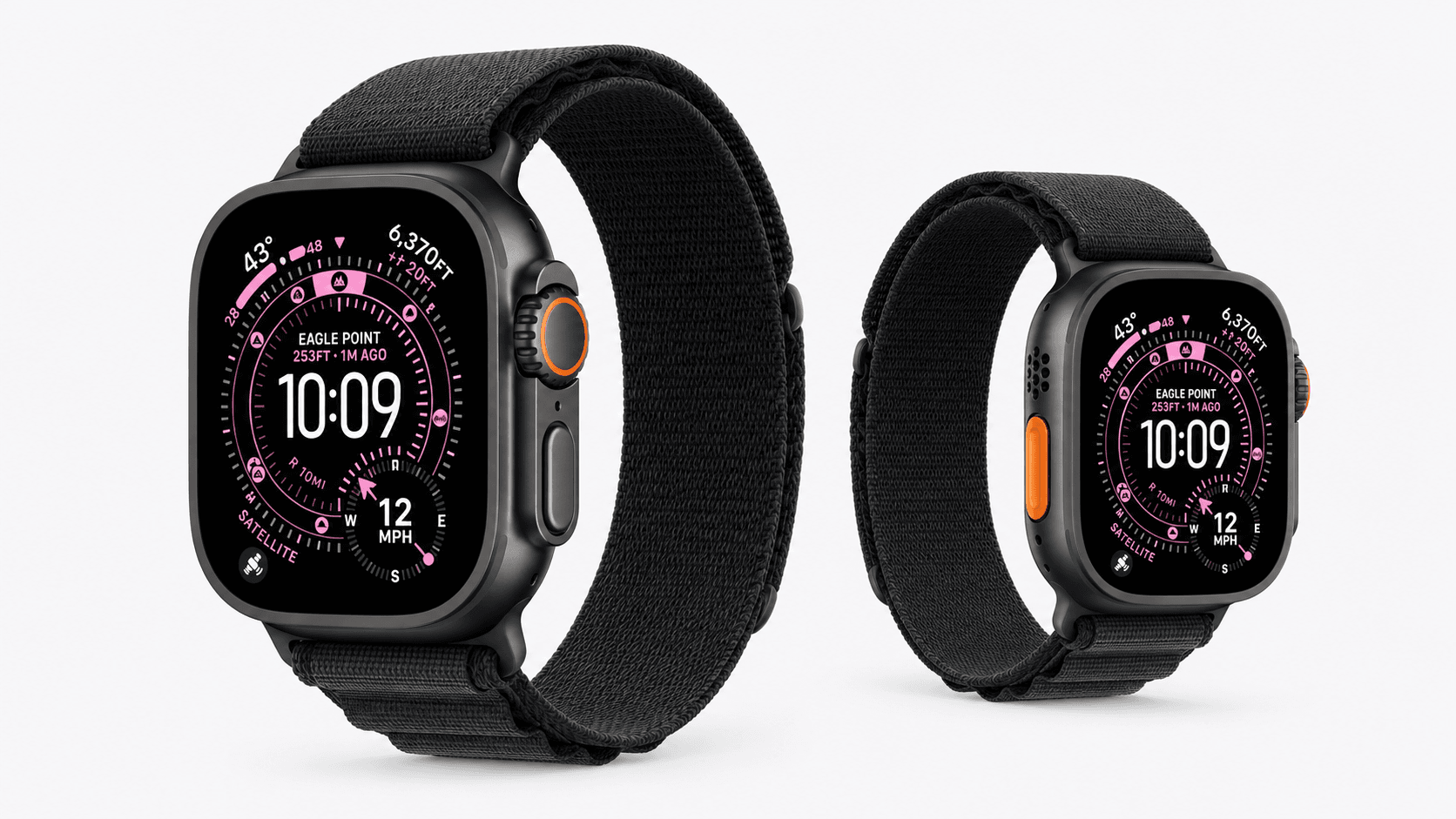
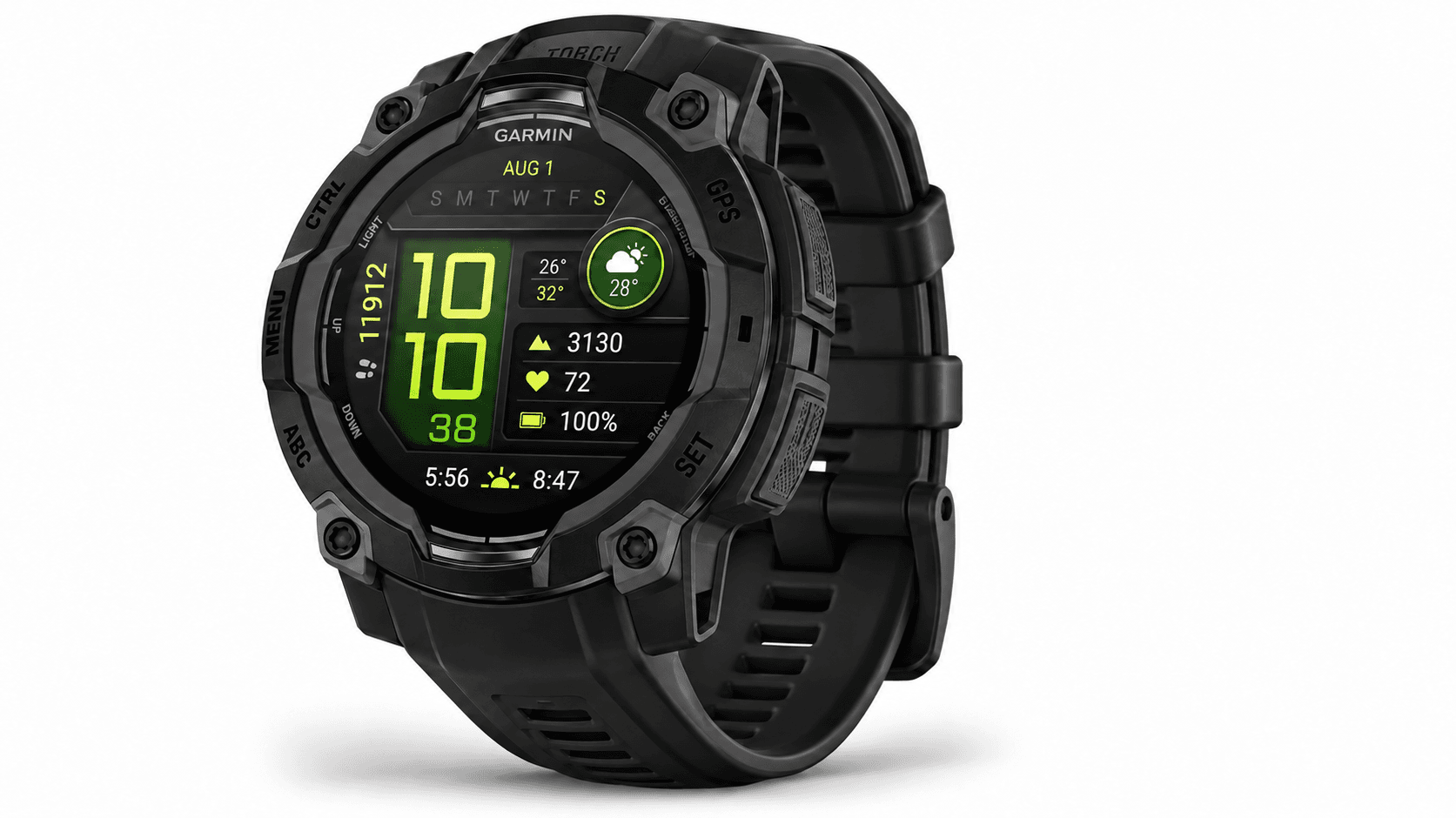
We're comparing the 49mm Apple Watch Ultra 3 and the 45mm Garmin Instinct 3 AMOLED, the two models our price buttons link to. That matters most on the Garmin side: this version has a color screen instead of the monochrome display older Instincts are known for, and it doesn't charge from sunlight. The Solar versions are separate watches with their own battery figures.
The Quick Take
Pick the Ultra 3 if you want phone-free cellular calls, watchOS apps, and recreational diving with a compatible dive-computer app. Pick the Instinct 3 AMOLED if you want longer gaps between charges, button controls, and a watch that works with either iPhone or Android. One catch: its 18-day smartwatch rating assumes the screen wakes with a wrist gesture. Leave the display always on and that drops to seven days.
Apple Watch Ultra 3
If you're on iPhone, the Ultra 3 pairs a titanium case with cellular calling and a full touchscreen app experience. It's the better choice when your watch has to handle everyday calls and messages as well as outdoor training.
Check Price on AmazonGarmin Instinct 3 AMOLED
If battery life matters most, the Instinct 3 AMOLED gives you a 45mm polymer case and much longer rated battery life. It leans into activity tracking and physical buttons instead of standalone calls.
Check Price on AmazonApple Watch Ultra vs Garmin Instinct: Specs Comparison
Every figure below is for the Ultra 3 and the 45mm Instinct 3 AMOLED. Battery ratings change a lot depending on the tracking mode, so check which mode each number refers to before you compare them.
| Spec | Apple Watch Ultra 3 | Garmin Instinct 3 AMOLED (45mm) |
|---|---|---|
| Best for | iPhone users who want cellular calls, apps, maps, and recreational diving | Hikers and runners who want long battery life and button controls, on iPhone or Android |
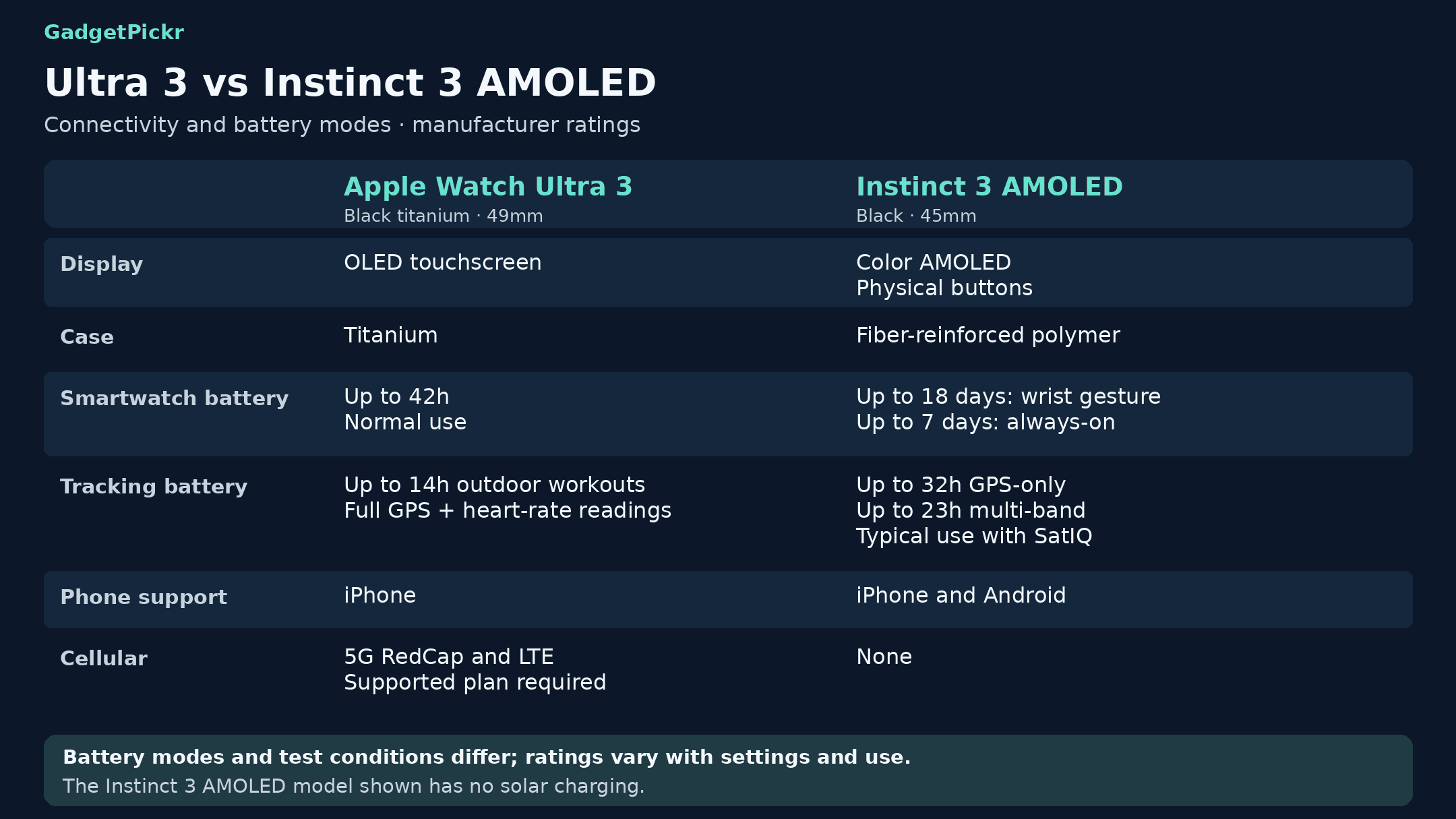
| Battery (smartwatch) | Up to 42 hours of normal use; 72 hours in Low Power Mode | Up to 18 days with wrist gesture; 7 days always-on |
| Battery (GPS) | Up to 14 hours of outdoor workouts with full GPS and heart-rate readings | Up to 32 hours GPS-only; 23 hours all-systems plus multi-band with SatIQ |
| Display | Always-On Retina OLED touchscreen | Color AMOLED, button-operated |
| Case | Titanium with sapphire crystal | Fiber-reinforced polymer; polymer/aluminum bezel |
| Phone compatibility | Compatible iPhone only (iOS 26 or later) | Compatible iPhone and Android phones; some messaging features differ |
| Water resistance | 100m; EN13319; recreational scuba to 40m with a compatible app | 10 ATM (pressure equivalent to 100m) |
| Cellular | 5G RedCap and LTE; service plan required | None |
| Case size | 49mm | 45mm (50mm versions also available) |
| Navigation | L1/L5 dual-frequency GPS; offline maps and Backtrack | Multi-band GNSS with SatIQ; courses and TracBack |
Design & Build Quality
At 49mm, the Ultra 3 is a big watch. A titanium case wraps around a flat sapphire crystal with a raised edge, and there's a customizable Action button next to the Digital Crown. If you want an outdoor watch that doesn't look purely utilitarian, that metal finish is a big part of the appeal.
The Garmin uses a 45mm fiber-reinforced polymer case with a metal-reinforced bezel. Garmin says it's built to the MIL-STD-810 standard for thermal and shock resistance, and Apple lists MIL-STD-810H testing for the Ultra 3. Neither rating makes a watch indestructible, so choose based on the case and controls you actually prefer.
The controls are the bigger difference. The Instinct runs everything through physical buttons, even with its AMOLED screen, so you never depend on touch input. The Ultra 3 mixes its touchscreen with the Digital Crown, side button, and Action button. If you often train in gloves or in the rain, think about which style you'd rather use day to day.
Performance & Key Features
Start with what happens when you leave your phone at home. With an active plan and coverage, the Ultra 3 can make calls, send messages, and stream audio on its own. Add watchOS apps, Siri, and offline maps, and it's the more capable communicator of the two. Satellite messaging and Emergency SOS give you off-grid options in supported regions, though that isn't the same as voice calls from anywhere.
The Garmin shows notifications and training data on its color AMOLED screen, all driven by buttons. Body Battery, HRV status, and recovery data help you keep an eye on activity and rest over time. For the trail, you get course navigation and TracBack, with multi-band GNSS and SatIQ handling satellite tracking. Tactical features belong to the Tactical Edition, so don't expect them on this standard model.
Battery life is where the Instinct 3 AMOLED pulls clearly ahead. Garmin rates the 45mm model for up to 18 days as a smartwatch with wrist gesture, seven days with the screen always on, and up to 32 hours of GPS-only tracking. Apple rates the Ultra 3 for up to 42 hours of normal use and 14 hours of outdoor workouts with full GPS and heart-rate readings. Low Power Mode stretches Apple's figure to 72 hours, but you give up some features to get there.
If you're looking at the Solar models, compare them on their own terms. They use a monochrome screen instead of AMOLED and add solar charging. Garmin rates the 50mm Instinct 3 Solar for up to 40 days as a smartwatch without solar help, and up to 260 hours of GPS-only tracking with solar at 50,000 lux. Its unlimited smartwatch claim assumes you wear it all day and spend three hours a day outside in 50,000-lux conditions. None of those numbers apply to the AMOLED watch we're comparing here.
Pros & Cons: Apple Watch Ultra
Pros: Communication is the reason to buy the Ultra 3. Cellular calls, voice input, media playback, and third-party apps let it handle jobs the Garmin can't do on its own. The sapphire-covered OLED display, offline maps, and Action button cover the outdoor side well. ECG and other health features tie into Apple's iPhone ecosystem, though availability depends on your region and eligibility.
Cons: You'll charge it far more often than the Instinct 3 AMOLED, especially with long GPS sessions and cellular use. It only works with a compatible iPhone, so Android users are out. Cellular service needs its own plan, and there's no smaller Ultra if 49mm feels too big. It makes the most sense if you'll use those connected features; the metal case alone doesn't justify the jump.
Pros & Cons: Garmin Instinct
Pros: Longer rated battery life makes the Instinct 3 AMOLED the easier watch to live with if you hate charging. You get a color display, physical controls, multi-band satellite tracking, and Garmin's activity and recovery tools. It works with both iPhone and Android, so switching phones won't leave you stuck. There's also a built-in LED flashlight, a handy extra on an outdoor watch.
Cons: This AMOLED version has no solar charging and no cellular connection. Third-party apps come through Garmin's Connect IQ store, not Apple's App Store, so check that the apps you rely on are available before you buy. Calls still go through your connected phone, and preset replies to regular text notifications only work with a compatible Android phone. Cross-platform support is a plus, but not every messaging feature works the same on iPhone as it does on Android.
Real Buyer Scenarios
If you run before work and want to take calls without carrying your iPhone, get the Ultra 3. Cellular service and watchOS apps fit that routine better than Garmin's phone-linked notifications. Offline maps and workout tracking cover weekend hikes too. Just plan on charging it regularly, especially on trips with a lot of tracking.
If you're heading out for a hiking weekend, or your schedule makes charging a hassle, get the Instinct 3 AMOLED. The longer smartwatch rating gives you more breathing room between charges, and button navigation doesn't depend on touch input. Keep in mind that continuous multi-band recording uses far more battery than occasional workouts, so plan around that mode's 23-hour rating. If you want solar charging, look at an Instinct Solar model instead.
Recreational scuba divers have an easy pick: the Ultra 3 supports dives to 40m with a compatible third-party dive-computer app. Don't read its 100m water-resistance rating as a dive limit; 40m is the supported scuba depth. Garmin's 10 ATM rating means the Instinct 3 handles pressure equivalent to 100m, but that doesn't make it a scuba dive computer. And if you're on Android, the choice between these two is already made: get the Garmin.
Alternatives Worth Considering
The Apple Watch Series 10 is an older model, but it's worth a look if you want watchOS without the Ultra's 49mm case. You get a wide-angle OLED display, health features, and iPhone integration in a slimmer body. The trade-offs are shorter battery life, single-frequency GPS, and a 50m water-resistance rating. If you're buying older stock, check the actual price before assuming it saves you money.
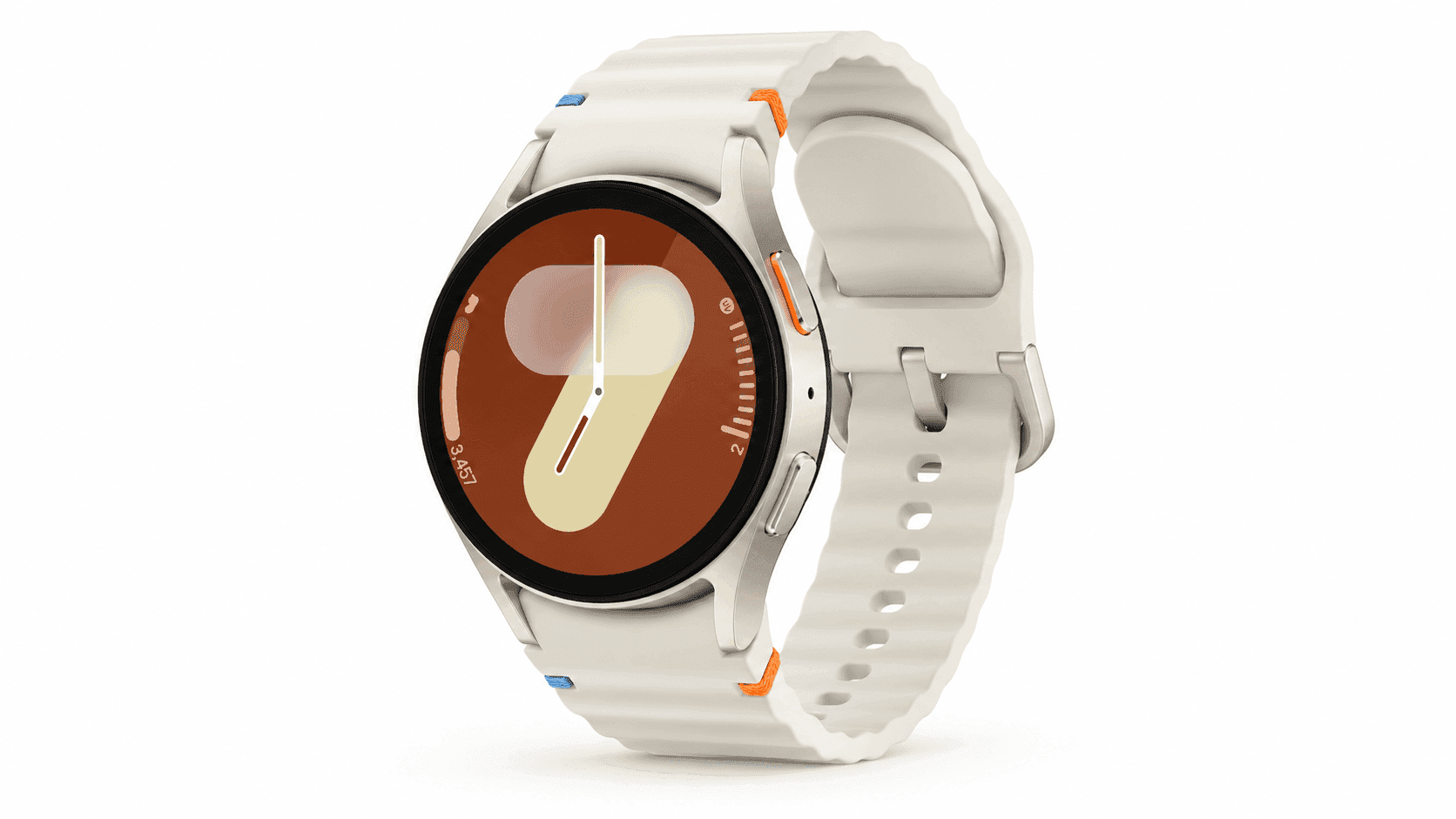
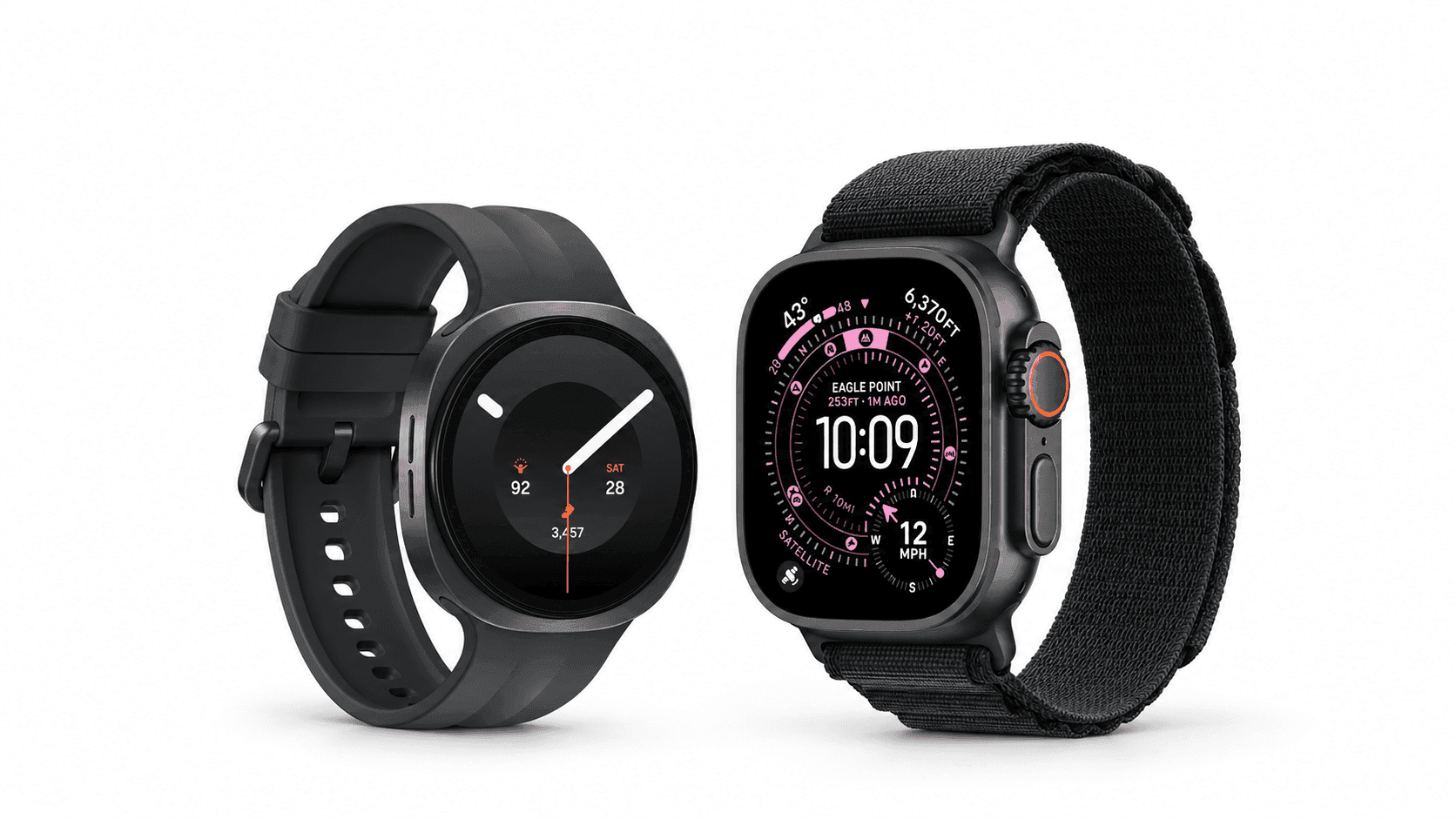
If you're on Android and want more smartwatch features than the Instinct offers, look at the Samsung Galaxy Watch Ultra (2025). It pairs a rugged design with apps, multisport tracking, and supported health features. It works with non-Samsung Android phones too, though Samsung Health Monitor needs a Galaxy phone. Think of it as the connected Android option, not a substitute for the Garmin's long battery life.
Final Verdict
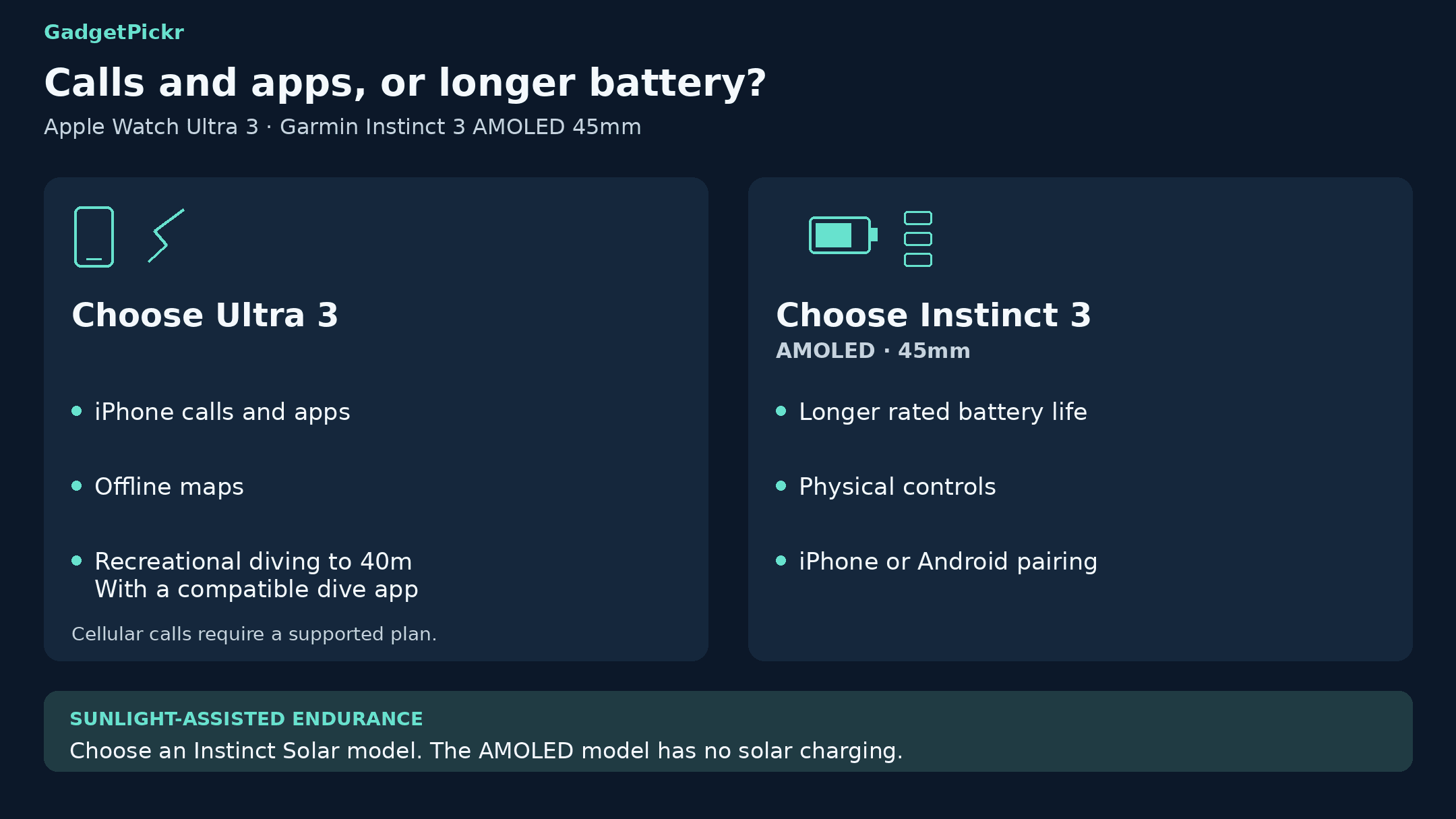
In the Apple Watch Ultra vs Garmin Instinct matchup, the Ultra 3 wins for iPhone communication, apps, detailed maps, and supported recreational scuba diving. Get it if you want to leave your phone behind and still take calls and answer messages. The titanium case and touchscreen make the most sense when you'll use those features every day.
Get the Instinct 3 AMOLED if battery life, physical controls, and working with either iPhone or Android matter more to you than standalone calls. The 45mm watch is rated for up to 18 days with wrist gesture or seven days always-on; the 40-day and 260-hour figures you may see belong to the Solar models. It's the better pick if you want to charge less often, and if solar charging appeals to you, an Instinct Solar is the one to look at.
Sources & References
Specifications and claims in this analysis were cross-referenced against the sources below.
- Garmin Instinct 3 AMOLED | REI Co-oprei.com
- Apple Watch Ultra 3: Order, Price, Colors, Specs | Verizonverizon.com
- Apple Watch Ultra 3 Full Specifications - PhoneArenaphonearena.com
- I took the Apple Watch Ultra 3 vs Garmin Instinct 3 snowboarding — and there was one clear winnertomsguide.com
- Apple Watch Ultra 3 - Tech Specs - Apple Supportsupport.apple.com
- Garmin Instinct 3 review: Instinctively a winning fitness watchtechradar.com
- Apple Watch Ultra 3 review: Features, Specs, Priceappleinsider.com
- Garmin Instinct 3 AMOLED 45mm Smartwatch, Black | Abtabt.com
Frequently Asked Questions
The Garmin, by a wide margin. The 45mm AMOLED model is rated for up to 18 days with wrist gesture or seven days always-on, compared with up to 42 hours of normal use for the Ultra 3. Continuous GPS tracking shortens battery life on both.